China’s Aluminum Door sector is expanding with global construction demand, energy-efficiency requirements, and renovation activity. The International Aluminium Institute reports that almost 75% of all aluminium ever produced remains in use today. That figure matters. It reflects durability, recoverability, and long service potential when products are designed responsibly.
Market studies from Grand View Research and Fortune Business Insights identify doors and windows as important applications within the wider aluminium and building-materials markets. However, market size alone cannot identify a dependable manufacturer. Buyers need evidence from factory audits, project references, extrusion capacity, thermal-break systems, coating performance, and export documentation. A polished catalogue proves very little.
Miles Prosser, Secretary General of the International Aluminium Institute, has described aluminium as “a material for the future.” His point is practical here. A well-engineered Aluminum Door can combine slim sightlines, corrosion resistance, low maintenance, and improved building performance. The details decide the result. Look for controlled alloy composition, accurate CNC cutting, reliable gaskets, and tested hardware.
No ranking is perfect.
The following China Top 10 Aluminum Door Manufacturers for Global Buyers are evaluated through a buyer-focused lens. Their production scale, customization capability, quality systems, international experience, and after-sales responsiveness receive close attention. Some companies may excel in premium residential projects, while others suit commercial developments or volume orders. This difference is easy to miss. Buyers should still verify certifications, sample quality, delivery terms, and current references before signing a contract.
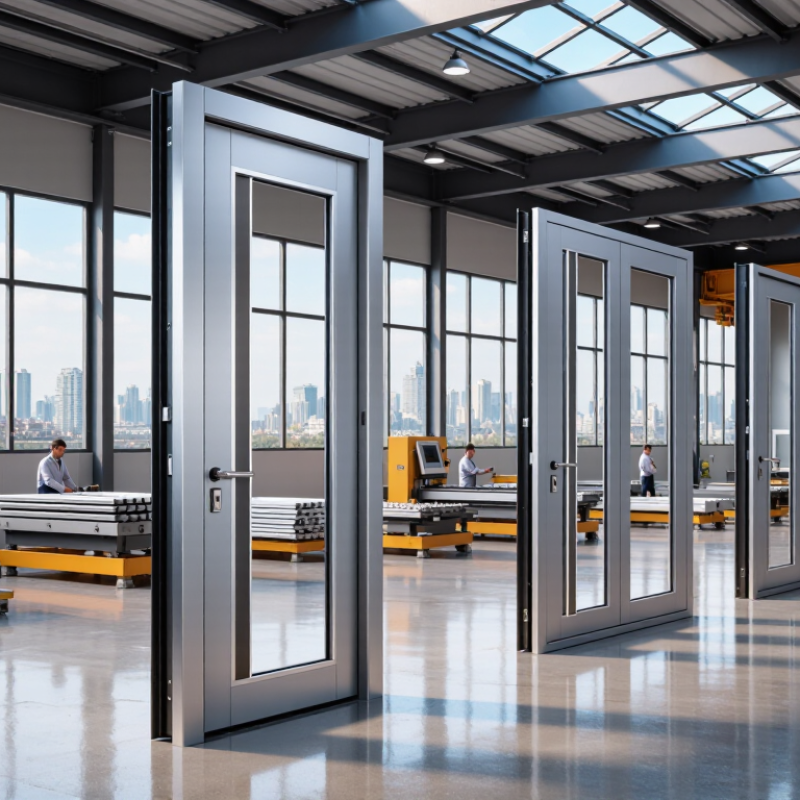
A leading aluminum door manufacturer in China is judged by more than factory size. The International Aluminium Institute reported about 41.5 million tonnes of primary aluminum production in China during 2023. That scale supports stable material access, but it does not guarantee reliable doors. Buyers should inspect alloy certificates, extrusion tolerances, coating thickness, and hardware traceability.
Real manufacturing experience appears in testing discipline. A capable supplier should provide performance data for air permeability, water tightness, wind resistance, and repeated opening cycles. These tests should match the buyer’s market standards, such as GB/T 8478, EN 14351-1, or relevant ASTM requirements. Independent laboratory reports are stronger evidence than factory brochures. Small details matter. Check corner joints, drainage channels, gasket compression, and protective packaging.
Sustainability also deserves closer attention. The International Aluminium Institute’s reports show that recycled aluminum can require far less energy than primary production, although savings depend on electricity and processing methods. A responsible manufacturer should explain recycled content, powder-coating controls, and waste handling with measurable records. No factory is flawless. Even an experienced exporter may face color variation, delayed components, or imperfect installation guidance. That is why sample approval, pilot orders, corrective-action records, and clear warranty terms remain essential. Claims should be verified, not merely repeated.
What defines a leading aluminum door manufacturer is the ability to meet recognized export requirements for thermal performance, air and water resistance, structural strength, surface durability, and quality-system control. The chart presents practical reference benchmarks commonly used in international construction tenders; exact requirements vary by project, climate, and destination-market regulations.
China’s Top 10 Aluminum Door Manufacturers for Global Buyers
These profiles examine ten leading Chinese aluminum door manufacturers through export readiness, production control, and project experience. The selection considers factory scale, testing capability, customization, and after-sales support. Several focus on thermal-break systems for residential buildings. Others specialize in curtain-wall entrances, fire-rated assemblies, or slim-frame sliding doors. One manufacturer stands out for automated cutting and CNC machining. Another relies more heavily on manual finishing, which can create attractive details but inconsistent batches.
The International Aluminium Institute reports that buildings account for roughly one-quarter of global aluminum demand. This supports continued interest in durable, low-maintenance door systems. Mordor Intelligence’s 2024 market analysis also identifies Asia-Pacific as the dominant region for aluminum doors and windows. The ten profiles reflect that advantage through integrated extrusion, powder coating, glazing, and assembly. However, factory size alone proves little. Some suppliers publish impressive catalogs but provide limited test evidence. That gap deserves attention.
Tips: Request air, water, wind-load, thermal, and hardware test reports for the exact door series. Compare sample corners, gasket joints, drainage holes, and coating thickness. Ask for independent inspection before shipment. A careful buyer should also verify packing methods and replacement-part procedures. Specifications can still change during negotiation. That is normal, but undocumented changes are risky.
| Profile | Primary Manufacturing Region | Main Product Focus | Typical Aluminum Systems | Common Surface Finishes | International Standards Commonly Supported | Customization Capability | Typical MOQ for Export Orders | Typical Production Lead Time | Common Export Market Coverage | Buyer Verification Priorities |
|---|---|---|---|---|---|---|---|---|---|---|
| Profile 01 | Guangdong, South China | Residential entrance doors, sliding doors and patio systems | Thermal-break and non-thermal-break aluminum profiles | Powder coating, anodizing, PVDF coating and wood-effect finishes | GB/T 5237; EN 14351-1 support available for export projects | High: drawings, colors, glass, hardware and packaging | Usually 1 container or project-based quantities | Approximately 25–45 days after approved drawings | North America, Europe, Australia, Southeast Asia and the Middle East | Air leakage, water tightness, wind-load calculations and hardware brands |
| Profile 02 | Foshan, Guangdong | Villa doors, folding doors and large-format glazed openings | Lift-and-slide, bi-fold and slim-frame systems | Matt and textured powder coating, anodized finishes and wood grain | GB/T 8478; project-specific EN and ASTM test documentation | High: oversized panels and made-to-measure configurations | Small trial orders may be accepted; full-container orders preferred | Approximately 30–50 days, depending on glass and hardware | United States, Canada, Europe, Gulf countries and Oceania | Panel weight limits, roller performance, drainage and site dimensions |
| Profile 03 | Jiangsu, East China | Commercial doors, office entrances and storefront systems | Framed glazed doors, automatic-door compatible frames and curtain-wall interfaces | Powder coating, anodizing and fluorocarbon coating | GB/T 8478; EN 14351-1 and ASTM E283/E331 testing may be arranged | Medium to high: commercial schedules and shop drawings supported | Typically project quantity or one mixed container | Approximately 30–60 days | Europe, Southeast Asia, Africa and the Middle East | Fire-rating requirements, accessibility clearances and project submittals |
| Profile 04 | Zhejiang, East China | Energy-efficient residential windows and doors | Polyamide thermal-break systems with insulated glass options | Powder coating, anodizing and dual-color interior/exterior finishes | GB/T 8478; ISO 9001 quality systems are commonly available | High: thermal performance, glazing and color combinations | Commonly 100–300 units, subject to profile and glass selection | Approximately 25–45 days | Europe, Australia, New Zealand and selected Asian markets | U-value calculations, condensation resistance and thermal-break continuity |
| Profile 05 | Shandong, North China | Security doors, apartment entrances and heavy-duty exterior doors | Reinforced aluminum frames, multi-point locking and insulated door leaves | Powder coating, anodizing and transfer wood grain | GB/T 8478; local fire, security or impact testing by project requirement | Medium to high: locksets, cores, panels and glazing can be specified | Usually 1 container or a confirmed construction schedule | Approximately 30–55 days | Middle East, Central Asia, Africa and Eastern Europe | Lock certification, forced-entry resistance, corrosion class and packing |
| Profile 06 | Fujian, Southeast China | Coastal homes, balconies and weather-resistant sliding doors | Thermal-break sliding, lift-and-slide and impact-resistant configurations | Marine-grade powder coating, anodizing and wood-effect coating | GB/T 5237; ASTM and EN performance testing available for selected systems | High: corrosion-resistant hardware and coastal glazing options | Typically 1 mixed container or custom project quantity | Approximately 30–50 days | Australia, Southeast Asia, Pacific islands and coastal Middle Eastern markets | Salt-spray performance, drainage design, wind pressure and glass specification |
| Profile 07 | Shanghai and nearby East China | High-rise residential and commercial aluminum door packages | Thermal-break hinged, sliding and curtain-wall integrated door systems | Powder coating, anodizing and PVDF coating | GB/T 8478; EN 14351-1, ASTM E283 and ASTM E331 support by project | High: BIM coordination, schedules and multi-building orders | Project-based; prototypes are usually required before mass production | Approximately 40–70 days for large projects | Europe, North America, Asia, Africa and the Gulf region | Structural calculations, mock-up approval, batch consistency and logistics |
| Profile 08 | Hunan, Central China | Interior aluminum doors, minimalist doors and partition systems | Slim-frame hinged, pivot, pocket and glass partition doors | Powder coating, anodizing and textured decorative finishes | GB/T 8478; project-specific acoustic and fire documentation | High: slim sightlines, decorative glass and hardware matching | Often 50–200 units for standard configurations | Approximately 20–40 days | Europe, North America, Southeast Asia and the Middle East | Acoustic ratings, glass safety, concealed hardware and installation tolerances |
| Profile 09 | Hebei, North China | Industrial, institutional and high-traffic aluminum doors | Heavy-duty hinged, emergency-exit and automatic-door compatible systems | Powder coating, anodizing and protective industrial finishes | GB/T 8478; fire and emergency-exit compliance depends on the selected system | Medium: engineering changes supported for commercial projects | Typically one container or contract-based quantities | Approximately 30–60 days | Africa, Central Asia, Eastern Europe and the Middle East | Door-cycle testing, panic hardware, fire certification and spare parts |
| Profile 10 | Guangxi, South China | Cost-competitive residential doors and volume housing projects | Standard sliding, hinged and balcony-door systems | Powder coating, anodizing and wood-grain transfer finishes | GB/T 8478 and GB/T 5237; export testing arranged when specified | Medium: standard systems with selectable colors, glass and hardware | Commonly 1–3 containers, depending on product mix | Approximately 25–45 days | Southeast Asia, Africa, Latin America and the Middle East | Bill of materials, profile thickness, glass compliance and container loading |
Note: Lead times, minimum order quantities, certifications and performance results vary by project, specification and destination market. Buyers should request current test reports, product drawings, coating specifications and pre-shipment inspection records before placing an order.
China’s top aluminum door manufacturers serve projects from humid coasts to cold inland cities. Their strongest capabilities usually begin with 6063-T5 or 6063-T6 extrusions, valued for clean profiles and reliable machinability. Higher-load frames may use 6061 alloys. The International Aluminium Institute reported global primary aluminum production of about 70 million tonnes in 2023, showing the scale behind this supply chain. Yet volume alone proves little. A polished catalog is not evidence of stable tolerances.
Global buyers should inspect the material system, not only the finished door. Thermal-break profiles use polyamide strips to reduce heat transfer. Double-glazed units, low-emissivity coatings, and silicone-compatible gaskets improve comfort and weather resistance. Powder coating and anodizing require controlled pretreatment, film thickness checks, and color records. The IEA identifies aluminum as an energy-intensive material, so recycled-content declarations and production-energy data deserve practical attention. Claims can be vague.
Manufacturing depth matters during customization. Look for automated extrusion cutting, CNC machining, corner crimping, glass assembly, and batch traceability. Factory testing should cover air permeability, water penetration, wind resistance, and hardware cycles under relevant standards, such as EN 12207, EN 12208, EN 12210, or ASTM methods. Reports from market research firms often forecast steady growth in aluminum construction products, but regional forecasts differ. Buyers should question the assumptions. A sample corner, coating report, alloy certificate, and test record reveal more than a long product list.
When comparing China’s top aluminum door manufacturers, global buyers should examine export readiness beyond factory photos. A reliable supplier can provide current certificates, test reports, and traceable production records.
ISO 9001 supports quality control, while ISO 14001 indicates structured environmental management. These certificates matter, but they do not replace product testing.
For European projects, buyers may request performance evidence under EN 14351-1 and supporting CE documentation, where applicable. North American orders often require testing aligned with ASTM or regional building codes.
Australian and Middle Eastern projects may follow different wind, water, thermal, and safety requirements.
Good manufacturers also understand export packaging, container loading, labeling, and destination-specific documentation.
Crated frames should use corner protection, moisture control, and clear installation marks.
Global market coverage may include Europe, North America, Africa, Southeast Asia, and the Gulf region, but claimed coverage needs verification through references and shipment records.
Request samples before placing a large order. Inspect coating thickness, drainage holes, gasket fit, and hardware movement by hand.
Certification looks convincing on paper. Installation performance can still disappoint. Manufacturers should admit such limits and explain corrective actions clearly.
A top-ten list is only a starting filter for global aluminum door buyers. Supplier selection should begin with measurable evidence, not attractive project photos. The U.S. Geological Survey reported about 70 million tonnes of global primary aluminum production in 2023. China contributed roughly half of that volume. This scale creates options, but capacity does not automatically prove quality.
Ask each manufacturer for alloy grades, wall thickness, coating specifications, and test records. Request samples before approving mass production. Measure frame squareness, corner joints, gasket compression, and surface color under daylight. Testing should reflect the target market’s requirements, including air leakage, water penetration, wind resistance, and thermal performance. The ISO 9001 certificate matters, but production discipline matters more. Check whether inspectors actually record nonconforming products.
Cost needs a wider calculation. Compare door price, packaging, tooling, shipping, installation tolerance, and replacement risk. The International Energy Agency identifies aluminum as an energy-intensive material, so energy sources and recycled content can affect both environmental claims and future procurement requirements. Ask for traceable material documents. Be careful with vague “green” language.
Visit the factory, if possible. Watch one complete production cycle. Check how workers protect finished frames from scratches. Do not rely only on the sales manager’s presentation. I once considered a supplier with excellent samples, but its random production pieces showed inconsistent drainage holes. That small detail could become a large site problem. A written inspection plan, clear warranty terms, and responsive technical communication are stronger buying signals than a low quotation.
Review alloy certificates, extrusion tolerances, coating thickness, and hardware traceability. A large factory is not automatically reliable.
Request reports for air leakage, water penetration, wind resistance, and repeated opening cycles.
Regional projects may require different wind, water, thermal, and safety performance.
Examine corner joints, drainage channels, gasket compression, and hardware movement by hand.
Ask for recycled-material records, coating controls, energy information, and waste-handling data.
Review current quality certificates, environmental records, laboratory reports, production records, and destination documents. Certificates alone are not enough.
Crated frames need corner protection, moisture control, clear labels, and visible installation marks.
Approve samples, place a pilot order, inspect corrective-action records, and confirm warranty terms. No supplier is flawless. A delayed component or color variation may still occur.
China has become a major source of aluminum door solutions for global construction and renovation projects. A leading manufacturer is defined not only by product quality, but also by advanced design capability, stable production capacity, strict quality control, customization support, and reliable customer service. This article introduces ten representative types of Chinese manufacturers, covering their key products, aluminum materials, surface treatments, energy-efficiency options, security features, and manufacturing strengths. It also explains how suppliers manage large-scale orders, customized specifications, and consistent delivery for international buyers.
Global purchasers should pay close attention to export experience, product testing, certifications, packaging standards, and market coverage when evaluating an Aluminum Door supplier. Comparing material grades, hardware performance, production technology, lead times, communication efficiency, after-sales support, and total purchasing cost can help buyers make a practical decision. By reviewing these factors together, buyers can identify a dependable partner capable of providing durable, compliant, and professionally manufactured aluminum door products for different architectural applications.