0%

Choosing the right Aluminum Bathroom Door involves more than comparing finishes and prices. The door must handle humidity, daily use, limited space, and changing bathroom temperatures. A polished product photo cannot reveal every practical weakness.

From experience, small details often decide long-term satisfaction. Check the aluminum alloy, surface treatment, frame thickness, hinges, rollers, seals, and drainage design. A powder-coated or anodized finish may resist moisture better than a poorly protected surface. However, quality depends on manufacturing and installation, not appearance alone.

Fit matters.

Measure the opening carefully, including uneven walls and floor slopes. A sliding door may save space, while a hinged model can provide a wider entrance. Consider frosted glass, clear glass, or another suitable panel based on privacy and cleaning needs. Reliable manufacturers should provide clear specifications, installation guidance, warranty terms, and maintenance advice. Independent reviews and professional installer feedback can also expose problems that advertisements overlook.

Safety deserves equal attention. Select suitable tempered or laminated glass, secure hardware, and smooth operating components from reputable suppliers. Confirm that the complete assembly suits the bathroom environment and local building requirements. These checks do not guarantee perfection, but they reduce avoidable risks.

The best Aluminum Bathroom Door is not always the most expensive option. It should match your space, habits, climate, and maintenance expectations. I have seen attractive doors become frustrating when seals loosen or measurements were rushed. That is worth remembering. A careful comparison, realistic budget, and honest assessment of installation quality will lead to a more dependable choice.
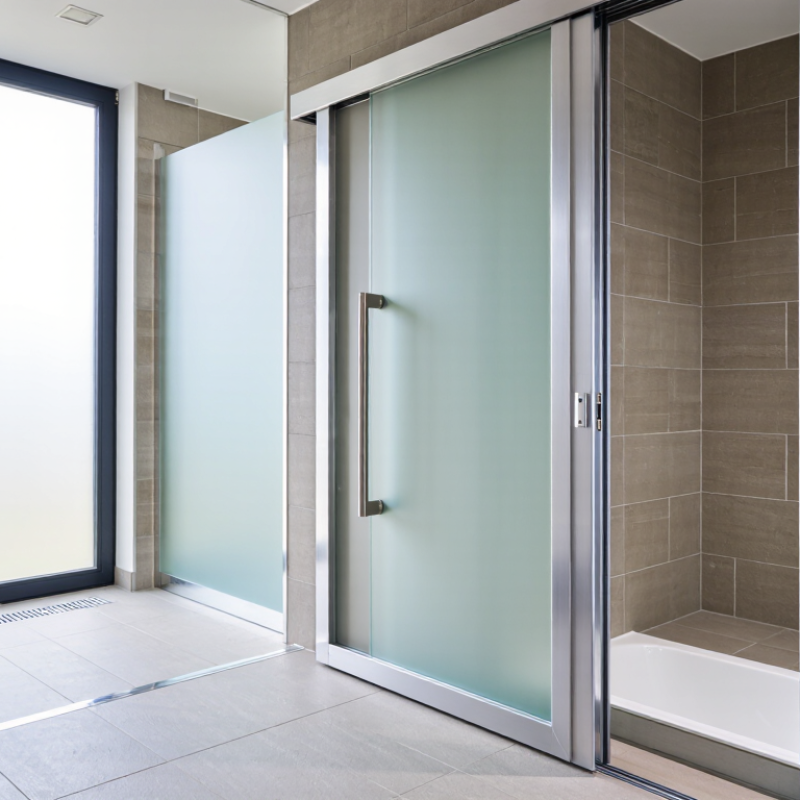
How to Choose the Best Aluminum Bathroom Door?

Define Bathroom Needs: Space, Moisture, Privacy, and Door-Swing Clearance

How to Choose the Best Aluminum Bathroom Door?

Start with the bathroom’s real dimensions, not a showroom impression. Measure wall width, fixture positions, and the doorway’s clear opening. The NKBA Bathroom Planning Guidelines recommend about 30 inches of clear floor space in front of fixtures. A swinging door can quickly consume that space. Test the swing with cardboard before ordering. It feels simple, but small bathrooms punish small mistakes.

Moisture changes the decision. The U.S. Environmental Protection Agency recommends indoor relative humidity between 30% and 50% to limit condensation and mold growth. Choose aluminum with corrosion-resistant hardware, sealed joints, and drainage-friendly thresholds. A powder-coated surface usually cleans easily, but damaged coating can expose the metal beneath. Inspect corners closely. They often collect water first.

Privacy also needs a practical test. Frosted glass, textured panels, or solid inserts can reduce visibility without making the room feel sealed. Check how much light remains after installation. Measure towel bars, toilets, and cabinets around the swing path. A sliding aluminum door may save floor space, yet its track needs regular cleaning. I once underestimated that detail. Dust and soap residue made the door feel heavier within weeks. Door choice should follow moisture, movement, privacy, and maintenance habits, not appearance alone.

Select 6063-T5 Aluminum Frames with 1.2–2.0 mm Wall Thickness

How to Choose the Best Aluminum Bathroom Door?

A dependable bathroom door starts with the frame, not the handle or glass. Choose 6063-T5 aluminum for its useful balance of strength, corrosion resistance, and clean surface quality. The T5 temper provides practical rigidity for daily opening and closing. It also supports accurate cutting and corner joining during installation.

Wall thickness matters. For most bathroom doors, 1.2–2.0 mm offers a sensible working range. A 1.2 mm frame can suit a small, lightly used door. A 2.0 mm frame feels firmer and better handles wider panels or frequent use. I once saw a thin frame twist because the door was oversized. The specification looked acceptable. The installation was not. Measure the opening, door weight, hinge position, and fixing points together.

Tips: Check the actual wall thickness with a caliper, not only a supplier sheet. Press near the hinge side and inspect for flex. Confirm that corners are square and drainage paths remain open. Keep the lower frame slightly clear of standing water. A durable coating helps, but poor sealing can still cause staining and corrosion. Do not choose the thickest section automatically. Extra material may increase weight, cost, and hinge stress without improving the whole door. Test the assembled frame before final sealing. Small alignment errors become obvious after the glass is installed.

Compare 5–8 mm Tempered Glass, Acrylic Panels, and Privacy Levels

How to Choose the Best Aluminum Bathroom Door?

When selecting an aluminum bathroom door, compare both panel thickness and privacy needs. Tempered glass from 5 to 8 mm offers a solid, refined feel. Five millimeters suits lighter doors and moderate daily use. Eight millimeters feels more substantial, but it adds weight to hinges and frames. Accurate installation matters. Poor alignment can cause dragging, even with quality materials. Tempered glass also handles bathroom temperature changes better than ordinary glass. If broken, it usually forms small, blunt fragments, although it is not unbreakable.

Acrylic panels provide a lighter and often more economical option. They are easier to handle in compact bathrooms and place less stress on fittings. However, acrylic can scratch during cleaning and may lose clarity over time. Rough sponges are a bad idea. For privacy, clear glass gives the brightest appearance but reveals silhouettes. Frosted, textured, or reeded surfaces offer better concealment while still allowing soft light. Full opacity gives maximum privacy, though the room may feel smaller. Privacy films can help, but their edges need careful sealing in wet areas.

Tips: Check the panel weight before choosing hinges. Hold sample surfaces under bathroom lighting. Steam changes the appearance of textured glass. A privacy level that looks perfect in a showroom may feel insufficient at night. I would also inspect cleaning access around the aluminum frame. This detail is easy to overlook. Sometimes, the most attractive door becomes frustrating after several weeks of daily wiping.

How to Choose the Best Aluminum Bathroom Door? - Compare 5–8 mm Tempered Glass, Acrylic Panels, and Privacy Levels

Typical performance values for residential bathroom door panels. Actual results vary by panel design, surface treatment, hardware, and installation quality.
Panel option Nominal thickness Approx. panel weight Privacy level Light transmission Safety and durability Main advantages Best use case
Clear tempered glass 5 mm Approx. 12.5 kg/m² Low High; typically about 85–90% Heat-treated safety glass; stronger than ordinary annealed glass, but it can still break under severe impact. Bright appearance, easy to clean, and visually expands small bathrooms. Guest bathrooms or layouts where maximum daylight and visibility are preferred.
Clear tempered glass 6 mm Approx. 15 kg/m² Low High; typically about 85–90% Good balance of rigidity and weight; use safety-rated tempered glass and suitable hinges. More rigid than 5 mm glass while remaining relatively light for standard door sizes. General residential bathroom doors with a clear, contemporary design.
Frosted tempered glass 6 mm Approx. 15 kg/m² High Medium to high, depending on the frosting process Tempered safety glass; etched or coated surfaces may require gentler cleaning. Strong privacy with useful daylight and a clean, uniform appearance. Shared bathrooms, family bathrooms, and doors positioned near living areas.
Patterned or ribbed tempered glass 6–8 mm Approx. 15–20 kg/m² Medium to high Medium; pattern and texture determine the final result Tempered glass provides impact-safety benefits; textured surfaces can collect more residue. Adds visual interest while reducing direct views through the door. Bathrooms requiring a decorative finish and moderate visual privacy.
Heavy clear tempered glass 8 mm Approx. 20 kg/m² Low High; typically about 85–90% High rigidity, but the additional weight requires properly rated hinges, pivots, and frames. Solid feel, reduced flex, and a premium frameless appearance. Wide or frequently used doors where stiffness is more important than low weight.
Clear acrylic panel 6 mm Approx. 7.1 kg/m² Low High; commonly about 88–92% for clear sheet Much lighter and more impact-resistant than glass, but it can scratch and may expand with temperature changes. Low door load, easy handling, and lower risk of sharp glass fragments. Lightweight doors, retrofit projects, and bathrooms where easy installation matters.
Frosted acrylic panel 6–8 mm Approx. 7.1–9.4 kg/m² Medium to high Medium to high, depending on surface finish Lightweight and less prone to shattering; avoid abrasive cleaners and excessive heat. Combines privacy, low weight, and straightforward cutting or fabrication. Private bathroom doors where low hardware loads are important.
Selection guide: Choose 5–6 mm tempered glass for a balanced standard door, 8 mm tempered glass for greater rigidity, frosted or patterned glass for stronger privacy, and acrylic when low weight and impact resistance are the main priorities. Confirm door size, hinge load rating, edge protection, ventilation, and local safety requirements before installation.

Specify AAMA 2604/2605 Powder Coating for Wet-Use Corrosion Resistance

How to Choose the Best Aluminum Bathroom Door?

A bathroom door faces daily steam, splashes, cleaners, and poor ventilation. Standard paint may blister around hinges, corners, and the lower frame. Specify AAMA 2604 or AAMA 2605 powder coating for stronger wet-use protection. The American Architectural Manufacturers Association’s AAMA 2604 specification includes five-year South Florida exposure testing. AAMA 2605 raises the benchmark to ten years. These tests assess color change, chalking, gloss retention, adhesion, impact, and humidity resistance.

Choose AAMA 2604 for many residential bathrooms with moderate moisture. Select AAMA 2605 for hotels, spas, coastal homes, or heavily used facilities. A 2023 report from the International Aluminium Institute notes that aluminum remains highly recyclable, but coating quality still affects service life. The frame needs proper drainage and sealed joints. Powder coating cannot correct standing water or careless installation. I would not trust a vague phrase like “weather resistant.” Ask for the exact AAMA class and test documentation.

Tips: Inspect the bottom rail first. Water often collects there. Confirm the coating covers cut edges and drilled areas. Request a finish sample after exposure testing, not only a showroom chip. Check hinges, fasteners, and seals for compatible materials. A small mismatch can create staining or premature corrosion. Recheck ventilation, too; even a superior coating performs poorly in a constantly damp room.

How to Choose the Best Aluminum Bathroom Door?

Specify AAMA 2604 or AAMA 2605 powder coating for stronger corrosion resistance in wet-use areas.

AAMA 2604 and AAMA 2605 are high-performance architectural coating specifications. Their commonly referenced neutral salt-spray exposure requirements are approximately 3,000 hours and 4,000 hours respectively. These test durations indicate laboratory corrosion resistance and are not a direct prediction of service life. For bathroom doors, also confirm proper pretreatment, sealed edges, drainage, and regular maintenance.

Verify 813 mm Clear Opening, 13 mm Threshold, and 304/316 Hardware

Choosing an aluminum bathroom door starts with the opening, not the catalog photograph. Measure the finished opening at the top, middle, and bottom. Then verify an 813 mm clear opening after the frame, seals, and hinges are installed. The rough opening may be wider, but it does not guarantee usable passage space. I have seen doors advertised as wide enough that became restrictive after installation. That small mistake affects moving equipment and everyday comfort.

Check the 13 mm threshold against the finished floor, not the unfinished slab. A floor buildup can quietly increase the step and create a trip concern. Confirm the door swing, drainage direction, and seal compression on the shop drawing.

A low threshold is useful, but water can escape if the floor falls incorrectly. Request a full-size section or mock-up when tolerances are uncertain. Measurements on paper can look perfect. Reality is less polite.

Hardware selection deserves equal attention in humid rooms. 304 stainless steel suits many indoor bathrooms and offers dependable corrosion resistance. Choose 316 when salt air, pool chemicals, or frequent moisture exposure increases corrosion risk.

Do not judge hardware by appearance alone. Check fastener grade, hinge load rating, adjustment range, and compatibility with the aluminum frame. Ask for material certificates and installation instructions from the fabricator.

I would also inspect corners and screw points after fitting; these areas often reveal rushed workmanship.

One detail is easy to miss: 304 and 316 are not interchangeable in every environment.

FAQS

How should I measure a bathroom doorway before choosing an aluminum door?

Measure the finished opening at the top, middle, and bottom. Leave no guesswork. Check wall width, fixtures, and clear floor space. Test the door swing with cardboard before ordering.

How much clear space should remain in front of bathroom fixtures?

Aim for about 30 inches of clear floor space. A swinging door can quickly reduce it. Check toilets, cabinets, towel bars, and sinks around the swing path. Small bathrooms punish small mistakes.

Is a sliding aluminum door better for a small bathroom?

It may save valuable floor space. However, its track needs regular cleaning. Dust and soap residue can make sliding difficult. I once underestimated this detail. It became annoying within weeks.

What privacy options work well for aluminum bathroom doors?

Frosted glass, textured panels, and solid inserts can reduce visibility. They still allow different amounts of light. Check the room after installation, not only in a showroom. Privacy can feel different at night.

What coating should an aluminum bathroom door have?

Choose a powder-coating performance class rated for wet conditions. Class 2604 suits many residential bathrooms with moderate moisture. Class 2605 offers stronger protection for humid or heavily used spaces. Ask for test documentation. “Weather resistant” is too vague.

Where should I inspect the door finish most carefully?

Inspect the bottom rail, corners, drilled areas, and cut edges. Water often collects at the lower frame. Damaged coating can expose the aluminum underneath. Sealed joints and drainage-friendly thresholds also matter. Look closely.

What clear opening and threshold dimensions should I verify?

Verify an 813 mm clear opening after installation. Frames, seals, and hinges reduce usable width. Check the 13 mm threshold against the finished floor. Floor buildup may increase the step. Paper measurements can look perfect.

Should I choose 304 or 316 stainless steel hardware?

304 hardware suits many indoor bathrooms. Choose 316 for salt air, pool chemicals, or heavier moisture exposure. Confirm hinge ratings, fastener quality, and material compatibility. They are not interchangeable everywhere. Inspect screw points after fitting.

Conclusion

Choosing the right Aluminum Bathroom Door begins with understanding the room’s practical needs. Assess the available space, humidity levels, privacy requirements, and door-swing clearance before selecting a style. A well-planned door should support comfortable movement while helping prevent moisture-related problems. For the frame, 6063-T5 aluminum with a wall thickness of approximately 1.2–2.0 mm offers a suitable balance of strength, stability, and lightweight performance.

The panel material also affects comfort and durability. Compare 5–8 mm tempered glass with acrylic panels according to safety, appearance, maintenance, and desired privacy. For wet environments, specify powder coating that meets AAMA 2604 or AAMA 2605 standards to improve resistance to corrosion and wear. During installation, verify an 813 mm clear opening, a 13 mm threshold, and reliable 304 or 316 stainless steel hardware. These details help ensure the finished door remains practical, secure, attractive, and durable in everyday bathroom use.

Charlotte

Charlotte

Charlotte is a seasoned marketing professional with a strong understanding of product strategy, customer needs, and market trends. As a key contributor to the company’s marketing team, she combines clear communication with practical industry knowledge to help audiences better understand the value......