CE • Water-Resistant
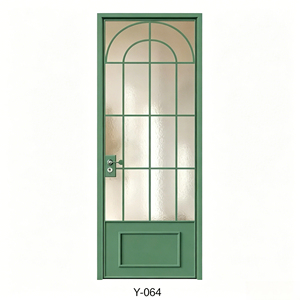
Scandinavian Carved Aluminum Alloy Glass Door Water-Resistant
- Electrostatic powder coated surface
- Anti-corrosion hermetic seal
- 3-Year comprehensive warranty
Explore our certified range of coated aluminium doors, manufactured from architectural 6063-T6 virgin alloys, thermal break barriers, and multi-layer corrosion-proof surface treatments tested for demanding global climates.
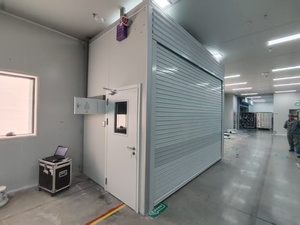
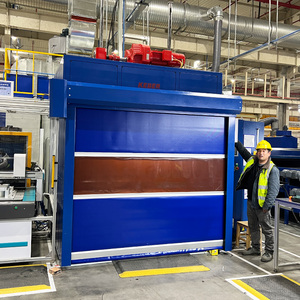
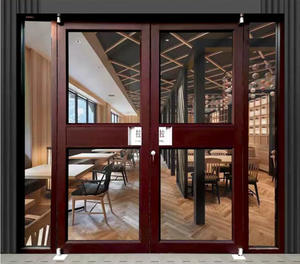
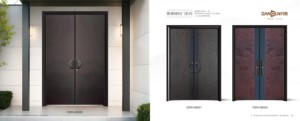
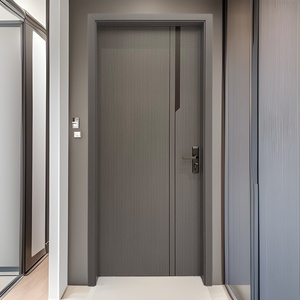
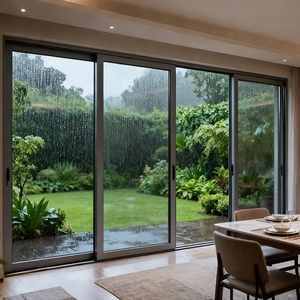
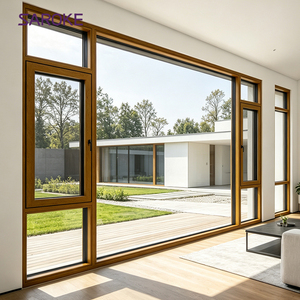
In large-scale commercial facades, high-end residential developments, and infrastructure projects, doors are subjected to aggressive cyclic physical stress, atmospheric oxidants, UV radiation, and thermal expansion. As an audited CE certified aluminium coated doors manufacturer, our engineering foundation is built around precision alloy formulations, certified structural thermal breaks, and multi-stage chemical conversion pre-treatments compliant with European harmonized standards.
Our architectural aluminium extrusions use EN AW-6063-T6 and EN AW-6061-T6 primary billets with tight tolerances over silicon, magnesium, and iron contents to prevent intergranular micro-cracking during extrusion. Before coating, every profile undergoes automated twelve-stage immersion or spray pre-treatment, including non-chromate zirconium-titanium passivation. This forms a nanoscale conversion matrix ensuring zero delamination under ASTM B117 salt spray exposure exceeding 3,000 continuous hours.
| Performance Metric | Standard / Protocol | Engineering Specification Value | CE Harmonized Compliance |
|---|---|---|---|
| Aluminium Substrate Alloy | EN 573-3 / EN 755-2 | EN AW-6063-T6; Tensile ≥215 MPa, Yield ≥170 MPa | EN 14351-1 Compliant |
| Fluorocarbon Coating (PVDF) | AAMA 2605 / EN 12206-1 | 70% Kynar 500 / Hylar 5000 resin; Dry Film ≥35μm (3-Coat) | Class A UV Stable |
| Architectural Powder Coating | Qualicoat Class 2 / ISO 2810 | Super-durable polyester resin; Thickness 60–80μm | Qualicoat Certified |
| Air Permeability | EN 1026 / EN 12207 | Class 4 (Differential pressure up to 600 Pa) | EN 14351-1 |
| Watertightness | EN 1027 / EN 12208 | Class 9A / E750 (Zero unsealed leakage under 750 Pa) | EN 14351-1 |
| Wind Load Resistance | EN 12211 / EN 12210 | Class C5 (Frontal deflection ≤1/300 under 2000 Pa test) | AS 2047 N6 Pass |
| Acoustic Isolation (Rw) | EN ISO 10140-2 / ISO 717-1 | Rw = 36 dB to 44 dB (Depending on laminated IGU & core) | Acoustic Rated |
| Thermal Transmittance (Ud) | EN ISO 10077-1 / -2 | Ud down to 0.98 W/(m²·K) with PA66GF25 thermal barrier | Passivhaus Ready |
| Fire Resistance & Smoke | EN 13501-2 / EN 16034 | EI²30, EI²60, EW30 integrity; Sa / S200 smoke barrier | CE Fire Certified |
Our coating systems are strictly bifurcated between Liquid Fluorocarbon (PVDF) and Thermosetting Powder Systems. For coastal projects exposed to marine chloride mists, industrial sulfur dioxide fallout, and intense solar radiance, our automated spray facilities apply a 3-coat/2-bake polyvinylidene fluoride resin matrix that resists cross-hatch tape peeling (ISO 2409 Class 0) and retains >85% of initial specular gloss after 10 years of accelerated weathering tests.
Understanding the regulatory requirements for external pedestrian doorsets, escape routes, and fire-resistant compartments in cross-border procurement.
Governs external pedestrian doorsets without fire/smoke resistance characteristics. We certify initial type testing (ITT) through accredited European notified bodies, verifying mechanical durability, thermal transmittance, air-water-wind permeability, and release of dangerous substances.
Mandatory for emergency exit routes, internal compartmentalization, and hotel egress doors. Our certified fire-rated doorsets are audited under System 1 of the AVCP (Assessment and Verification of Constancy of Performance), ensuring batch-to-batch integrity under furnace testing up to 120 minutes.
Every export shipment is delivered with traceable Declarations of Performance (DoP), factory production control (FPC) records, mill test certificates for alloy chemistry, and certified paint batch logs. This documentation simplifies building control sign-offs across the EU, UK (UKCA), and the Middle East.
Façade procurement is shifting from standalone component purchasing to integrated, lifecycle-certified fenestration engineering. Here are the macro shifts shaping commercial specifications through 2030 and beyond.
Global developers and Tier-1 contractors increasingly mandate verified Environmental Product Declarations (EPDs). Sourcing low-carbon aluminium billets smelted using renewable hydro-power, combined with closed-loop powder recycling, is becoming a prerequisite to achieve LEED Platinum and BREEAM Outstanding ratings.
Modern commercial and luxury villa doors require integrated mechatronic access control: concealed brushless servo actuators, biometric vein scanners, and automated RS-485 / KNX Building Management System (BMS) integration, replacing external surface-mounted hardware with clean, recessed flush profiles.
Climate volatility drives higher demand for doors compliant with Florida Building Code (TAS 201/202/203) and Australian AS 2047 cyclonic ratings. Large glazed sliding and pivot doors require heavy multi-point locking systems that withstand severe cyclic pressure fluctuations and missile impact tests without structural failure.
On-site labor shortages encourage the adoption of fully unitized, factory-glazed, and pre-hung coated door modules. Pre-tested sub-frame systems allow rapid plug-and-play installation on reinforced concrete structures, cutting site installation time and reducing air leakage caused by improper field assembly.
Reviewing four decades of engineering milestones: from single-skin cold-bridged frames to smart, multi-cavity, continuous thermal break entrance systems.
Single chamber hollow aluminium with basic liquid solvent paints. Profile sections suffered from heavy internal condensation, high thermal conductivity (Uf > 5.8 W/m²K), and rapid chalking under UV exposure due to primitive pigmentation chemistry.
Introduction of mechanical polymer debridging to separate interior and exterior extrusions. Early architectural powder coatings improved chalking resistance, but structural shear strength remained vulnerable under high wind pressure and wide thermal differentials.
Adoption of 24mm to 34mm PA66GF25 (polyamide with 25% glass fiber) continuous thermal struts. Multi-chamber designs with EPDM weatherseals lowered frame U-values to < 1.8 W/m²K, while Qualicoat Class 1 powder coatings became standard.
Today's top-tier doors incorporate aerogel-filled polyamide cavities, continuous warm-edge spacer glass, multi-point servo automation, and nanostructured PVDF coatings that withstand over 4,000 hours of marine salt spray and offer near-zero thermal bridging (Ud ≤ 0.9 W/m²K).
Operating from Foshan, Guangdong—the core of global architectural aluminium manufacturing—our operations combine high-capacity automated production with custom architectural joinery. With an established manufacturing park and over two decades of export experience, we bridge high-volume output with precision fabrication.


Detailed engineering and contractual guidance addressing common challenges faced by general contractors, developers, and door distributors.
Collaborate directly with our technical facade engineers. Send your architectural door schedules, CAD elevation drafts, or acoustic and fire-rating specifications to receive an itemized manufacturing estimate, glass configuration recommendations, and shop drawings within 24 business hours.
Get a Quote