Multi-Point Locking
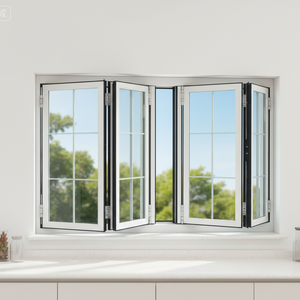
High-performance architectural entrance systems, thermal break profiles, and impact-resistant fenestration solutions engineered for extreme climates and institutional building codes worldwide.
Certified under European CE conformity (EN 14351-1), Australian AS 2047, and UL fire benchmarks, every composite door system leverages aerospace-grade 6063-T6 aluminum alloys and high-density thermal polymers.
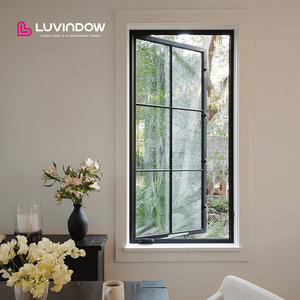
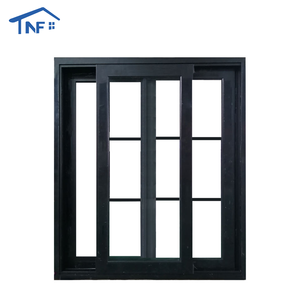
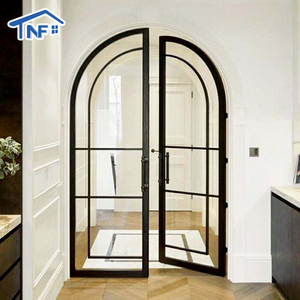
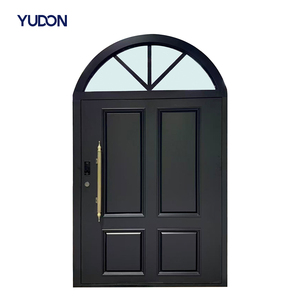
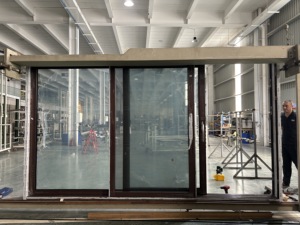
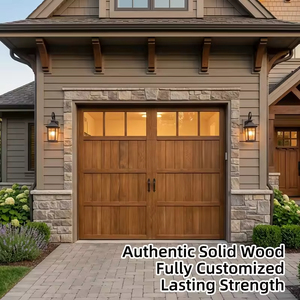
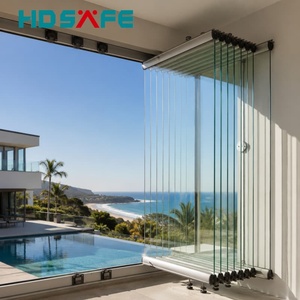
A deep-dive technical blueprint explaining why composite multi-layered cross-sections outperform traditional monolithic timber and steel entry points in lifecycle resilience and environmental dampening.
Aluminium composite doors engineered under CE Standard EN 14351-1 represent the convergence of structural metallurgy and macromolecular insulation science. Standard monolithic aluminum door frames suffer from inherently high thermal conductivity (approx. 205 W/m·K), leading to interior surface condensation, high building envelope energy loss, and internal frame deformation under heavy solar radiance. DERCHI solves this by incorporating polyamide PA66 glass-fiber-reinforced (25% GF) thermal break bars directly bonded between internal and external extrusion casings.
Additionally, modern composite structures eliminate bi-metallic bowing. When an entry door faces scorching 45°C exterior heat and an air-conditioned 21°C interior room, uneven linear thermal expansion normally torques the door leaf, making locks jam. Our patented expansion joints, flexible inner polyurethane foam matrices, and aircraft-grade cast aluminum facings enable dimensional stability across temperature differentials ranging from -35°C to +80°C.
| Test Parameter | Standard Benchmark | DERCHI Composite System | Institutional Impact |
|---|---|---|---|
| Thermal Transmittance (U-Value) | EN ISO 10077-1 / 2 | 0.82 – 1.15 W/(m²·K) | Satisfies European Net-Zero & Passivhaus requirements |
| Air Permeability | EN 12207 (Class 4) | Exceeds 600 Pa test pressure | Prevents hot/humid drafts and monsoon micro-leakage |
| Watertightness | EN 12208 (Class 9A / E1050) | No leakage at 1050 Pa (150 km/h wind-driven rain) | Essential for cyclone/typhoon exposed coastal frontages |
| Wind Load Resistance | EN 12210 / AS 2047 N6 | Design Pressure up to 4500 Pa | Safeguards high-rise villas and expansive pivot leaves |
| Burglar Resistance Class | EN 1627 (RC3 to RC4) | Multi-point motorized hooks & anti-drill core | Armored bank-level physical resistance against forced entry |
Finished with PPG Qualicoat Class 2 fluorocarbon powders and PVDF anodizing, our composite panels resist 3,000+ hours of continuous salt-spray testing without chalking, blistering, or galvanic corrosion along tropical coastlines.
Pre-routed conduits accommodate European motorized multi-point locksets, facial recognition scanner pads, biometric capacitive readers, and automated building management system (BMS) relays without compromising structural seals.
Continuous co-extruded EPDM and foamed silicone rubber gaskets deliver sound transmission loss up to Rw 42 dB, shielding luxury residential interiors and boardroom environments from heavy highway or urban decibels.
How institutional architects, real estate developers, and international facade contractors are optimizing door specification schedules for long-term ESG compliance and structural longevity.
Traditional hinged doors are increasingly replaced in prestige hospitality and luxury residential projects by monumental composite pivot doors exceeding 4 meters in height and 2 meters in width. Heavy-duty concealed floor springs supporting up to 800 kg load capacities are becoming the standard spec requirement.
Procurement managers are shifting toward suppliers verifying low-carbon aluminium billets smelted using renewable hydro-power. Environmental Product Declarations (EPD) and cradle-to-gate lifecycle assessment documentation have moved from optional value-adds to mandatory tender requirements in the EU and North America.
The rapid evolution of architectural aesthetics favors exterior cast aluminum facings with sculpted 3D geometries or ceramic tile veneers, coupled with solid interior sustainably sourced architectural hardwoods. This delivers uncompromised external climate immunity alongside bespoke internal interior design warmth.
Ranked among the Top 10 door and window manufacturers in China, Guangdong Dejiyoupin Doors and Windows Co., Ltd. (DERCHI) operates a turnkey 180,000㎡ industrial complex in Foshan, delivering end-to-end bespoke fabrication.
Our facility houses dedicated extrusion precision CNC lines, robotic powder coating towers, specialized cast aluminum relief workshops, and automated thermal-break crimping machines. With over 600 skilled technicians, we manufacture composite doors, garage doors, and architectural curtain walls under one roof.
With over 100 registered invention, utility, and appearance design patents, our systems hold verifiable global certifications including CE (EN 14351-1), ISO 9001, Australian AS 2047 cyclonic N6 ratings, and UL fire classifications, accelerating municipal project approvals and code handovers.
We assign experienced bilingual technical project managers to every account. Prior to manufacturing, we issue full-scale BIM CAD parametric shop drawings matching structural rough openings, sill drainage profiles, perimeter anchor calculations, and customized access control diagrams.
Comprehensive responses addressing structural feasibility, compliance verification, export sea freight packing, and site installation tolerances.
Connect with our senior fenestration engineers to receive custom BIM CAD shop drawings, acoustic and thermal test reports, and factory-direct volume pricing within 24 hours.
Inquire Now