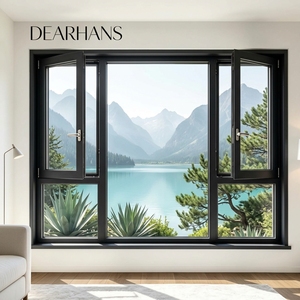
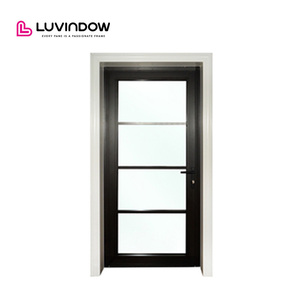
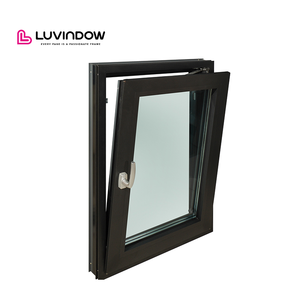
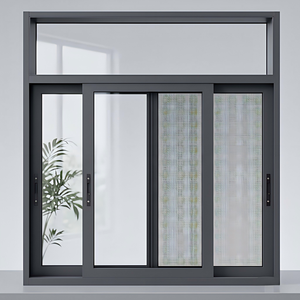
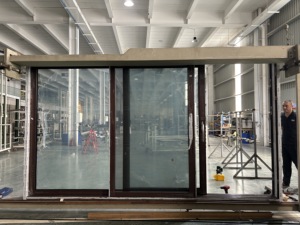
Premium Wood Grain Finish Aluminum Clad Wood Casement Windows For Timber Cladding Houses
- Profile: 6063-T6 Extrusion + Solid Oak Interior
- Thermal: Uw ≤ 1.1 W/m²K (Passivhaus Capable)
- Airtightness: EN 12207 Class 4 Certified
Comprehensive European Standard (EN 14351-1) certified window and door solutions. Fabricated with 6063-T6 virgin architectural aluminium alloy, advanced Technoform® thermal polyamide strips, and high-performance safety glazing.
A comprehensive technical evaluation guide for commercial contractors, facade consultants, and architectural developers.
Procuring architectural aluminium doors and windows across international borders requires rigorous scrutiny beyond catalog aesthetics. The European Standard EN 14351-1:2006+A2:2016 (Windows and doors - Product standard, performance characteristics) is universally accepted as a global baseline for weatherability, structural safety, and thermal performance. To achieve authentic CE compliance, manufacturers must validate system designs through a certified Notified Body (NB), demonstrating consistent factory production control (FPC) under ISO 9001 guidelines and establishing verifiable Declaration of Performance (DoP) dossiers.
The core structural integrity of CE-certified aluminium systems hinges on alloy metallurgy. Top-tier Chinese facilities utilize strictly virgin 6063-T6 billets, avoiding scrap-recycled melts that suffer from microscopic voids, high iron impurity levels, and premature intergranular stress corrosion. Furthermore, thermal barrier systems must utilize polyamide 6.6 reinforced with 25% glass fibre (PA66 GF25) rather than cost-cutting PVC extrusions, ensuring thermal expansion coefficients that match aluminium and prevent structural delamination under cyclical solar heating.
| Performance Characteristic | EN Standard Criterion | Certified Performance Level | Commercial Impact |
|---|---|---|---|
| Air Permeability | EN 12207 | Class 4 (600 Pa maximum pressure) | Eliminates envelope draughts; minimizes HVAC energy leakage. |
| Watertightness | EN 12208 | Class 9A / Class E750 (Unshielded test) | Zero water ingress under extreme tropical monsoon wind-driven rain. |
| Resistance to Wind Load | EN 12210 | Class C4 / C5 (Deflection < 1/300) | Ensures high-rise structural stability against hurricane uplift forces. |
| Acoustic Attenuation | EN ISO 717-1 | Rw (C; Ctr) = 38 dB to 44 dB | Maintains indoor sound pressure levels below 35 dBA in city centres. |
| Thermal Transmittance (U-Value) | EN ISO 10077-1/-2 | Uf: 1.2 – 1.8 W/m²K | Uw: ≤ 1.0 W/m²K | Achieves BREEAM Outstanding and LEED Platinum carbon targets. |
In coastal and high-humidity environments—such as Southeast Asia, coastal North America, and the Middle East—surface finishing represents the second line of defence. Certified facilities implement automated Qualicoat Class 2 / Class 3 powder coating or AAMA 2605 fluorocarbon (PVDF) application. These chemical treatments guarantee minimum film thickness (60-80 microns) and continuous salt-spray corrosion resistance exceeding 3,000 hours without surface blistering or chromatic degradation.
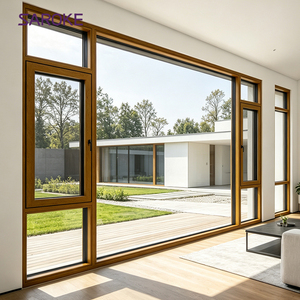
Structural demands, carbon accounting, and automation are transforming the modern fenestration landscape.
International tenders increasingly necessitate Environmental Product Declarations (EPD). Modern Chinese tier-one manufacturers are shifting toward hydro-powered aluminium smelting, reducing product carbon footprints to under 4.0 kg CO2e per kg of primary billet, enabling developers to secure sustainable financing and global green ratings.
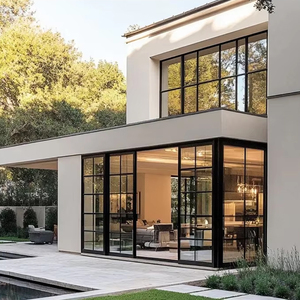
Architects demand maximum natural daylight through floor-to-ceiling panoramic spans with ultra-slim visible sightlines (< 20mm). The integration of hybrid Vacuum Insulated Glazing allows slim 8.3mm panels to deliver the thermal barrier previously exclusive to 40mm triple-glazed units, avoiding prohibitive frame weights.
Modern fenestration has evolved from passive boundaries into active building automation nodes. The adoption of concealed mechatronic perimeter locking (RC2/RC3 rated), embedded micromotor opening mechanisms, and seamless sensor integration provides automated natural ventilation schedules coordinated with central HVAC systems.
Recognized as an industry leader in high-performance fenestration and specialized architectural building products.
Fully integrated European automated CNC machining centers in Foshan, guaranteeing cutting tolerance accuracy within ±0.1mm, clean corner crimping, and high annual production output.
Beyond CE EN 14351-1, our systems are certified under Australian AS 2047 N6 hurricane cyclic testing, ISO 9001 quality audits, and UL fire-rating verifications for international approval.
Dedicated in-house facade engineers providing custom structural wind calculation reports, complete CAD shop drawings, and BIM Revit files for architects before fabrication starts.
Non-fumigation plywood crates with internal EPE foam wrapping protect glass surfaces. English-speaking project managers on GMT+8 provide immediate project collaboration and installation guidance.
Critical operational answers regarding technical compliance, factory verification, and shipping.
Legitimate CE certification requires a genuine Declaration of Performance (DoP) referencing standard EN 14351-1, issued alongside an Initial Type Testing (ITT) report from an accredited European Notified Body (NB). Be vigilant of counterfeit "CE" badges that stand for "China Export." Legitimate suppliers will provide the accredited laboratory test report number, verifying water, air, structural, and thermal ratings.
The AS 2047 N6 classification is one of the most demanding fenestration benchmarks in the world, requiring windows to withstand positive and negative ultimate limit state wind pressures exceeding 4500 Pa. Passing AS 2047 confirms that profile extrusions, mullion reinforcements, and locking mechanisms will maintain complete structural integrity in severe coastal typhoons and cyclonic conditions.
Standard architectural anodized or powder-coated finishes have an MOQ as low as 1 custom opening schedule. Bespoke extrusion die fabrication requires 12–15 business days for tooling, followed by 25–35 days for profile extrusion, thermal assembly, CNC processing, glazing, and multi-stage testing before export crating.
Every fenestration unit undergoes protective masking. Frames are wrapped in high-density EPE foam cushions and enclosed in heavy-duty fumigation-free solid timber or plywood shipping crates. Desiccant packs are inserted to absorb ocean humidity, and crates are locked to container hard-points with heavy polyester ratchet lashing.
Whether you require CAD shop drawings, acoustic laboratory certificates, or container-load quotations for luxury residential, resort, or commercial developments, our engineering specialists provide turnkey technical support.