Impact Rated
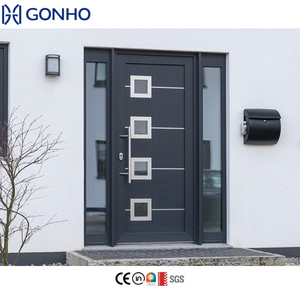
Every assembly leverages primary 6063-T6 architectural aluminium extrusions, precision thermal barrier matrixes, and impact-resistant acoustic glazing calibrated to rigorous EN and international building codes.
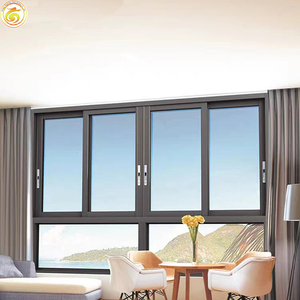
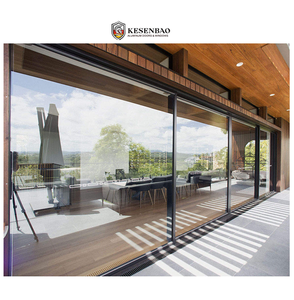
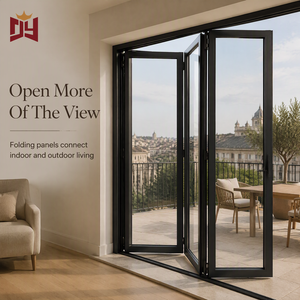
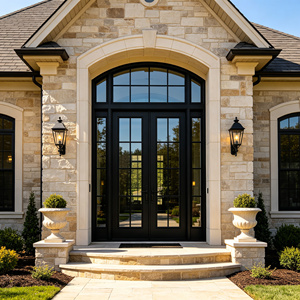
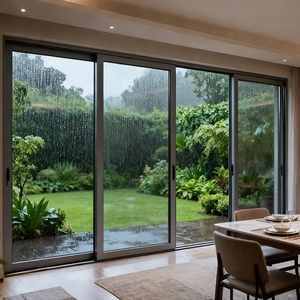
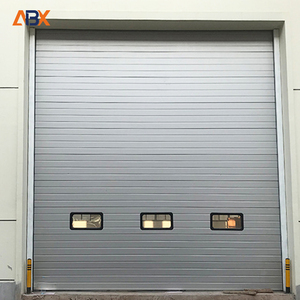
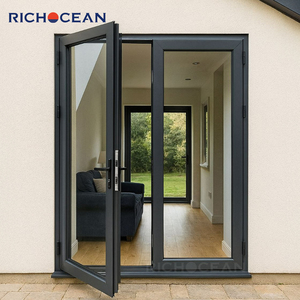
Authoritative insight into European standard EN 14351-1 compliance, thermal transmittance (U-Values), and architectural procurement trends for international buyers.
The contemporary architectural facade landscape has seen a structural pivot toward hybrid fenestration materials. As commercial builders and bespoke villa developers grapple with increasingly severe climate fluctuations, traditional single-core timber, uPVC, and uninsulated metal profiles fail to maintain structural equilibrium. Enter CE Certified Aluminium Fibre Door systems—a composite engineering breakthrough pairing outer architectural-grade aluminium alloy skins (extruded 6063-T6 or hardened magnesium-silicon blends) with dense, thermoset structural fibre cores such as continuous filament glass-reinforced polymers (GFRP) or aerated polyisocyanurate thermal cores.
Under European Union harmonized standards—specifically EN 14351-1:2006+A2:2016 (Windows and doors - Product standard, performance characteristics)—external pedestrian doorsets must rigorously demonstrate verified mechanical resistance, watertightness, low air permeability, and stringent thermal insulation metrics. When sourcing from direct-manufacturing hubs such as Foshan, general contractors and architectural procurement heads must evaluate not merely cosmetic finishing, but the exact thermal break design, multi-point locking geometries, and dynamic wind load capacity certified under real laboratory simulations.
Multi-chamber polyamide PA66 GF25 thermal barriers effectively arrest continuous thermal bridging, keeping overall system thermal transmittance U-values down below 1.1 W/(m²·K).
Thermoset polyurethane combined with continuous composite fibre matrices inhibits perimeter warping, thermal bowing, and internal delamination under extreme solar radiation.
Exceeding Australian AS 2047 N6 and coastal hurricane criteria, engineered to withstand over 4500 Pa cyclic wind gust pressures without air leakage or framing deflection.
Navigating global building material procurement over the next five years demands anticipation of regulatory shifts, material circularity, and smart integration. The procurement pipeline for entrance portals has transcended basic dimensional checks into deep material forensics:
1. Decarbonized and Recycled Aluminium Sourcing: Environmental Product Declarations (EPDs) are becoming standard prerequisites for European and North American tier-one commercial bids. Progressive manufacturers in Foshan are actively adopting lower-carbon smelting lines, recycling closed-loop billets that lower the embodied carbon index below 4.0 kg CO₂e per kg of finished profile while preserving tensile yields exceeding 240 MPa.
2. Biometric and IoT Ecosystem Integration: Specifiers are universally transitioning away from manual mechanical cylinders to factory-concealed motorized multipoint locks. Modern aluminium fibre systems now ship pre-machined for smart home protocols (Zigbee, Matter, and dry-contact building automation systems), integrating continuous 3D concealed biometric scanners, digital drop seals, and electronic access controls directly recessed within the thermal chambers.
3. Super-Sized Pivot Architectures: Where traditional residential doors were bounded by 2100mm heights, contemporary architectural briefs demand seamless heights up to 3500mm or even 4200mm. Achieving this magnitude requires high-modulus fibre core composites inside the aluminium panel skins to prevent thermal bowing (the bimetallic deflection phenomenon triggered when outdoor surface temperatures hit 65°C while indoor air conditioning remains at 21°C).
To provide clear information gain for engineering contractors and project estimators, the following benchmark compares typical commercial entrance construction systems under severe tropical and temperate coastal environmental testing:
| Performance Parameter | CE Aluminium Fibre Composite | Standard Hollow Aluminium | Solid Hardwood Core | Standard Steel Door |
|---|---|---|---|---|
| Thermal Conductivity (U-Value) | 0.9 – 1.3 W/(m²·K) | 2.8 – 3.8 W/(m²·K) | 1.8 – 2.4 W/(m²·K) | 2.6 – 3.5 W/(m²·K) |
| Monsoon Moisture Expansion | Zero swelling / 100% Stable | Zero swelling / Dimensional Stable | 3% – 7% Volumetric Expansion | Corrosion potential at seals |
| Coastal Salt-Spray Tolerance | Qualicoat Class 2 / PVDF >3000h | Anodized / Powder Coated | Varnish degrades rapidly | Requires galvanized + zinc primer |
| Bimetal Thermal Bowing Risk | Negligible (Fibre Counterbalanced) | Moderate (Requires Expansion Gaps) | High (Moisture & Heat Warping) | Low to Moderate Deflection |
| Acoustic Attenuation (Rw) | 38 dB – 44 dB | 28 dB – 32 dB | 30 dB – 35 dB | 32 dB – 36 dB |
The progression of architectural doors hinges largely on the interfacial bonding between disparate materials. Historically, bonding flat aluminium sheet metal to structural composite boards was vulnerable to sheer stress failure under extended UV radiation cycles. Today, advanced manufacturing utilizes hot-melt polyurethane reactive (PUR) automated roll-coating alongside structural silicone adhesive channels. This ensures the finished leaf acts as a monolithic structural diaphragm capable of dissipating dynamic seismic loads, pressure waves from explosive blasts, and cyclic cyclonic shears without skin delamination.
Ranked among China's Top 10 leading luxury door and window manufacturers, DERCHI combines 25+ years of fenestration engineering prowess with an ultra-modern 180,000㎡ intelligent production base in Shishan Town, Nanhai District, Foshan. Supplying high-profile hotel developments, beachfront luxury villas, and expansive condominium complexes across Asia, Oceania, and the Middle East, our technical teams convert demanding architectural briefs into durable, certified reality.
Direct oversight encompassing raw extrusion profile coating, thermal strip insertion, CNC multi-axis hardware milling, double/triple insulated glass assembly, and final export protective casing.
Eliminate project risks prior to mass manufacturing. Our technical office drafts complete 1:1 shop drawings, threshold water-drainage calculations, and structural load analysis for your consultant approval.
Minutes from South China deep-water container hubs (Guangzhou, Shenzhen, Foshan Port), reducing transit turnarounds and optimizing project critical paths across the Philippines, Singapore, UAE, and Europe.
Clear engineering and commercial clarifications addressing minimum order parameters, container logistics, custom structural testing, and certification audits.