Engineered Architectural Window & Door Systems
Explore our CE, AS2047, and ISO-tested fenestration portfolio engineered for precision residential, commercial, and high-wind coastal applications.
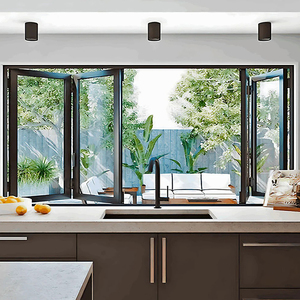
Aluminum Folding Window Commercial Tempered Glass Accordion Vertical Folding Modern Exterior Villa Bifold Window
View Specifications →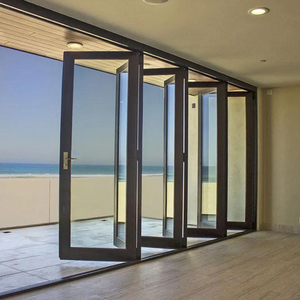
Heavy Duty Aluminum Alloy Folding Glass Door for Terrace Balcony Kitchen
View Specifications →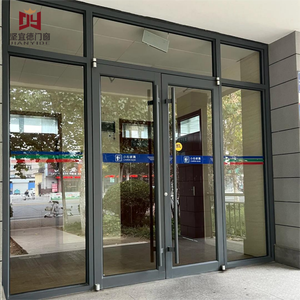
Heavy Duty Commercial Aluminum Entrance Door | KFC Style Windproof Double Glazed Shopfront Door with High Thermal Insulation
View Specifications →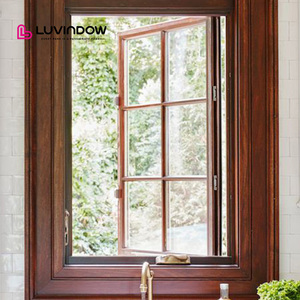
Luvindow Historic Home Wooden Windows For Replacement Low-E Glass Aluminum Clad Wood Tilt Turn Windows
View Specifications →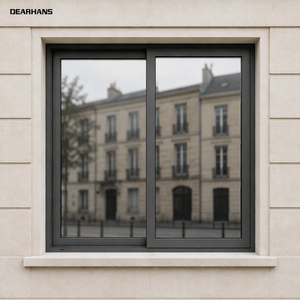
Modern Home Aluminium Sliding Window Low-E Insulated Glass Custom Made for Villa Patio Sunroom Exterior Remodel Project
View Specifications →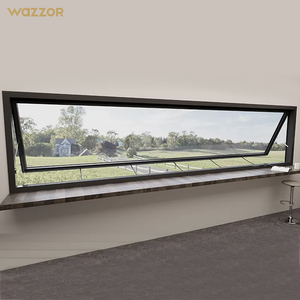
Wazzor Top-Out Awning Window Australia Standard Aluminum Glass Gas Strut Window Awning Type Building Material Awning Windows
View Specifications →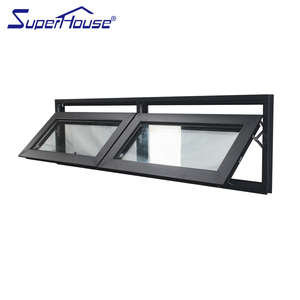
Superhouse China Sound Insulation Aluminium Roof Swing Window For Villa
View Specifications →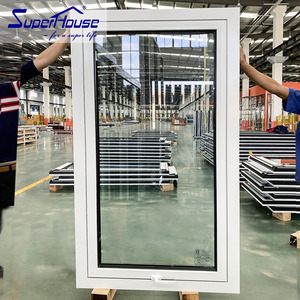
Superhouse Thermal Break Exterior AS2047 Certificated Aluminum Windows for Kitchen & Home Bar White Aluminum Awning Window
View Specifications →Technical Evaluation of CE Certified Single Hung Systems
Evaluating structural deflection under high wind loads, European EN 14351-1 testing regimes, and optimal thermal transmission thresholds in modern vertical sash designs.
In contemporary commercial and high-density residential architecture, single hung aluminum windows provide a balance of structural minimalism, vertical space-saving functionality, and dependable acoustic separation. Unlike standard sliding or side-hung profiles, a precision-machined single hung window incorporates a fixed upper lite paired with an operable bottom sash that slides vertically along specialized counter-balance hardware. Under the statutory mandates of the European Construction Products Regulation (CPR 305/2011) and the harmonized standard EN 14351-1, fenestration products distributed within the European Economic Area or imported into global markets referencing CE metrics must establish verifiable conformity across air permeability, watertightness, and wind resistance.
As a certified manufacturer and global exporter based out of our specialized 180,000㎡ industrial park in Foshan, Guangdong, our engineering division addresses thermal bridging through continuous polyamide PA66 GF25 thermal breaks. By mechanically crimping 25% glass-fiber reinforced polyamide bars between extruded 6063-T6 aluminum inner and outer profiles, thermal conductivity is reduced from over 200 W/(m·K) to composite framing U-values (Uf) as low as 1.6 to 2.1 W/(m²·K). This enables the complete fenestration system (Uw) to reliably achieve values below 1.4 W/(m²·K) when integrated with Argon-filled Low-E insulated glass units (IGUs).
| Test Parameter | European Standard (CE / EN) | Achieved DERCHI Benchmark | Engineering Significance |
|---|---|---|---|
| Air Permeability | EN 12207: Class 4 (600 Pa) | Class 4 (< 0.75 m³/h·m at 100 Pa) | Prevents draft leakage and conditioned air escape in HVAC environments. |
| Watertightness | EN 12208: Class 9A (600 Pa) | Class E1050 (Test Pressure: 1050 Pa) | Zero water penetration under extreme storm and driving monsoon conditions. |
| Wind Load Resistance | EN 12210: Class C5 (2000 Pa) | Class C5 / AS 2047 N6 Equivalent | Structural deflection less than L/300 under dynamic cyclonic pressures. |
| Acoustic Attenuation | EN ISO 717-1 (Rw + C; Ctr) | Rw = 38 dB to 44 dB | Multi-chamber EPDM co-extruded gaskets isolate high-frequency urban decibels. |
| Operating Forces | EN 13115: Class 2 | Class 2 (< 100 N manual lift effort) | Smooth single-hand opening and tilt-in latch operation for interior maintenance. |
Future Procurement & Technology Trends in Aluminium Fenestration
Cross-border developers, general contractors, and project architects are aligning procurement cycles with five transformative technological shifts.
1. Embodied Carbon & Closed-Loop Billet Sourcing
Driven by European ESG mandates and CBAM (Carbon Border Adjustment Mechanism), international procurement teams now demand low-carbon primary aluminum billets refined via renewable hydroelectric power. Recycled aluminum ratios (post-consumer scrap) exceeding 40% are transitioning from optional marketing metrics into mandatory tender prerequisites.
2. BIM Integration & Parametric CAD Shop Drawings
Tier-1 builders no longer procure from static product brochures. Procurement agreements mandate direct Revit/IFC parametric modeling integrations that sync with structural BIM models, enabling automatic clash detection with curtain-wall anchors, cast-in embeds, and precast concrete reveals prior to CNC aluminum extrusion cutting.
3. High-Security Multi-Point Cam Locking
Traditional single hung latches relied on simple gravity sweep locks. Modern specifications incorporate perimeter continuous multi-point engagement latches with concealed stainless-steel tie-bars. This upgrade bolsters PAS 24 burglar resistance while exerting uniform mechanical pull against perimeter santoprene gaskets for improved air tightness.
4. Warm-Edge Spacers & Vacuum Insulated Glass
To satisfy stringent nZEB (nearly Zero Energy Buildings) guidelines across Europe, traditional aluminum glass spacers are being phased out. Procurement schedules specify composite structural warm-edge spacers (such as Technoform or Swisspacer) and hybrid double-glazing units with tempered Vacuum Insulated Glass (VIG) delivering center-of-glass Ug values of 0.6 W/(m²·K).
5. Hurricane & Cyclonic Impact Validation
Coastal developments in Southeast Asia, the Pacific rim, and the Caribbean demand fenestration tested to both EN 12210 wind resistance and AS 2047 / ASTM E1886/E1996 large missile impact criteria. Structural silicone glazing (SSG) combined with PVB or SentryGlas (SGP) ionoplast interlayers ensures sashes remain intact after cyclic wind gusts exceed 4500 Pa.
6. Factory-Direct Containerized Crating
Supply chain fragility has eliminated loose ocean freight packaging. Enterprise importers require custom steel-reinforced, fumigated plywood stillages with desiccants and moisture-barrier vapor films. Direct-to-floor offloading reduces secondary handling breakages to less than 0.15% across full container loads (FCL).
Why Global Importers Partner with DERCHI
Recognized among the Top 10 fenestration systems manufacturers in China, Guangdong Dejiyoupin Doors and Windows Co., Ltd. delivers institutional scale, precision CNC engineering, and rigorous international certification.
180,000㎡ Mega Base
Our state-of-the-art Foshan production facility features automated 4-axis profile machining centers, robotic corner-crimping cells, and high-capacity insulated glass lamination lines.
Global Test Credentials
Products undergo independent destructive and performance testing to secure verified CE compliance, Australian AS 2047 N6 ratings, ISO 9001 quality audits, and UL fire ratings.
Dedicated CAD/BIM Support
Our multilingual architectural engineering team delivers free, site-specific CAD shop drawings, wind-load calculation analyses, and custom extrusion tooling designs before manufacturing begins.
Port-Adjacent Logistics
Positioned minutes from major South China maritime hubs (Guangzhou, Shenzhen, Foshan), we optimize ocean freight schedules with export-grade steel palletization and transit telemetry.
Frequently Asked Questions by Commercial Buyers
Clear answers on technical specifications, CE documentation, container consolidation, and custom architectural fabrication.
Plan Your Next Commercial Fenestration Schedule
Submit your architectural drawings, tender schedules, or custom dimensions to our Foshan engineering division for a complete technical proposal, compliance schedule, and competitive FOB/CIF quotation.