Featured Aluminum & Glazed Fenestration Assemblies
Precision-milled extrusions engineered with thermal breaks, multi-point locksets, and laminated insulation glass units to meet severe seismic, cyclonic, and acoustic criteria globally.
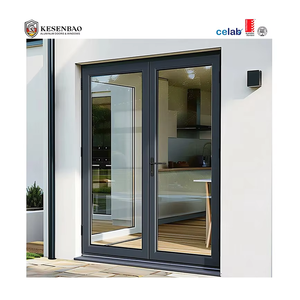
High-integrity multi-chamber alloy profile combined with EPDM weatherstripping and dual-pane tempered insulated units, rated up to 42 dB sound attenuation.
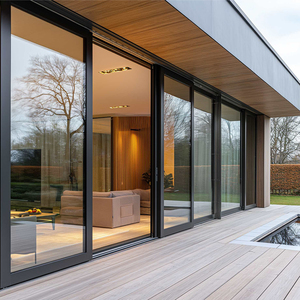
Concealed stainless-steel rollers with heavy-duty thermal break thresholds ensuring frictionless glide, air-tightness, and superior storm resistance.
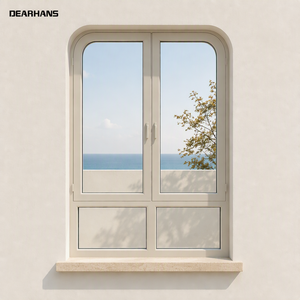
Custom-bent architectural profiles tailored for organic architectural facades, complex polygonal openings, and signature institutional landmarks.
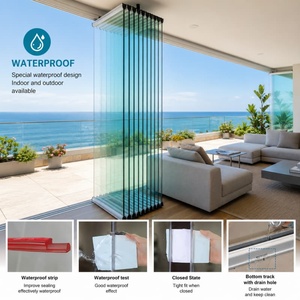
Panoramic multi-panel folding system engineered with top-hung structural tracks, enabling seamless integration between interior living spaces and open balconies.
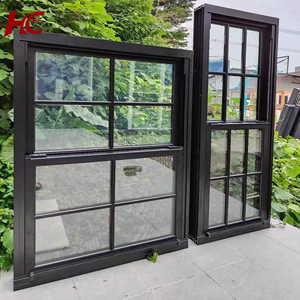
Vertical counter-balanced sash mechanisms paired with argon-filled Low-E coatings for optimum natural ventilation and thermal control in commercial buildings.
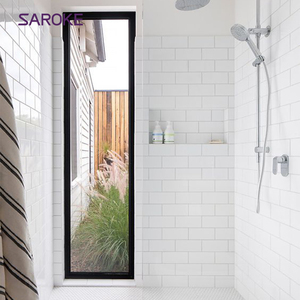
Ultra-low U-factor triple glazed assembly crafted with moisture-resistant seals, providing absolute privacy, zero condensation, and passive thermal envelope gains.
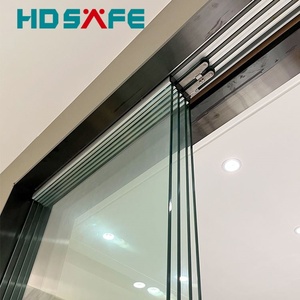
Minimalist interior acoustic glass partitioning with concealed hydraulic dampers and premium anodized aluminum ceiling track for flexible spatial configuration.
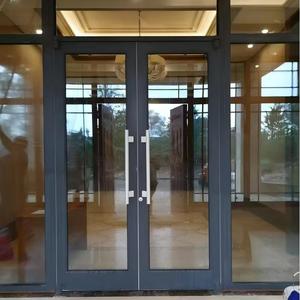
Anodized matte-black and powder-coated fluorocarbon exterior profile with obscure privacy glass, specifically curated for contemporary residential developments.
Engineered Performance Benchmarks (EN 14351-1 & AS 2047)
Independent factory lab testing metrics showing our CE-compliant structural and thermodynamic thresholds.
| Door System Series | Acoustic Rating (Rw) | Thermal Transmittance (U-Value) | Structural Wind Load | Air Infiltration / Water Tightness |
|---|---|---|---|---|
| Soundproof Casement (Hospital/Villa) | Rw 38 - 43 dB (ISO 10140-2) | 1.3 - 1.7 W/m²K (ISO 10077-1) | Class C5 (EN 12210) | Class 4 (600 Pa) / Class 9A (600 Pa) |
| Thermal-Break Patio Sliding Door | Rw 34 - 39 dB | 1.5 - 1.9 W/m²K | AS 2047 N6 (Up to 4500 Pa) | Class 3 (300 Pa) / Class 7A (300 Pa) |
| Heavy-Duty Folding Bi-Fold System | Rw 32 - 36 dB | 1.6 - 2.1 W/m²K | Class C4 (2000 Pa) | Class 3 (300 Pa) / Class 8A (450 Pa) |
| Low-E Fixed & Double-Hung System | Rw 36 - 40 dB | 1.1 - 1.4 W/m²K (Triple Glazed) | Class C5 (2400 Pa) | Class 4 (600 Pa) / Class E900 (900 Pa) |
Why Global General Contractors Choose DERCHI
Operating a 180,000㎡ precision manufacturing center in Foshan, Guangdong Dejiyoupin Doors and Windows Co., Ltd. integrates full-lifecycle architectural door solutions.
Rigorous CE & AS 2047 Compliance
Our doors undergo rigorous factory production control (FPC) meeting EU Regulation 305/2011 (CPR) standards, alongside the Australian AS 2047 cyclonic testing protocol (N6 rating), validating structural integrity during extreme air pressure differentials.
End-to-End Custom CAD/BIM Modeling
Eliminate on-site installation variance with our pre-production technical engineering. Our team drafts comprehensive structural shop drawings, dynamic thermal bridge analysis, and structural wind deflection computations prior to profile extrusion.
Seaside & Tropical Surface Treatments
Specifically engineered for severe maritime climates across Southeast Asia and coastal corridors. We apply architectural Qualicoat Class 2 powder coatings and fluorocarbon PVDF finishes that provide over 3,000 hours of neutral salt spray corrosion resistance.
Acoustic Insulation for Medical & Villa Assets
Utilizing high-density polyamide (PA66 GF25) thermal insulation strips and multi-chamber butyl seals, our acoustic door systems neutralize low-frequency noise (100–3150 Hz), achieving sound transmission class (STC) standards suitable for healthcare facilities.
Direct Export Port Logistics
Situated within the Greater Bay Area export network, our proximity to Guangzhou, Shenzhen, and Foshan ports permits reduced container transit periods, tailored sea-freight wooden pallet packaging, and rapid customs dispatch across Southeast Asia, Europe, and the Middle East.
Real-Time Engineering Support (GMT+8)
Direct communication with certified façade engineers who review your structural opening plans, door schedules, and hardware specifications. We deliver complete project bids and preliminary shop drawings within 24 hours.
Emerging Procurement Trends & Technological Evolution (2025–2030)
How the structural glass and aluminum door industry is pivoting toward net-zero embodied carbon, digital twins, and integrated automation.
1. Deep Decarbonization & Low-Carbon Recycled Billets
International environmental ratings such as LEED v4.1 and BREEAM are requiring fenestration suppliers to provide third-party verified Environmental Product Declarations (EPDs). The global door supply chain is rapidly transitioning from virgin primary aluminum toward secondary low-carbon billets smelted using renewable hydro-electric energy.
Procurement teams increasingly specify alloy matrices containing a minimum of 40% certified post-consumer scrap to curb upstream Scope 3 greenhouse gas emissions, establishing verifiable environmental compliance without compromising yield strength.
2. Triple-Pane Warm-Edge & Vacuum Glazing Integration
With stringently enforced building energy performance directives across the European Union (EPBD) and North American Energy Star guidelines, conventional dual-pane glazing is steadily being superseded by advanced triple-pane insulated glass units (IGUs) incorporating warm-edge composite spacers.
The implementation of thin-glass vacuum insulated glass (VIG) technology achieves overall center-of-glass U-values lower than 0.60 W/m²K, allowing oversized exterior entrance and folding glass doors to match the insulating performance of solid masonry walls.
3. Mechatronic Concealment & Smart IoT Actuation
The contemporary luxury residential and smart commercial office sectors demand seamless hardware integration. Heavy exposed hinges are replaced by concealed architectural pivots, self-calibrating hydraulic closers, and electromechanical motorized multipoint locking units.
These integrated actuation hardware systems integrate directly with building management systems (BMS), KNX, and biometric access controls, enabling remote status monitoring, fail-safe emergency egress, and scheduled air replenishment.
4. Slim-Sightline Structural Glazing Under Dynamic Loads
Architects continue to minimize visible frame sightlines to optimize transparent daylighting. This aesthetic imperative necessitates stronger 6063-T6 or 6005-T5 architectural aluminum alloys reinforced with internal structural steel or composite tie-rods.
Engineering departments now simulate localized gust dynamics via finite element structural analysis (FEA) to ensure that minimalist, ultra-slim profiles resist cyclical structural wind shear and maintain water tightness without frame torsion or deflection.
Frequently Asked Questions on Importing CE Aluminum & Glass Doors
Direct technical guidance on customs clearance, acoustic specification, hardware compatibility, and quality control.