Featured Architectural Envelope & Glazing Assemblies
Browse our precision-manufactured, CE-compliant, and weather-sealed opening solutions developed for luxury commercial developments, beachfront hospitality compounds, and modern urban estates.
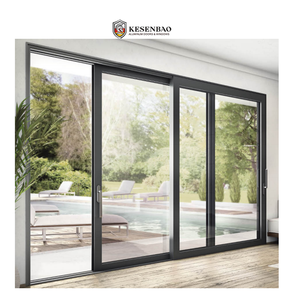
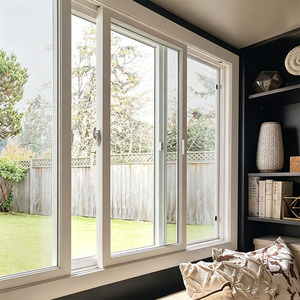
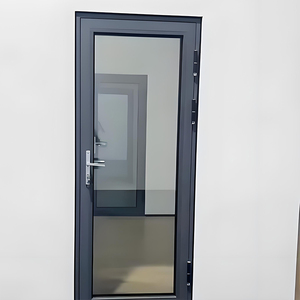
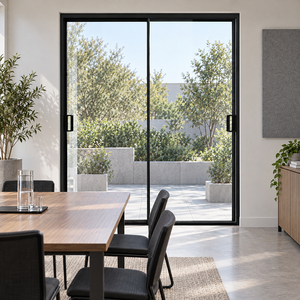
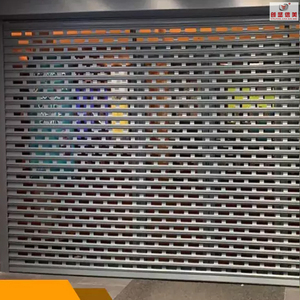
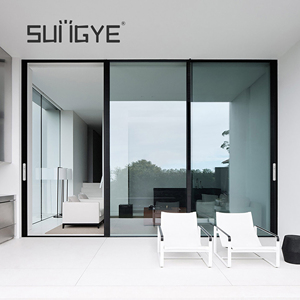
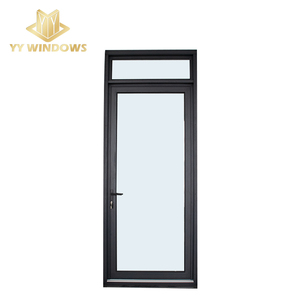
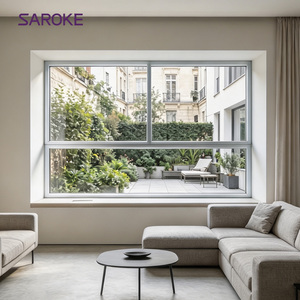
Engineering Excellence in Aluminum Clad Systems
Sourcing aluminum clad windows demands an intricate understanding of structural mechanics, bi-metallic expansion differentials, and air-water tightness metrics. As a premier Foshan manufacturing powerhouse, Guangdong Dejiyoupin Doors and Windows Co., Ltd. (DERCHI) engineers fenestration profiles that bridge high-performance European thermal benchmarks with harsh tropical resilience.
Stringent CE & EN 14351-1 Compliance
Every fenestration batch complies rigorously with CE Construction Products Regulation (CPR 305/2011) standards. Testing protocols verify wind resistance up to Class C5/B5, water tightness under severe driving rain up to Class E900, and controlled air permeability compliant with Class 4 specifications. Our assemblies ensure frictionless local regulatory compliance across EU member territories and demanding international codes.
Advanced Extruded Alloy & Cladding Science
We deploy high-tensile 6063-T6 or 6061-T6 architectural-grade extruded aluminum outer shells coupled with high-density polyamide (PA66 GF25) thermal barriers. By integrating an innovative snap-fit sliding clip mechanism between the external aluminum shield and the internal substrate, we eliminate mechanical strain induced by fluctuating thermal expansion coefficients between varying structural layers.
Factory Direct Supply & CAD Integration
Operating a modernized 180,000㎡ industrial complex with 600+ skilled personnel, we supply turnkey project solutions straight from Foshan. Our specialized engineering division supplies full BIM object modeling and comprehensive CAD shop drawings tailored to complex structural schedules, eliminating on-site adjustment errors and lowering international shipping overhead.
Global Procurement & Technological Trends
The commercial fenestration and facade sector is experiencing a paradigm shift driven by stringent carbon neutral mandates, extreme weather anomalies, and high-performance building standards.
Passivhaus Thermal Ratings
Global specifications require window U-values below 0.8 W/(m²·K). Procuring manufacturers now require warm-edge spacer integration, multi-chambered polyamide profiles, and argon/krypton filled low-emissivity triple glass packages to satisfy ultra-low energy parameters.
Multi-Hazard Weather Shielding
With typhoons intensifying across coastal corridors, demand for Australia AS 2047 and Florida hurricane-impact certifications is accelerating. Buyers prioritize thick PVB/SGP interlayer laminated glass sets and heavy-duty structural corner brackets.
Fluorocarbon & Marine-Grade Finishes
To resist hyper-saline maritime atmospheres, procurement mandates are pivoting heavily toward AAMA 2605 certified PVDF fluorocarbon coatings and marine-grade anodized profiles guaranteeing 20+ years of zero-chalking UV surface stability.
Smart Hardware & Concealed Automation
Next-generation facade systems specify concealed multipoint European groove hardware, motorized hidden actuators linked directly to centralized Building Management Systems (BMS), and biometric access sensors embedded inside architectural jambs.
Engineering Parameters: Standard Aluminum vs. DERCHI Aluminum Clad
Quantitative performance indices measured against standardized international testing metrics.
| Performance Vector | Conventional Aluminum Frames | DERCHI CE Certified Clad System | Compliance Standard |
|---|---|---|---|
| Thermal Insulation (Uw) | 2.8 - 3.5 W/(m²·K) | 0.79 - 1.2 W/(m²·K) | EN ISO 10077-1 / NFRC |
| Acoustic Attenuation | Rw 28 - 32 dB | Rw 42 - 48 dB (Acoustic Laminated) | EN ISO 717-1 |
| Wind Load Resistance | Class 2 (800 Pa) | Class C5/B5 (Up to 4500 Pa / AS 2047 N6) | EN 12210 / AS 2047 |
| Water Tightness | Class 4A (150 Pa) | Class E900 (900 Pa Driving Rain) | EN 12208 |
| Corrosion Resistance | Basic Mill/Powder Coating | PVDF Fluorocarbon (AAMA 2605 / 3000h Salt Spray) | Qualicoat Class 2 / ISO 9227 |
Frequently Asked Sourcing & Manufacturing Questions
Critical technical clarifications for developers, fenestration contractors, and facade consultants.
Why choose aluminum-clad systems over standard all-aluminum or uPVC profiles?
Aluminum-clad systems represent the zenith of hybrid engineering: they utilize an exterior shield of heavy-duty aluminum to resist direct UV degradation, torrential rains, and mechanical wear, coupled with an interior core or thermal subsystem that offers superior thermal insulation, sound dampening, and interior design versatility. Unlike uPVC, they do not sag under thermal stress, and they drastically outperform standard aluminum in preventing condensation and heat conduction.
What makes CE Certification essential for export-grade aluminum clad windows?
CE Certification confirms that the window system complies with harmonized standard EN 14351-1 under the Construction Products Regulation. It certifies that factory production control (FPC) and third-party laboratory evaluations have verified the assembly's mechanical strength, load-bearing safety devices, acoustic isolation, and specific hazardous substance thresholds, safeguarding project managers against costly site rejections.
How does the factory resolve differing thermal expansion between materials?
Aluminum exhibits a thermal expansion coefficient distinct from wood, composite cores, or rigid uPVC substrates. DERCHI employs proprietary floating composite clips rather than rigid through-screws. This allows the exterior aluminum shield to expand and contract smoothly across extreme diurnal temperature fluctuations without transferring shear stress, warping the profile, or breaking the perimeter silicone seals.
What hardware configurations are integrated for heavy architectural sashes?
For large-span fenestration units exceeding 150 kg per sash, we integrate heavy-duty concealed multipoint locking hardware sourced from German engineering leaders (such as Siegenia, Roto, or HOPPE) alongside custom stainless steel reinforced pivot hinges. These mechanisms ensure ultra-smooth, low-friction operation, anti-jemmy burglar resistance up to RC2/RC3 ratings, and micro-ventilation settings.
How are shipments secured to prevent micro-scratching and seal degradation?
All finished assemblies undergo four-stage export protection: first, non-residue peelable protective films on all extruded faces; second, bespoke high-density EPE foam edge caps; third, vacuum shrink-wrapped moisture vapor wraps; and finally, heat-treated fumigated plywood crates with integrated rubber vibration dampeners, certified for trans-oceanic container freight.
What is the standard production cycle for custom fenestration schedules?
Following CAD shop drawing sign-off and material specification confirmation, typical production cycles run between 25 and 35 calendar days for standard architectural projects. Specialized PVDF coatings, oversized laminated architectural curve glass, or bespoke die-extrusions run on tailored 40 to 45-day timelines with full photographic quality control checkpoints.
Request Your Project Engineering Quotation & BIM Package
Direct from our Foshan production facility. Submit your window schedule, structural requirements, or CAD files today to receive an engineered, code-compliant price matrix within 24 operational hours.