Featured Fenestration & Folding Door Assemblies
Tested rigorously under EN 14351-1, AS 2047, and NFRC parameters to deliver thermal insulation, fluid acoustic isolation, and architectural fluidity.
 Industrial Grade
 CE Certified
 Architectural
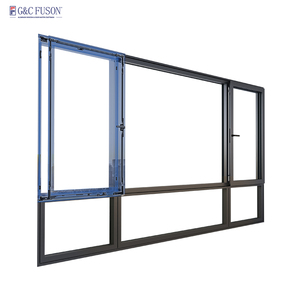 Multi-Axis Pivot
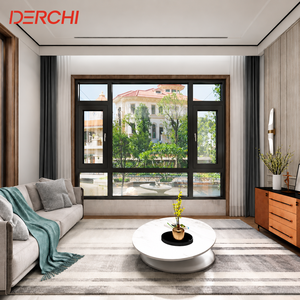 Passive Shield
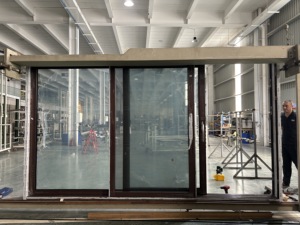 Acoustic Glazed
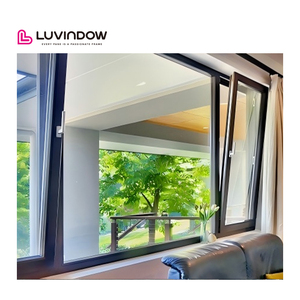
Engineering Excellence in CE Certified Aluminum Folding Door Assemblies
Modern architectural design requires structural transparency, energy-envelope efficiency, and seamless spatial indoor-outdoor transitions. As a specialized CE certified aluminum folding doors manufacturer, DERCHI engineers its bi-fold door systems to balance mechanical load capacity with slender sightlines. The European CE marking (conforming to EN 14351-1 standards) requires verified performance in water tightness, air permeability, wind load resistance, and overall thermal transmittance (Uw).
The core structural profile utilizes 6063-T6 or 6061-T6 architectural-grade aluminum alloy with wall thicknesses exceeding 2.0mm. To eliminate thermal bridging, we integrate multidirectional polyamide (PA66 GF25) thermal break barriers reinforced with 25% fiberglass. This thermal barrier prevents exterior conduction loss, reducing overall assembly U-values to under 1.6 W/(m²·K). When paired with warm-edge spacers and inert argon-gas filled double or triple Insulated Glass Units (IGU), these folding systems prevent internal condensation even in coastal tropical or sub-zero temperate zones.
Hardware architecture represents the critical operational differentiator in exterior folding systems. Rather than relying on simple surface tracks, DERCHI systems utilize bottom-weighted or top-hung stainless steel multi-wheel bogies riding inside extruded anodized channels. Each carriage supports leaf weights up to 150kg without sagging, operational binding, or premature seal fatigue. Dual EPDM rubber gaskets combined with continuous weatherpile brushes provide comprehensive water resistance, achieving hydrostatic pressure ratings exceeding 450 Pa.
Strategic Procurement Trends Shaping Global Door & Window Acquisition
Large-scale contractors, facade engineers, and developers are reevaluating procurement frameworks. Sourcing building envelopes requires balancing structural resilience against supply chain compliance and carbon footprint metrics.
Turnkey Envelope Integration
Global developers increasingly consolidate vendors, procuring bi-fold patio systems, automated pivot entries, tilt-turn windows, and structural curtain walls from single-source manufacturing facilities to eliminate dimensional tolerances and finish discrepancies.
Direct-to-Factory CAD/BIM Verification
Tier-1 builders avoid generic retail distributors, partnering directly with in-house factory technical teams capable of supplying shop drawings, structural wind load analysis, and BIM modeling compatible with Revit workflows prior to profile extrusion.
Rigorous Multi-Standard Compliance
With cross-border residential real estate development expanding across Europe, Southeast Asia, and the Middle East, purchasers favor manufacturers holding dual certifications: CE compliance alongside AS 2047, NFRC, and UL fire-rated credentials.
The Evolution of High-Performance Folding Systems: Future Outlook
As building codes enforce net-zero targets and micro-living spaces demand flexible zoning, folding fenestration is transitioning from simple sliding partitions to responsive, intelligent climate barriers.
Ultra-Narrow Architectural Sightlines
Next-generation systems use micro-profile widths under 45mm without compromising profile wall rigidity. By engineering structural steel reinforcement within aluminum extrusion cavities, panel heights can exceed 3.5 meters while maintaining wind deflection thresholds.
Flush Zero-Barrier Thresholds
Universal design demands zero-step transitions between indoor lounges and outdoor terraces. Advanced drainage tracks integrate concealed subsurface siphons, managing severe rainwater volume while maintaining water-tight integrity.
Automated & Building-Integrated Systems
Concealed electromechanical drive units allow multi-panel bi-fold systems to open or latch via building automation protocols, smart device apps, or reactive wind/rain sensors, advancing accessibility in high-end hospitality and luxury estates.
Why Institutional Buyers Partner with Guangdong Dejiyoupin
Ranked among China's Top 10 door and window brands, we manufacture systems engineered to outlast extreme weather, backed by industrial production scale.
180,000㎡ Mega Production Base
Located in Foshan, Guangdong—the world’s manufacturing center for architectural aluminum—our smart production infrastructure houses robotic CNC profile machining centers, powder-coating plants, and structural glass assembly lines operated by 600+ personnel.
Comprehensive Multi-National Certifications
Beyond our CE certification for the European market, DERCHI systems hold ISO 9001 quality compliance, Australian AS 2047 N6 cyclonic testing for wind-load rigidity, and UL fire-rated certifications, ensuring compliance with local municipal codes.
Bespoke Engineering & Shop Drawings
We do not rely on standard retail inventory. Every project is configured to order. Our engineering design team generates complimentary structural CAD shop drawings, glass wind-load analyses, and hardware scheduling to support project timelines.
Export Hub Proximity & Port Logistics
Adjacent to the Pearl River Delta maritime shipping hubs (Guangzhou and Shenzhen), we manage specialized sea-freight packing inside reinforced steel-frame or fumigated wooden crates, ensuring damage-free transit to Southeast Asia, Europe, and the Middle East.
Broad Fenestration Portfolio
In addition to aluminum folding doors, our factory produces cast aluminum luxury entrance doors, stainless steel high-security systems, panoramic sliding doors, European tilt-turn windows, and automatic garage systems, providing single-source supply chain efficiency.
Dedicated Project Management
Our sales engineering divisions operate across global time zones (GMT+8), providing prompt quoting, technical clarifications, pre-assembly live video inspections, and bilingual on-site installation documentation.
Frequently Asked Questions: Commercial Folding Door Procurement
Essential engineering and procurement considerations for architects, developers, and import managers sourcing aluminum folding assemblies.
Q1What specific criteria define a CE certified aluminum folding door system?
Under European standard EN 14351-1, CE certification requires systematic third-party laboratory verification of air permeability (Class 1-4), water tightness under static pressure (Class 1A-9A), resistance to wind loads (Class A1-C5), acoustic performance (Rw), and calculated thermal transmittance (U-value). A CE mark confirms factory production control (FPC) compliance and full traceability of all structural raw materials.
Q2Top-hung vs. bottom-rolling folding doors: Which system is preferable for large openings?
Bottom-rolling (or bottom-weighted) systems carry the primary structural glass weight along the lower track, directing downward force onto the structural floor slab. This makes them ideal for large residential and commercial spans (e.g., spans exceeding 6 meters) where the structural overhead lintel may experience minor deflection. Top-hung doors provide smoother gliding mechanisms and reduced threshold build-up, but require an engineered, non-deflecting structural steel lintel above the opening.
Q3How do thermal break folding doors perform in coastal or tropical climates?
Thermal breaks are as crucial in hot, humid climates as in freezing environments. By isolating the external profile from the internal extrusion via low-conductive polyamide strips, heat radiation is prevented from conducting into air-conditioned interior zones. This dramatically reduces HVAC power demand. Furthermore, DERCHI profiles utilize AkzoNobel fluorocarbon (PVDF) powder coating, providing salt-spray corrosion resistance against maritime sea-fog conditions.
Q4What is the maximum achievable panel width and height for custom folding systems?
While standard opening sizes range between 2.2m to 2.6m in height, DERCHI engineers bespoke systems accommodating panel heights up to 3.5m and widths up to 1.2m per sash, depending on site-specific wind pressure calculations. During pre-production engineering, our CAD team evaluates the glass dead load and moments of inertia (Ix) to determine appropriate profile reinforcements.
Q5What packaging standards prevent structural distortion and scratching during maritime transport?
Export fenestration products face dynamic forces and humidity fluctuations during ocean transit. DERCHI packs all folding doors, frame assemblies, and hardware through a four-tier protocol: protective surface PE film wrapping, corner shock-absorbers, closed-cell pearl foam lagging, and consolidation into fumigated wooden cases or reinforced steel transit racks designed for forklift handling.
Q6What lead times should be projected from architectural design sign-off to port loading?
Standard production cycles for custom-extruded, powder-coated, and glazed bi-fold systems average 25 to 35 business days from final CAD shop drawing sign-off and deposit receipt. Expedited schedules are available for time-sensitive commercial projects via scheduled capacity reserves within our Foshan facility.