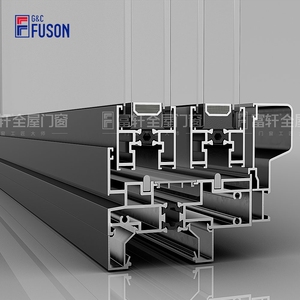
 Impact Rated
Engineered Product Lines
High-Performance Architectural Fenestration Systems
Manufactured under strict ISO 9001 and Australian AS2047 protocols, each fabricated assembly integrates structural 6063-T5/T6 alloy profiles, multi-point ROTO precision locking hardware, and multi-chamber thermal insulation.
Impact Rated
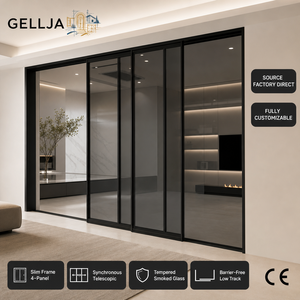 Patio System
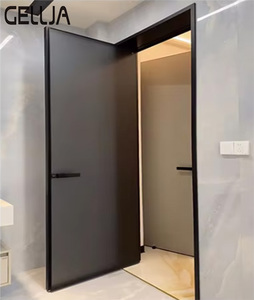 Interior / Hospitality
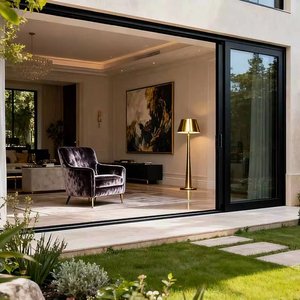 CSA Certified
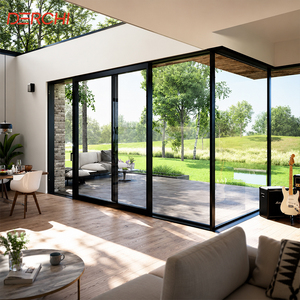 AS2047 Standard
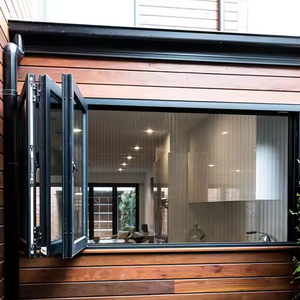 Multi-Panel Fold
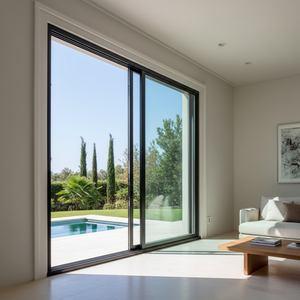 ROTO Hardware
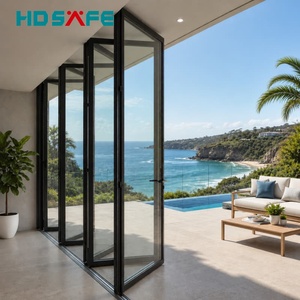 Panoramic Vista
180,000㎡
Smart Manufacturing Base
600+
Skilled Technical Personnel
100+
Patents & Global Certs
25+
Years Architectural Exporting
Manufacturing Rigor
Why Tier-1 Contractors and Global Developers Source From DERCHI
Operating out of Foshan, Guangdong—the core of China’s architectural metal cluster—DERCHI (Guangdong Dejiyoupin Doors and Windows Co., Ltd.) combines vertical extrusion control, computerized CNC zero-tolerance milling, and rigorous international quality certifications.
🏭
Integrated Manufacturing Ecosystem
Complete control over the supply chain: from 6060/6063 T5 and T6 billet sourcing, multi-cavity thermal break extrusion, and electrostatic powder coating to final robotic assembly lines.
📐
Full-Spectrum CAD/BIM Support
Every commercial or luxury residential project is validated by our in-house engineering desk, delivering free CAD shop drawings, wind load calculations, and cross-section details prior to CNC tooling.
🛡️
Internationally Tested & Certified
Validated against rigorous global mandates including Australian AS 2047 N6 deflection testing, American NFRC thermal standards, Canadian CSA ratings, and CE/ISO 9001 quality compliance.
🌐
Dedicated Global Project Desk
Engineered for high-efficiency shipping through South China seaports. Dedicated multi-language project consultants operating in real-time coordination with Southeast Asia, Australia, and Middle East time zones.
Procurement Intelligence
Strategic Sourcing Trends in Architectural Aluminium Fenestration
The international fenestration market is moving rapidly beyond generic framing toward climate-resilient, thermally broken systems configured with certified life-cycle engineering and verified carbon footprints.
🌪️
Severe Cyclone & Typhoon Defense
With intensified global windstorm patterns across the Asia-Pacific basin, coastal Florida, and the Caribbean, developers are mandating structural deflection ratings exceeding 3000 Pa to 4500 Pa.
- AS 2047 N6 ultimate wind pressure compliance
- SentryGlas (SGP) and multi-layer PVB laminated safety glazing
- Reinforced heavy-wall 2.0mm to 3.0mm primary structural profiles
⚡
Decarbonization & U-Value Envelopes
Stricter green building codes (LEED, BREEAM, BCA Green Mark) necessitate advanced thermal break barriers. Standard aluminum frames are no longer accepted on premium institutional builds.
- Polyamide PA66 GF25 multi-cavity thermal insulation strips
- Warm-edge spacer technology filled with 90%+ Argon gas
- Low-Emissivity (Low-E) multi-silver sputter coatings minimizing solar heat gain
🏗️
Full-Envelope Single-Source Procurement
Contractors actively eliminate multi-vendor interface risks by bundling entry systems, curtain walls, motorized lift-and-slide doors, and bifold units into unified manufacturer deliveries.
- Unified powder coat batches ensuring zero color variance
- Synchronized ocean freight packaging reducing site staging damage
- Unified hardware keys and integrated automation protocols
| System Classification | Thermal U-Value Range | Wind Load (Deflection) | Air / Water Tightness | Ideal Architectural Application |
|---|---|---|---|---|
| Non-Thermal Heavy-Duty Sliding | 3.2 – 4.5 W/m²·K | 1500 – 2500 Pa | 300 Pa / 450 Pa | Tropical coastal resorts, sheltered interior partitions, commercial screens |
| Multi-Chamber PA66 Thermal Break | 1.4 – 2.0 W/m²·K | 2500 – 4000 Pa | 450 Pa / 600 Pa | Energy Code Luxury villas, high-rise apartments, green commercial envelopes |
| Severe Hurricane Impact Laminated | 1.8 – 2.4 W/m²·K | 4500 – 6000 Pa (AS 2047 N6) | 700 Pa / 900 Pa | Typhoon Class Island beachfront properties, high-velocity coastal storm regions |
| Cast Aluminium Security Entry Pivot | 1.6 – 2.2 W/m²·K | 3000 – 4500 Pa | Multi-point EPDM sealing | Grand villa entrances, presidential residences, hotel entrance lobbies |
Innovation Horizon
The Future of Architectural Aluminium Systems: 2026–2030
Advanced material science and building automation are converting passive window and door openings into active, responsive structural assets.
📱
Smart IoT & Concealed Motorization
Large-format sliding panels exceeding 400kg per leaf are transitioning toward brushless motor drives hidden seamlessly within the architectural header profile. System parameters sync with building management systems (BMS), weather stations, and smart home biometrics (facial recognition and voice integration).
👁️
Ultra-Minimalist Sightlines
Architects demand panoramic, unobstructed ocean and skyline views. The industry is aggressively slimming interlock profiles down to 20mm–25mm while re-engineering structural load distribution to heavy-duty bottom tracks and stainless steel concealed carriage rollers.
♻️
Low-Carbon Recycled Alloys & Photovoltaics
Building codes in North America and the European Union are actively tracking Scope 3 embodied carbon. Future procurement prioritizes certified secondary recycled aluminium billets, non-toxic PVDF coatings, and transparent Building-Integrated Photovoltaic (BIPV) glass skins.
Contractor & Importer FAQ
Frequently Asked Questions on Importing From China
Comprehensive engineering clarity addressing compliance, structural tolerances, glass certification, and maritime logistical safety.
Q1: How does DERCHI ensure thermal break performance matches extreme climates?
We incorporate virgin polyamide PA66 reinforced with 25% glass fiber (PA66 GF25) extrusion barriers crimped between inner and outer alloy chambers. This prevents structural thermal transfer, eliminating interior condensation in high-humidity climates and maintaining thermal U-values below 1.6 W/m²·K in cold environments.
Q2: Are the glass assemblies certified for overseas municipal building inspections?
Yes. All insulated and tempered glass configurations are fabricated under strict optical and safety compliances, holding CE EN 1279 / EN 12150 (Europe), ANSI Z97.1 / ASTM C1048 (USA), and AS/NZS 2208 (Australia). Test reports and safety stamps are supplied with every bill of lading.
Q3: Can custom sizes and oversized pivot systems be manufactured without deflection issues?
Absolutely. For panels reaching up to 3.5m or 4.0m in height, our engineers perform finite element wind deflection calculations. We implement internal steel sub-reinforcements, thickened wall thicknesses (up to 3.0mm), and heavy-duty floor pivots capable of carrying up to 600kg dynamic loads with zero sag.
Q4: How are fragile glass panels and delicate powder finishes protected during ocean shipping?
Our export standard uses a 4-layer defense: primary scratch-resistant protective film on all metal profiles, dense EPE foam corner cushions, moisture-absorbing desiccants, and fumigated solid plywood crates or steel A-frame sea racks secured inside closed shipping containers.
Q5: How do you assist project developers with local installation?
We provide full project submittals including detailed CAD exploded installation views, sub-frame anchoring schedules, sealant joint diagrams, and comprehensive video installation documentation to ensure fast local trade labor execution with zero ambiguity.
Q6: What hardware brands are configured within your fabricated systems?
We partner directly with world-class fenestration hardware pioneers, including German ROTO, Siegenia, Hoppe, and high-performance certified in-house precision hardware, guaranteeing a minimum of 50,000 to 100,000 smooth operating cycles.
Request Complete Architectural Technical Catalogs & CAD Profiles
Contact our engineering sales department today for project take-offs, custom door schedules, wind-load analysis, and direct factory pricing.
Get Catalog