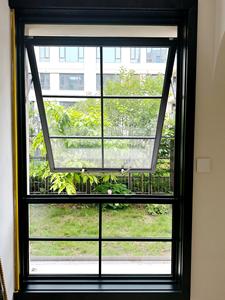
Architectural Portfolio
Engineered Aluminum & Structural Door Systems
Manufactured under strict ISO 9001 and CE frameworks. Each engineered opening system leverages aerospace-grade 6063-T6 aluminum alloys, precision thermal barriers, and heavy-duty architectural hardware.
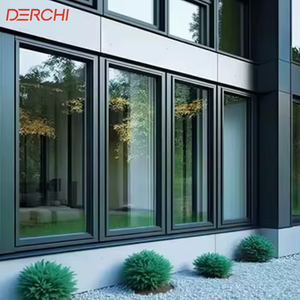
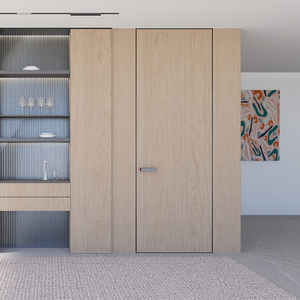
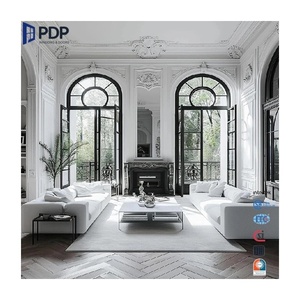
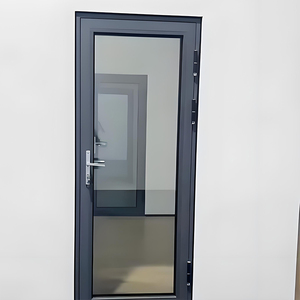
180,000㎡
Smart Production Base
25+
Years Engineering Expertise
AS 2047
N6 Cyclone Certified
100+
Patents & Global Standards
Procurement Whitepaper
Structural Demands & Evolution of Aluminum Stable Door Systems
Modern architectural envelope design has significantly redefined the function of equestrian, residential, and commercial barrier systems. Known traditionally as "Dutch doors" or split entrance portals, the contemporary aluminum stable door represents a sophisticated intersection of independent dual-leaf articulation, high-performance thermal insulation, and uncompromised perimeter security. When assessing reliable procurement pathways from Tier-1 Chinese manufacturers and industrial clusters like Foshan, engineering teams must evaluate critical structural tolerances, metallurgical compositions, thermal bridge mitigations, and microclimate durability profiles.
| Evaluation Parameter | Legacy Timber / Softwood | Standard Commercial Steel | DERCHI Heavy-Duty Extruded Aluminum |
|---|---|---|---|
| Dimensional Stability & Moisture Absorption | Poor; swells, delaminates, and rots under tropical rainfall or high-humidity exposure. | Moderate; non-absorbent but vulnerable to internal corrosion, red rust, and weld failure. | Exceptional; 0% moisture absorption, zero warping across -30°C to +80°C cycles. |
| Corrosion & Saline Resistance | Susceptible to fungal attack, wood-boring insects, and UV grain degradation. | Requires cyclic galvanization/repainting; salt-spray failure common under 500 hours. | Fluorocarbon / PVDF >30μm, tested past 3,000 hours neutral salt spray testing (ASTM B117). |
| Thermal Insulation Efficiency | Natural insulator, but loses R-value over time due to frame shrinkage and seal failure. | Very low; acts as direct thermal bridge causing excessive interior condensation. | Polyamide PA66 GF25 Thermal Breaks, lowering U-values down to ≤1.6 W/(m²·K). |
| Tensile Strength vs. Weight Ratio | Low-to-medium; prone to sagging over spans exceeding 1000mm width. | High strength, but extreme dead weight imposes excessive structural loads on hinges. | Optimized 6063-T6 / 6061-T6 Alloys; high yield strength with manageable self-weight. |
| Lifecycle Maintenance Overhead | High; recurring bi-annual sanding, oiling, sealing, and hardware recalibration. | Medium-to-High; regular anti-corrosive priming and acoustic gasket replacements. | Near Zero; maintenance-free anodized/fluorocarbon finishes with EPDM multi-chamber gaskets. |
Future Sourcing Trend: High-Performance Polyamide Thermal Separation
Global green building standards (LEED v4.1, BREEAM, and European nZEB mandates) are shifting commercial specifications away from uninsulated hollow extrusions toward multi-chamber polyamide thermal barriers (PA66 GF25 reinforced with 25% structural glass fiber).
Procurement directors increasingly demand low-emissivity double-glazed units (DGU) or laminated IGUs integrated directly into the upper articulating leaf to limit thermal transmission while maximizing natural ventilation.
Future Sourcing Trend: Multi-Point Security & Interlocking Seals
Legacy stable doors suffered from weak central intersection latches, creating vulnerabilities to forced entry and wind-driven water ingress. Next-generation specifications mandate continuous perimeter multi-point gear-driven locking hardware.
By engineering specialized rebated interlocks with vulcanized EPDM compression seals at the waist seam, modern dual-leaf assemblies achieve airtight, typhoon-resistant performance meeting Australian AS 2047 N6 standards.
Technology Trend: Surface Chemistry & Anti-Microbial Coatings
High-end hospitality, coastal equestrian resorts, and premium residential villas demand surface protection that exceeds basic powder coating. Fluorocarbon (PVDF) electrostatic coatings and super-durable architectural anodization ensure color fastness under extreme UV conditions.
In addition, specialized anti-microbial and non-toxic powder chemistries are being deployed across equestrian facilities to eliminate bio-accumulation and prevent toxic ingestion by animals.
DERCHI Industrial Infrastructure
Why Tier-1 Developers & Architects Partner with Our Foshan Facilities
Operating from Shishan Town, Nanhai District, Foshan—the world's foremost aluminum extrusions capital—Guangdong Dejiyoupin Doors and Windows Co., Ltd. (DERCHI) leads precision system manufacturing across Asia and global export corridors.

Fully Integrated Industrial Base
With an active manufacturing footprint spanning 180,000 square meters and an engineering workforce exceeding 600 skilled technicians, DERCHI delivers true single-source fabrication: from billet extrusion and thermal break crimping to multi-axis CNC machining, structural bonding, and finished assembly.
- Complete control over structural aluminum alloy metallurgy and tempering
- In-house CNC precision machining for seamless hardware pockets and corner crimping
- Direct geographic proximity to Pearl River Delta shipping ports for reduced freight lead times
- Dedicated English-speaking technical project management teams operating on GMT+8
Stringent Global Certifications
Products are rigorously tested to international benchmarks, holding CE, ISO 9001, Australian AS 2047, and UL fire ratings. This ensures effortless regional code compliance for commercial, residential, and institutional developments.
End-to-End CAD & BIM Engineering
We eliminate installation discrepancies before manufacturing starts. Our engineering team converts architectural schematics into detailed shop drawings, stress calculations, and hardware scheduling within 24 hours of project submission.
Overseas Packaging & Logistics
Every profile and door leaf is shielded with multi-layer protective film, custom honeycomb foam buffers, and reinforced seaworthy wooden crates designed for flat-rack or high-cube container transit, preventing maritime moisture corrosion.
Procurement Intelligence
Frequently Asked Questions: Aluminum Stable Door Sourcing
Expert answers addressing structural integration, hardware engineering, order lead times, and global delivery standards.
How do aluminum stable doors prevent water penetration at the mid-leaf articulation line?
Unlike primitive timber designs that rely on simple overlapping lips, our precision-engineered aluminum stable doors utilize an integrated stepped rebate profile paired with vulcanized EPDM bulb gaskets. When both the upper and lower leaves are closed, an internal interlocking channel directs wind-driven moisture down internal profile weep-holes rather than into the building interior. This system has been verified under positive wind pressures exceeding 3,000 Pa, satisfying severe storm and cyclone guidelines.
What aluminum extrusion specifications are recommended for heavy-duty commercial applications?
For high-traffic or structural installations, we mandate 6063-T6 or 6061-T6 architectural grade aluminum with a primary wall thickness between 2.0mm and 3.0mm. Corner joints must be assembled using hydraulic mechanical crimping brackets with two-component polyurethane corner adhesives (chemo-welding) rather than self-tapping screws. This prevents diagonal sag over extended duty cycles and accommodates heavy insulated glass units.
Can DERCHI accommodate integrated insect screens, louvers, or decorative grilles?
Yes. The top articulating leaf can be configured with an independent stainless steel 304/316 security mesh screen, operable aluminum louvers for controlled airflow, or internal Georgian colonial architectural bars embedded directly inside the sealed double-glazed airspace. Both motorized and manual screen systems can be color-matched to the main door frame.
What finishes are available to ensure resistance to coastal salt-spray and extreme UV radiation?
We offer three core surface finishing systems: (1) Fluorocarbon (PVDF) architectural coatings containing at least 70% Kynar 500 resin, delivering over 20 years of fade resistance under intense solar radiation; (2) Qualicoat Class 2 certified electrostatic powder coatings; and (3) Heavy-duty architectural anodization (20μm to 25μm layer thickness), ideal for coastal and marine environments requiring exceptional abrasion and salt resistance.
What is the typical production lead time and minimum order quantity (MOQ) for custom project schedules?
For standardized extrusion profiles and standard RAL architectural color palettes, our typical manufacturing lead time ranges from 25 to 35 calendar days following CAD shop drawing approval. For custom dies or bespoke architectural hardware configurations, lead times average 40 to 45 days. We support flexible project procurement, offering prototype validation and container-consolidated mixed orders for architects, developers, and commercial contractors.
Accelerate Your Commercial Architectural Sourcing
Connect directly with our engineering division in Foshan. Send your door schedule, rough opening sizes, and climatic requirements to receive fully rendered CAD shop drawings, acoustic assessments, and factory-direct quotation within 24 hours.