Commercial Grade
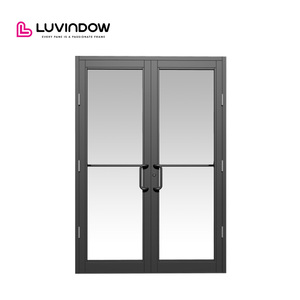
Explore our globally certified lineup of commercial swing systems, coastal thermal break bi-fold assemblies, high-load hurricane sliding profiles, and architectural hung fenestrations manufactured to ASTM, AS2047, and EN 14351-1 standards.
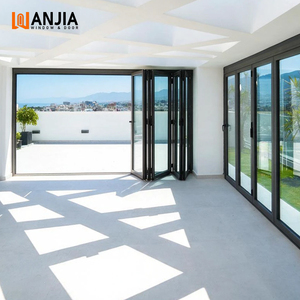
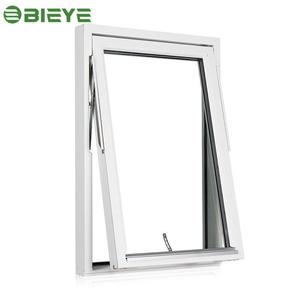
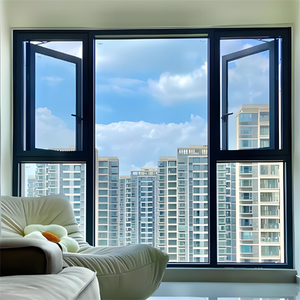
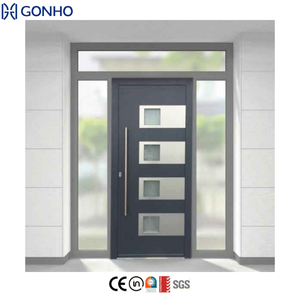
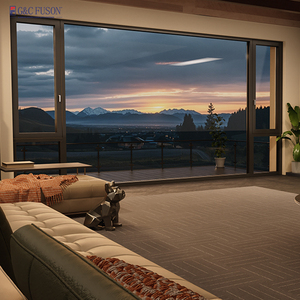
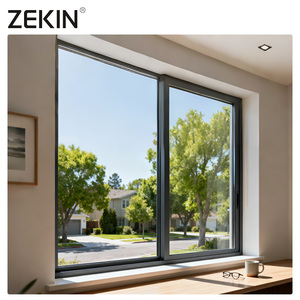
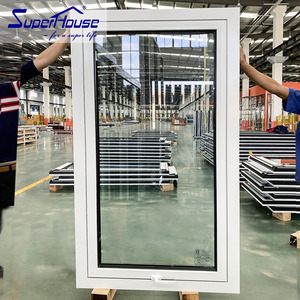
Understanding the metallurgical, thermal, and manufacturing benchmarks that separate tier-one Chinese fenestration exporters from low-grade commodity extruders.
The global procurement landscape for architectural fenestration has experienced a seismic paradigm shift. International builders, EPC general contractors, and facade consultants no longer treat aluminium standard doors as elementary entry barriers. Today, they are evaluated as integrated high-performance mechanical systems requiring rigorous structural engineering, validated thermal barriers, and verified acoustic isolation. Sourcing directly from premier Chinese manufacturing hubs like Foshan, Guangdong provides an exceptional balance of capital efficiency and advanced technical fabrication—provided the procurement process is built on clear technical parameters.
At the core of an export-grade aluminium door is the metallurgical integrity of the profile. Low-tier manufacturers frequently utilize secondary scrap alloys loaded with iron and silicon impurities, resulting in brittle structural profiles susceptible to stress fracturing under cyclic wind loads. In contrast, tier-one Chinese manufacturing plants exclusively utilize virgin billet 6063-T5 or 6063-T6 primary aluminium. This metallurgical discipline guarantees tensile strengths exceeding 205 MPa and yield strengths beyond 170 MPa, providing the foundation for slim sightlines capable of bearing massive multi-laminated glass panes.
Surface finishing is equally critical, especially for coastal installations in Southeast Asia, Australia, and the Middle East where high UV radiation and airborne chlorides rapidly degrade conventional paint. Reliable export manufacturers implement fluorocarbon (PVDF) electrostatic coatings complying with AAMA 2605 standards or class-leading architectural anodizing conforming to Qualanod specifications with minimal film thicknesses of 20 to 25 microns. This ensures colour retention, chalking resistance, and chemical stability over a thirty-year operating life.
Thermal bridging represents another critical technical frontier. Early generation aluminium doors were plagued by conductive heat loss, compromising overall building energy models. Modern standard doors solve this issue through precision-engineered polyamide PA66 GF25 thermal breaks. Reinforced with 25% continuous glass fibre, these insulating struts precisely match the coefficient of thermal expansion of the surrounding aluminium alloy (2.3 × 10⁻⁵ K⁻¹), preventing internal stress shear, profile warping, and air infiltration under severe temperature differentials between interior conditioned zones and external tropical heat or sub-zero winters.
Sealing systems separate elite fenestration from leaky assemblies. Premier Chinese exporters utilize continuous co-extruded cellular EPDM (Ethylene Propylene Diene Monomer) gaskets or thermoplastic elastomers (TPE) vulcanized at corners rather than cut-and-butted on site. These gaskets maintain high elastic recovery and UV resistance, securing air tightness below 0.5 m³/(h·m) under positive and negative pressures in compliance with ASTM E283.
Finally, hardware integration dictates long-term commercial functionality. By engineering custom extruded profiles with standard European groove (Euro-Groove) dimensions, our factory allows effortless pairing with world-renowned multi-point hardware systems, concealed hydraulic pivots, and smart mechatronic access control systems without requiring structural profile routing that degrades wind-load resistance.
| Performance Parameter | Commercial Grade Standard | DERCHI Engineering Specification | Testing Protocol / Compliance |
|---|---|---|---|
| Aluminium Alloy & Temper | Recycled / Secondary Alloy 6063 | Virgin Primary Billet 6063-T5 / 6063-T6 (Wall: 2.0-3.0mm) | GB/T 5237 / ASTM B221 |
| Thermal Barrier Core | PVC / Low-spec Polyurethane | Technoform Polyamide PA66 GF25 Structural Isolators | EN 14024 (Shear & Transverse Tensile) |
| Design Wind Load (Cyclic) | 1500 Pa to 2500 Pa | Up to 4500 - 6000 Pa (AS 2047 N6 Ultimate Wind Pressure) | AS/NZS 4420.2 / ASTM E330 |
| Water Penetration Resistance | 150 Pa - 300 Pa Static | 700 Pa Static & Dynamic Cyclic Resistance | ASTM E331 / AS/NZS 4420.5 |
| Acoustic Isolation Rating | Rw 25 - 28 dB | Rw / STC 38 - 45 dB (Dual & Triple Laminated IGU) | ISO 10140-2 / ASTM E90 |
| Surface Treatment Resilience | Standard Polyester Powder (AAMA 2603) | Qualicoat Class 2 Superdurable Powder / AAMA 2605 PVDF (3-Coat) | AAMA 2605 / ISO 2810 |
How sustainability mandates, industrial digital fabrication, and structural minimalism are reshaping B2B import requirements across commercial and residential sectors.
Global ESG regulations, including the European Union's Carbon Border Adjustment Mechanism (CBAM) and US LEED v4.1 certification, are transforming sourcing criteria. Project stakeholders increasingly demand Environmental Product Declarations (EPDs). Forward-thinking Chinese factories are adopting hydro-powered aluminium smelting and certified post-consumer circular alloys, slashing embodied carbon from 16 kg CO₂e/kg to under 4.0 kg CO₂e/kg aluminium while preserving peak mechanical performance.
Modern architectural syntax emphasizes spatial transparency and visual continuity. Standard door profiles are evolving from traditional heavy perimeter framing toward structural minimalist sashes with visible widths below 25mm. In luxury residential and flagship hospitality projects, monumental pivot doors spanning up to 4.5 meters in height and 2.5 meters in width are dominating specifications, requiring reinforced internal carbon-steel spine stabilizers and balanced bottom pivots.
The convergence of building management systems (BMS) with high-security door assemblies represents the future of smart infrastructure. Global importers are prioritizing doors with factory-routed internal conduits that support magnetic linear drives, biometric recognition handles, concealed solenoid multi-point latches, and integrated air pressure sensors for motorized building ventilation and smoke evacuation cycles.
Backed by 25+ years of fenestration engineering, our integrated Foshan manufacturing base delivers end-to-end precision fabrication, global project certifications, and zero-defect quality control.
Operating across modern manufacturing parks in Foshan, Guangdong with automated CNC double-mitre sawing stations, automated thermal break crimping lines, and robotic corner-crimping assemblies.
Products hold verified CE, ISO 9001, AS 2047 (Australian N6 cyclonic rating), and UL fire-rated certifications, ensuring immediate compliance with global architectural inspection codes.
Our dedicated technical engineering department translates architectural door schedules into full structural shop drawings, anchor load calculations, and BIM models within 48 hours.
Direct access to South China container ports (Nansha, Yantian, Shekou). Every shipment features protective film laminations, corner impact guards, moisture desiccant bags, and solid export crate crating.
Essential technical and commercial clarity to accelerate project specifications, mitigate supply chain risk, and ensure seamless installation on site.
Compliance is achieved by selecting high-yield primary alloy profiles (6063-T6) with minimum nominal wall thicknesses of 2.0 mm to 3.0 mm at critical structural flanges, paired with internal steel reinforcement sleeves at mullion joints. For cyclone-prone regions like Northern Australia (AS 2047 N6 / Region C & D) and coastal Florida (TAS 201/202/203), doors incorporate multi-point deadlocking gear, heavy-duty security hinges, and PVB/SGP structural laminated insulated glazing tested to resist cyclic wind pressures up to 6000 Pa.
Typical lead times range between 25 and 35 calendar days from final approval of CAD shop drawings and hardware finishes. Complex projects requiring custom profile die extrusions, specialized PVDF colour matching, or ballistic glass require an additional 10 to 14 days for die fabrication and testing. We maintain buffer stocks of standard architectural profiles to accelerate rapid prototyping for mock-up visual inspections.
Galvanic corrosion occurs when dissimilar metals (such as standard carbon steel fasteners in direct contact with aluminium) are exposed to an electrolyte like rain or coastal sea salt. Our engineering protocol mandates that all assembly screws, brackets, and structural anchors be constructed from 304 or 316-grade austenitic stainless steel. Furthermore, synthetic dielectric isolation gaskets and nylon isolating bushings are installed between hardware faceplates and aluminium extrusions.
Every container leaves our facility accompanied by an exhaustive QA dossier. This includes Raw Material Mill Test Certificates (MTC) verifying alloy chemical composition, tensile and yield strength, Qualicoat coating thickness reports, glass batch safety certificates (SGCC, AS/NZS 2208, CE EN 12150), water tightness and air infiltration factory test records, and comprehensive installation manuals with fastener torque specifications.
Partner with Guangdong Dejiyoupin (DERCHI) to access direct manufacturing pricing, verified engineering compliance, and rapid CAD shop drawing services for your upcoming residential or commercial developments.
Get Catalog