High-Performance Door & Integrated Window Series
Engineered for structural resilience, cyclonic wind-load protection, and thermal efficiency across commercial and high-end residential architectures.
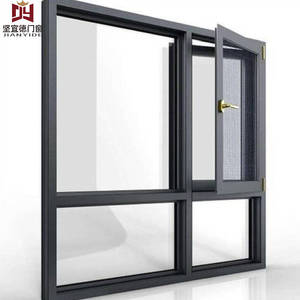
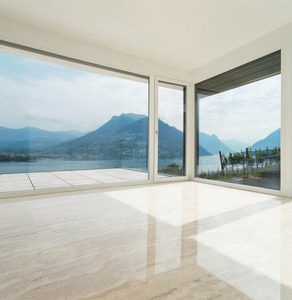
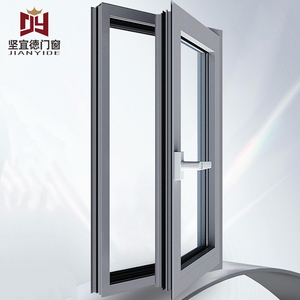
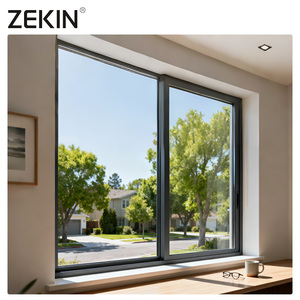
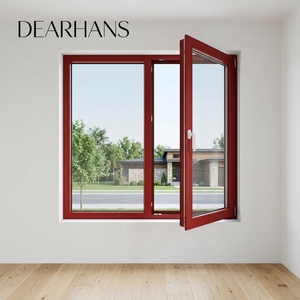
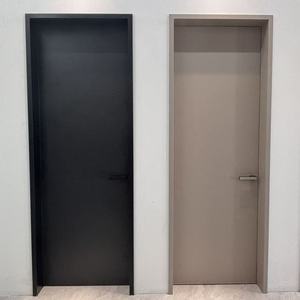
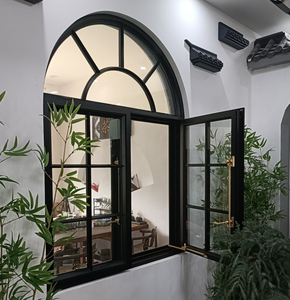
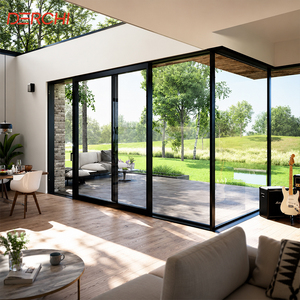
Why International Developers Partner with DERCHI
Operating out of Foshan, Guangdong—the global epicenter of high-end aluminum extrusion—Guangdong Dejiyoupin Doors and Windows Co., Ltd. combines heavy automated fabrication with uncompromising architectural tolerances.
Stringent Multi-Standard Certifications
Unlike regional suppliers adhering only to localized guidelines, our fenestration envelopes satisfy international benchmarking: Australian AS 2047 (N6 Cyclonic Test), European CE, ISO 9001, and UL fire ratings. This verifiable compliance prevents on-site regulatory delays across Southeast Asia, North America, and Oceania.
Full-Spectrum Architectural Customization
Every building project exhibits unique dead-load, wind-load, and spatial metrics. Our in-house technical engineering studio translates architectural elevations into complete CAD shop drawings, glass thermal calculations, and BIM schedules before aluminum bill-of-materials release, eliminating costly field rework.
Advanced Extrusion & Surface Metallurgy
Utilizing high-purity 6063-T5 and 6063-T6 virgin primary aluminum profiles, our door and window units feature multi-cavity thermal break designs. Finished with AkzoNobel powder coatings, PPG fluorocarbon (PVDF), or marine-grade anodizing exceeding 25 microns, profiles remain impervious to salt spray, UV degradation, and tropical humidity.
Integrated Pearl River Logistics Efficiency
Situated adjacent to major export shipping channels—Shenzhen, Guangzhou, and Hong Kong—our export division ensures turnkey containerization. From fully enclosed fumigated wooden crates to multi-layer protective film against sea freight condensation, we service the Pacific Rim, Middle East, and worldwide on rapid lead times.
Dedicated Project Engineering & GMT+8 Dispatch
International commercial procurement demands responsive coordination. Our bilingual project engineers work on real-time project tracking, providing continuous shop-floor video inspection, hardware cycle-testing verification, and responsive support matching our clients' active commercial hours.
Single-Source Interior & Exterior Integration
Minimize procurement friction by coordinating your exterior high-performance hurricane doors and storefront window configurations alongside cast aluminum entry gates, minimalist pivot doors, and acoustic interior sets under a single manufacturer warranty and unified structural delivery timeline.
Engineering Insights: Aluminum Fenestration Dynamics
A technical overview of modern aluminum profile chemistry, structural barrier optimization, and performance testing for Tier-1 engineering consultants.
1. The Shift to Polyamide Thermal Break Profiles
In modern architectural design, energy conservation is no longer an optional aesthetic enhancement; it is dictated by rigorous energy codes (such as ASHRAE 90.1, IECC, and European Part L). Conventional single-chamber hollow aluminum extrusions possess exceptionally high thermal conductivity ($k \approx 160\text{ W/m}\cdot\text{K}$), turning frames into immediate conduits for condensation and interior heat gain.
Our engineered systems deploy PA66 GF25 (25% glass-fiber reinforced polyamide) mechanical thermal struts. These struts isolate interior and exterior aluminum sections, dropping thermal bridge values substantially. When coupled with argon-filled, warm-edge low-emissivity double or triple insulated glass units (IGUs), our assemblies easily achieve overall $U$-values down to 1.4–1.8 W/m²·K, ensuring zero interior sweat even in extreme high-humidity monsoon environments.
| Profile Architecture | Typical U-Value (W/m²·K) | Sound Insulation (Rw / STC) | Wind Load Capacity | Recommended Deployment |
|---|---|---|---|---|
| Standard Non-Thermal Extrusion | 4.5 – 5.8 | 25 – 28 dB | Moderate (1200–1800 Pa) | Internal Partitions / Low Humidity Warehouses |
| Single-Chamber Thermal Break | 2.2 – 2.8 | 32 – 36 dB | High (2500–3500 Pa) | Standard Residential / Suburban Villas |
| Multi-Cavity PA66 Thermal Envelope | 1.4 – 1.9 | 38 – 44 dB | Extreme Cyclonic (4500–6000 Pa) | Coastal Towers / Luxury Villas / Harsh Climates |
| Aluminum-Wood Composite System | 1.2 – 1.6 | 40 – 46 dB | High (3000–4000 Pa) | High-End Acoustic Residences / Cold Zones |
2. Structural Integrity: Wind Load Deflection & Typhoon Resistance
In coastal zones across the Philippines, the South China Sea, the Gulf Coast, and the Caribbean, fenestration products must withstand severe cyclonic wind pressures and windborne debris. A fenestration system is only as durable as its weakest structural component. Deflection calculations ($L/175$ or $L/250$ under serviceability loads) require rigid structural mullions with enhanced moments of inertia ($I_x, I_y$).
DERCHI systems are verified under the Australian Standard AS 2047 up to Serviceability Design Wind Pressure (ULS > 4500 Pa, N6 rating). By incorporating heavy wall thicknesses ranging from 2.0mm to 3.0mm on major load-bearing surfaces, reinforced corner keys, and continuous EPDM multi-lip perimeter gaskets, our door-with-window configurations prevent water penetration up to a 600–700 Pa static water head test, preventing envelope breach during severe typhoons.
Future Procurement Trends in Architectural Fenestration
Emerging structural requirements, aesthetic demands, and technological advancements dictating global procurement strategies over the next five years.
Ultra-Narrow Sightlines & Panorama
Modern luxury developments prioritize minimal visible framing and expansive glass-to-frame ratios. Advanced structural silicones and structural glazing profiles allow 20mm–25mm interlockers capable of carrying sliding panel weights up to 500kg smoothly on heavy-duty stainless-steel runners.
Integrated Biometric Access & Smart Actuation
Architects are actively phasing out mechanical latch-only systems. Commercial and high-end residential bids now demand motorized multi-point locks, concealed European sash drives, facial recognition integration, and automated building management system (BMS) connectivity built directly into the frame profile.
Embodied Carbon Transparency & Circularity
Global procurement teams prioritize ESG metrics. Utilizing hydro-electric smelted primary aluminum and secondary post-industrial recycled billets substantially curtails the lifecycle carbon footprint of fenestration modules, qualifying developments for LEED and BREEAM certifications.
Procurement & Technical Specifications FAQ
Clear engineering explanations addressing common questions from commercial developers, general contractors, and overseas importing buyers.