China Best Aluminum Impact Windows Factory & Exporters
Engineered Structural Fenestration Systems: Certified Miami-Dade NOA, AS 2047 Cyclone Resistant & Thermally Broken Architectural Glass Façades for Global High-Risk Wind-Borne Debris Regions
Verified Performance
Architectural Grade Hurricane Impact Windows & Entry Systems
Direct factory-engineeredfenestrations crafted from primary 6063-T6 virgin aluminum billet, integrated with PVB/SGP laminated glazing envelopes and multi-point concealed German hardware.
Navigating ASTM E1886/E1996 Large Missile Impact testing, structural cyclic pressure dissipation, and metallurgical durability in hyper-saline coastal atmospheres.
The Physics of Missile Impact Resistance
Standard architectural fenestration collapses catastrophically when subjected to hurricane-force projectile debris. In contrast, heavy-duty impact systems utilize a composite multi-layer sandwich structure.
Our engineering couples fully tempered external glass panes with high-elongation polyvinyl butyral (PVB) or ionoplast SentryGlas (SGP) interlayers. When debris strikes at 50 ft/s (approx. 55 km/h, simulating 2x4 lumber impacts under ASTM E1996), the outer glass fractures safely, while the viscoelastic polymer interlayer absorbs and dissipates the kinetic energy without perforation.
Aluminum's inherent high thermal conductivity has historically posed thermal bridges. We eliminate this issue using high-load Polyamide 66 reinforced with 25% glass fiber (PA66 GF25) thermal isolating barriers crimped mechanically into dual extruded structural chambers.
Constructed entirely from pure 6063-T6 aluminum alloys with minimum tensile yield strength exceeding 205 MPa and wall thicknesses between 2.0mm to 3.2mm, our assemblies resist deflection under extreme dynamic wind loads up to 5,000 Pa.
Complies with AAMA 501.1 dynamic water and air infiltration thresholds.
Marine-Grade Architectural Surface Coatings
Fenestrations installed in coastal regions (such as Florida, the Caribbean, Southeast Asia, and the Gulf Coast) face intense atmospheric corrosion from airborne chlorides and UV degradation.
We deploy factory-automated fluoropolymer electrostatic PVDF coatings (polyvinylidene fluoride meeting AAMA 2605 criteria) and marine-spec 25-micron class anodization. This finish endures over 4,000 hours of continuous ASTM B117 salt spray exposure without micro-blistering, chalking, or color fading.
Resistant to coastal humidity, acid rain, and extreme solar irradiance.
Global Procurement Outlook
Future Procurement Trends in Impact Windows (2025–2030)
How international developers, architects, and importers are aligning building envelope procurement with rising climate risks, code stringency, and automated manufacturing.
1. Convergence of HVHZ & Passive House Standards
Historically, hurricane windows sacrificed thermal efficiency for structural bulk. Today's commercial and residential tenders in North America and Australasia mandate triple-glazed units featuring warm-edge spacers, double argon gas cavities, and triple-silver Low-E glass that achieve U-values < 0.18 BTU/hr·ft²·°F alongside Category 5 hurricane impact resistance.
2. Digital BIM Integration & Shop Drawing Automation
Global procurement cycles have compressed. Tier-1 developers require parametric Revit/BIM models during the RFI stage. Our technical team outputs high-precision shop drawings with complete wind-load anchor calculations, mullion moment of inertia evaluations, and water-sill flashing details within 48 hours of project plan submission.
3. Ultra-Slim Profiles with Massive Panoramic Spans
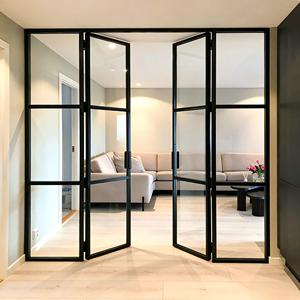
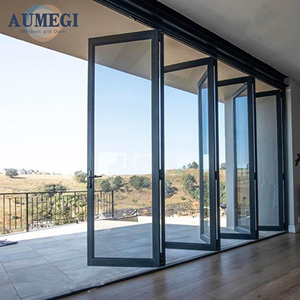
Driven by contemporary luxury villa architecture, the demand for floor-to-ceiling panoramic sliding and pivot systems has surged. Fabricating panels exceeding 3.5 meters in height requires structural structural silicones (Dow Corning 983) and high-modulus internal steel reinforcers that maintain slim sightlines without sacrificing wind load deflection standards.
Ranked among China's Top 10 fenestration and door manufacturing enterprises, DERCHI operates an integrated 180,000㎡ industrial manufacturing park in Nanhai District, Foshan. We control every stage of fabrication from aluminum extrusion precision CNC milling to robotized insulated glass unit assembly.
End-to-End In-House R&D: Dedicated structural engineering teams handling CAD/BIM shop drawings, custom extrusion die creation, and strict quality assurance.
Rigorous Global Testing: Products tested and verified to Australian AS 2047 N6 cyclone criteria, CE, ISO 9001, and North American AAMA/WDMA impact benchmarks.
Export-Ready Logistics Hub: Located within 2 hours of major South China container ports (Guangzhou, Shenzhen, Hong Kong) with sea-worthy fumigated steel rack packing.
Dedicated Engineering Project Support: GMT+8 time-zone responsive sales engineers providing real-time technical coordination from tenders to installation manuals.
Crucial engineering, certification, and logistical considerations addressed directly by our fenestration manufacturing specialists.
What is the technical difference between PVB and SentryGlas (SGP) interlayers in impact windows?
While standard Polyvinyl Butyral (PVB) offers dependable elasticity and impact resistance for moderate tropical storms, SentryGlas (SGP) ionoplast interlayers are five times tougher and up to 100 times stiffer than conventional PVB. SGP maintains structural rigidity even after both glass panes shatter, preventing the glass unit from sagging out of the aluminum frame. For high-velocity hurricane zones (HVHZ) or massive spans exceeding 3 meters, SGP is the mandatory structural specification.
How does DERCHI ensure local code compliance in Australia, the US, and the Caribbean?
We customize system structural sections according to regional building codes. For the Australasian market, our doors and windows comply with AS 2047 and AS 1288, having achieved the maximum AS 2047 N6 wind pressure rating. For North American and Caribbean projects, we fabricate units adhering to ASTM E1886/E1996 large missile test protocols and Florida Building Code (FBC) criteria, providing comprehensive laboratory test reports, structural engineer calculations, and factory assembly auditing documents.
What quality control measures prevent glass seal failures and condensation?
All insulated glass units (IGUs) are produced in clean-room environments utilizing automated dual-seal edge technology: polyisobutylene (PIB) as the primary vapor barrier, combined with structural silicone or polysulfide secondary seals. We fill chambers with 90%+ Argon gas and integrate molecular sieve 3A desiccant inside warm-edge spacers, verified through high-vacuum dew point testing (-60°C without fogging).
How are heavy architectural glass windows packaged to prevent damage during ocean transit?
Export shipments utilize customized heavy-duty steel A-frames and fully enclosed fumigated plywood crates (ISPM 15 certified). Each glass panel is protected with anti-scratch PE film, cork spacing pads, and impact-absorbing corner bumpers. The crates are mechanically anchored directly to the shipping container floor using heavy-duty ratchet tie-downs to neutralize dynamic harmonic vibrations across rough ocean journeys.
Can you manufacture custom-sized openings and oversized pivot configurations?
Yes, 100% of our production is engineered to order. We routinely engineer massive architectural pivot doors up to 2.2 meters in width and 4.5 meters in height using German Dorma or FritsJurgens concealed pivot hinges rated for 500KG+ operating weights, engineered alongside integrated perimeter magnetic multi-point locking rods for weather-tight sealing.
Accelerate Your Project with Certified Impact Engineering
Submit your architectural elevations, door schedules, or structural wind-load requirements. Our Foshan factory engineering center delivers complete CAD/BIM shop drawings, wind-load evaluations, and direct factory pricing within 24 to 48 hours.