AS2047 / NFRC
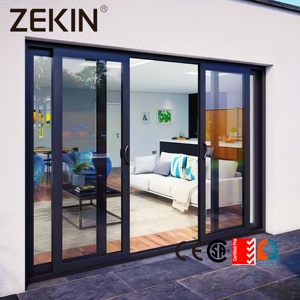
Explore our export-certified portfolio manufactured under stringent ISO 9001 quality matrices, combining fire boundary integrity, ballistic thermal-break profiles, acoustic silencing, and precision CNC finishes.
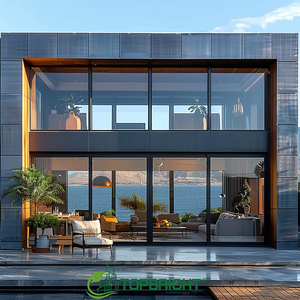
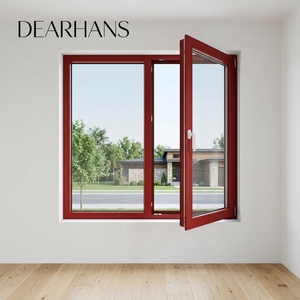
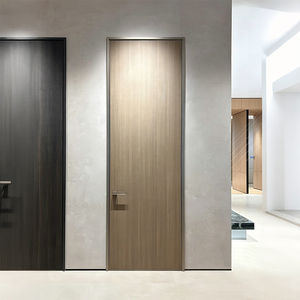
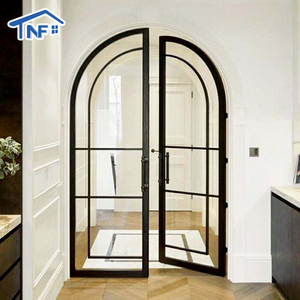
Specifying internal aluminum fire doors demands an understanding of metallurgy under high temperatures, compartmental integrity, thermal transfer mitigation, and composite matrix stabilization.
Standard architectural aluminum softens at 500°C to 650°C. Our fire-barrier assemblies leverage reinforced 6063-T6 multi-cavity extrusions lined with chemical cooling agents. Internal chambers house engineered inorganic calcium silicate ceramic liners and fire-activated hydrous materials that release bound water vapor during thermal spikes, maintaining web temperatures below critical yield boundaries for 30 to 120 minutes under BS EN 1634-1 testing protocols.
Fire barriers fail primarily when flames or smoke breach edge clearances. We mill precision perimeter rebates directly into the aluminum stiles and jamb profiles to seat co-extruded sodium-silicate intumescent seals. Upon heat exposure above 180°C, these seals expand up to 25 times their initial thickness, exerting high dynamic pressure against frame edges, hermetically arresting lethal carbon monoxide and high-pressure superheated gases.
Modern luxury and institutional interiors demand lightweight maneuverability paired with unyielding impact strength. We integrate expanded aluminum honeycomb substrates laminated between dual composite refractory mineral boards. Bound with solvent-free, non-toxic fire resins, this composition prevents core slumping, delamination, and excessive deflection under uneven unilateral thermal pressure typical of fully ignited rooms.
| Performance Characteristic | Architectural Grade Aluminum Fire Door | Traditional Hollow Metal Steel Door | Solid Timber Core Fire Door |
|---|---|---|---|
| Corrosion & Humidity Resistance | Exceptional (No warping, zero oxidation in tropical climates) | Moderate (Prone to rust at bottom channels) | Poor (High risk of fungal rot, thermal expansion) |
| Structural Weight / Hinge Load | 24–32 kg/m² (Optimal balance, low hardware fatigue) | 48–65 kg/m² (Heavy, requires frequent hinge realignment) | 38–50 kg/m² (Heavy, subject to core sag over time) |
| Aesthetic Customization & Finishes | PVDF, Fluorocarbon, Wood Grain Sublimation, Anodized | Primed or Single-Tone Industrial Powder Coat | Natural Veneers, Polyurethane Lacquer |
| Life Cycle Maintenance Overhead | Virtually Zero (Anodized surface exceeds 25-year rating) | Moderate (Periodic re-painting, rust abatement) | High (Veneer peeling, expansion clearance adjustments) |
| Acoustic Attenuation (Rw / STC) | Rw 38 dB – 44 dB (Multi-chamber core dampening) | Rw 32 dB – 36 dB (Resonant reverberation in cavities) | Rw 30 dB – 35 dB (Dependent on perimeter seal tightness) |
Stay ahead of evolving fire safety codes, environmental mandates, and building lifecycle management requirements with these structural industry shifts.
Developers are eliminating bulky, institutional steel bulkheads. The market increasingly demands ultra-slim aluminum profiles that integrate seamlessly with interior curtain walls while maintaining EI30 to EI90 integrity. Advanced fire-rated ceramic and gel-filled glass technologies allow panoramic transparency in fire corridors without sacrificing thermal insulation thresholds.
International infrastructure developers and green commercial towers (LEED Platinum, BREEAM Outstanding) enforce Environmental Product Declarations (EPDs). Sourcing aluminum internal fire doors from suppliers utilizing clean hydro-powered smelting and high post-consumer recycled billet reduces embodied carbon by up to 65% across structural fit-outs.
Fire boundaries are increasingly connected to centralized Building Automation Systems (BAS). Emerging specifications mandate factory-milled concealed conduits, electromagnetic failsafe catches, and intelligent drop seals that integrate with smart keyless entry protocols, ensuring automatic compartmentalization within seconds of smoke detector triggers.
Recognized among the Top 10 premium door and window manufacturing leaders in China, Guangdong Dejiyoupin Doors and Windows Co., Ltd. (DERCHI) operates from a premier 180,000㎡ industrial park in Shishan Town, Nanhai District, Foshan. Our vertically integrated fabrication covers alloy extrusion finishing, precision robotic CNC milling, automated honeycomb assembly, and certified quality-gate testing.
By engineering systems tailored to withstand structural wind loads, high monsoon humidity, and seismic forces across Asia, Oceania, and the Middle East, our technical team turns architectural design intent into code-compliant installations.

Essential guidance addressing compliance certification, custom manufacturing, logistics, and on-site integration for foreign engineering buyers.
Aluminum internal fire doors do not rely solely on raw metal profiles. Our systems utilize patented multi-cavity thermally broken extrusions packed with hydrated gypsum, calcium silicate, or proprietary chemical cooling cores. Under severe fire exposure, these compounds release non-combustible water crystals that hold profile surface temperatures far below the 660°C metallurgical failure point for the certified testing duration (EI30 to EI120).
DERCHI doors are engineered to satisfy BS EN 1634-1 (Europe / Middle East), UL 10B/10C fire tests (North America), AS 1530.4 (Australia/NZ), and ISO 834 fire endurance curves. Before dispatching container consignments, third-party laboratory reports and internal QC calibration sheets verifying temperature rise limits and pressure tightness are supplied for local civil defense approvals.
Yes. We integrate multi-layer ceramic intumescent fire glass panels (e.g., Pyrostop/Robax class) flush-mounted into slimline internal aluminum frames. For aesthetics, profiles can be treated with PVDF fluorocarbon coatings, hard-anodized textural finishes, or heat-cured realistic wood-grain sublimation veneers that meet Class 0 / Class A flame spread ratings without off-gassing toxic fumes.
Standard custom project orders require 25 to 35 working days post-CAD drawing approval. Each finished panel and frame system undergoes protective PE wrapping, edge impact bumpers, corrugated cardboard cladding, and reinforced export-grade fumigated plywood crating engineered for heavy multi-modal sea freight handling through Guangzhou, Shenzhen, or Foshan ports.