China Top Aluminium Jali For Door Manufacturers & Suppliers
Architectural-grade security mesh, decorative privacy grilles, and heavy-duty insect screening systems engineered for harsh marine, tropical, and modern residential developments.
Precision Engineering Showcase
Featured Aluminium Jali & Door Barrier Systems
Explore high-tensile aluminium safety jali grilles, thermal break doors, multi-slide insect barrier assemblies, and hurricane-rated entrance fixtures designed for export projects.
Engineering Integrity of Modern Aluminium Jali Systems for Doors
In modern architectural engineering, the traditional concept of the "jali"—historically an ornate stone or timber perforated screen—has undergone a radical material evolution. For high-end residential villas, commercial high-rises, and coastal infrastructure projects throughout Southeast Asia, the Middle East, and worldwide, aluminium jali for doors represents the pinnacle intersection of physical perimeter security, ventilation optimization, pest exclusion, and aesthetic distinction. As leading manufacturers based in Foshan, China, DERCHI (Guangdong Dejiyoupin Doors and Windows Co., Ltd.) engineers extruded aluminium 6063-T5/T6 alloy and precision-expanded aluminium grill systems that overcome the rapid degradation associated with conventional iron gates and untreated wood.
Specifying aluminium jali door assemblies requires an understanding of metal alloy chemistry, mechanical shear stress, and surface finish longevity. Unlike ferrous metals, aluminium naturally generates a passivating oxide film that prevents rust under continuous atmospheric exposure. However, when deploying door jali grilles in marine or coastal zones prone to high chloride ion saturation—such as resort villas in the Philippines, high-rises in Singapore, or waterfront developments in Dubai—standard mill finishes are insufficient. Our manufacturing protocol utilizes electrostatic architectural fluorocarbon (PVDF) coatings and marine-grade multi-stage powder finishes exceeding AAMA 2604/2605 requirements, safeguarding the structural integrity of every jali profile against saline corrosion, chemical abrasion, and ultraviolet degradation.
Technical Specification Metric: Structural aluminium jali designs configured with CNC laser-cut 4mm to 8mm alloy panels or integrated high-tensile 304/316 marine stainless steel woven mesh provide knife-shear resistance exceeding Australian AS 5039/5041 security thresholds while maintaining up to 58% unobstructed convective airflow, preserving natural indoor ventilation while guaranteeing perimeter defense.
Beyond passive aesthetics, an integrated door jali system performs critical architectural duties. It functions simultaneously as an energy conservation medium and a burglar deterrent. By deflecting direct solar radiation before it strikes the primary thermal-break double-glazed barrier, exterior-mounted aluminium jali profiles substantially lower HVAC solar heat gain coefficients (SHGC). Simultaneously, the integration of heavy-duty multi-point security locks, anti-jemmy flange configurations, and tamper-proof concealed hinge pins ensures that the jali screen delivers uncompromising forced-entry resistance without transforming the property into a visual fortress.
Market Forecast & Architecture Roadmap
Future Procurement & Manufacturing Trends in Aluminium Door Jali
How evolving building standards, climate volatility, and automated manufacturing are redefining specifications for global developers and architectural contractors.
Parametric CNC & Laser Lattice Customization
Generic diamond-mesh jalis are rapidly yielding to parametric computational architecture. Commercial developers now mandate custom CNC-machined geometric lattice panels that echo local vernacular motifs while maintaining uniform structural load dispersal and verified wind ratings.
Multi-Layer Barrier Convergence
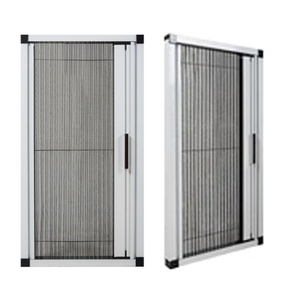
Procurement is shifting toward single-frame unified assemblies. Instead of sourcing separate screen doors, storm shutters, and entry systems, contractors favor composite doors that embed architectural aluminium jali grilles, micro-fine insect screening, and insulated security cores within one monolithic reveal.
Circular Metallurgy & Low-Carbon Extrusions
With international carbon border adjustment mechanisms and stringent green building certifications (LEED v4, BREEAM), B2B importers prioritize suppliers utilizing hydro-powered recycled billet extrusions with certified EPD documentation, reducing the cradle-to-gate embodied carbon footprint of the metal frame.
Typhoon & Extreme Wind Load Certification
Coastal developments across the Western Pacific and Caribbean necessitate rigorous impact verification. Jali frames must undergo dynamic cyclical pressure testing and debris cannon tests, satisfying rigorous cyclone benchmarks such as the Australian AS 2047 N6 standard and Florida Building Code (FBC) criteria.
Smart Access & Motorized Jali Actuation
Modern architectural entryways demand seamless interaction with building automation protocols (BMS). Next-generation jali panels feature concealed electromagnetic locking pins, biometric authentication integration, and automated retractable sliding motors controllable via central smart living platforms.
Direct-From-Factory Shop BIM Modeling
The procurement lifecycle has compressed dramatically. Engineering consultancies no longer accept generic PDF brochures. B2B buyers mandate fabrication-level Revit BIM objects and millimeter-precise 3D parametric CAD models to prevent dimensional collisions before industrial tooling commences.
Enterprise Reliability
Guangdong Dejiyoupin: Global Leader in Door Engineering
Operating as a Top 10 brand in China’s door and window manufacturing epicenter, Guangdong Dejiyoupin Doors and Windows Co., Ltd. (DERCHI) represents over 25 years of engineering mastery across a dedicated 180,000㎡ industrial complex in Foshan.
Vertically Integrated Manufacturing: Direct in-house control spanning billet casting, precision extrusion, CNC milling, automatic surface coating, assembly, and testing.
Independent Test Verifications: Full compliance with CE, ISO 9001, AS 2047 N6 wind resistance, and UL fire-rating certifications.
GMT+8 Real-Time Technical Service: Direct engineering consultation, complimentary parametric CAD shop drawings, and turnkey door schedule detailing.
Strategic South China Port Access: Streamlined maritime container dispatch from Foshan, Guangzhou, and Shenzhen ports to minimize export lead times.
Targeted Application Solutions for Project Specifiers
Selecting the ideal door jali and entrance barrier configuration based on regional environmental stress and structural occupancy.
Luxury Coastal & Tropical Villas
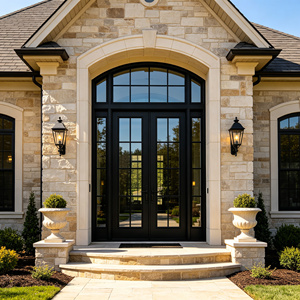
Recommended Solution: Cast Aluminium Relief Jali with Double Thermal-Break Frame & PVDF Finish. Withstands monsoon salinity without micro-pitting, offering privacy, wind deflection, and majestic entrance aesthetics.
High-Rise Condominiums & Penthouses
Recommended Solution: Slim Frame Aluminium Glass Entry Door coupled with High-Tensile Marine Mesh Jali. Meets strict high-altitude positive/negative wind load deflection criteria while permitting unhindered panoramic views.
High-Traffic Commercial & Resorts
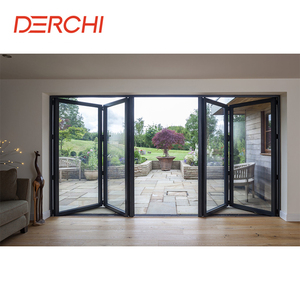
Recommended Solution: Heavy-Duty Multi-Slide Automated Aluminium Jali Door with 316 Stainless Mesh Core. Delivers seamless access, effortless motorized operation, and insect exclusion across expansive lobby openings.
Procurement Knowledge Base
Frequently Asked Questions for Global Importers
Critical commercial, engineering, and logistics considerations when sourcing aluminium door jalis from China manufacturers.
What makes 6063-T5 aluminium superior to cast iron or mild steel for door jali applications?
Aluminium alloy 6063-T5 provides an exceptional strength-to-weight ratio, structural ductility, and innate corrosion resistance. Cast iron and mild steel are highly susceptible to oxidation (rusting), which causes surface blistering, dimensional distortion, and structural failure in humid or coastal climates. Furthermore, aluminium extrusions allow for intricate geometric hollow sections, internal reinforcement chambers, and snap-in security channels that cannot be achieved with brittle cast metals or fabricated mild steel, all while substantially reducing dead-load strain on door hinges and structural lintels.
How do you ensure galvanic corrosion does not occur between the aluminium door frame and the jali mesh?
Galvanic corrosion occurs when dissimilar metals (such as an aluminium frame and stainless steel security mesh) come into direct physical contact in the presence of an electrolyte like coastal humidity. At DERCHI, our engineering protocols strictly mandate the use of continuous Santoprene, EPDM, or specialized PVC dielectric isolation barriers. The mesh is securely held in an isolated internal retention channel utilizing high-modulus, non-conductive bonding adhesives and structural clamping wedges, completely eliminating metallic contact and extending service lifespans past 25 years.
Can DERCHI accommodate custom architectural lattice designs, opening dimensions, and hardware configurations?
Yes, 100% of our production is made-to-order. Our in-house technical engineering team reviews your project's architectural door schedules and structural rough openings. We produce comprehensive, complimentary 2D CAD fabrication drawings and 3D BIM models detailing extrusion profiles, transom integrations, wall anchorage interfaces, and hardware accommodations (including multi-point hook locks, smart digital locks, and heavy-duty floor spring pivots) prior to extrusion cutting and CNC milling.
What international testing certifications apply to DERCHI aluminium doors and screening systems?
Our products undergo comprehensive independent accredited laboratory evaluations. DERCHI assemblies comply with CE standards, ISO 9001 quality management, Australian AS 2047 (achieving N6 ratings for cyclic wind load, water penetration resistance, and air infiltration), AS 5039 security screen standards, and optional UL fire-rated specifications. These accredited performance certificates enable project managers and general contractors to pass municipal building inspections and regulatory sign-offs seamlessly.
What are the standard lead times, export packaging methods, and shipping procedures for overseas orders?
Standard custom production cycles range from 25 to 35 days depending on profile finish (powder coating vs. fluorocarbon PVDF) and architectural complexity. For international container transit, doors and jali assemblies are wrapped in multi-layer protective PE film, shielded with impact-absorbing foam corner protectors, and sealed inside fumigation-free, ISPM-15 compliant plywood crates with internal desiccants. Located in Foshan within the Pearl River Delta freight corridor, we dispatch containers promptly via Guangzhou, Shenzhen, or Hong Kong ports.
Transform Your Building Entrance With China's Top Door Manufacturer
Submit your door schedules, project opening dimensions, or bespoke aesthetic drawings. Our senior facade engineers will deliver verified shop drawings, structural wind-load estimates, and factory-direct wholesale pricing within 24 hours.