Precision-Engineered Architectural Window & Door Configurations
Engineered by Guangdong Dejiyoupin Doors and Windows Co., Ltd. (DERCHI) to withstand tropical typhoons, extreme thermal differentials, and coastal humidity.
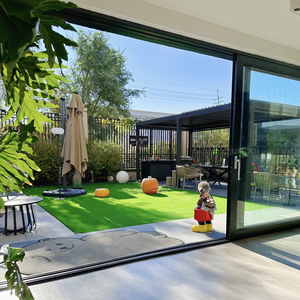
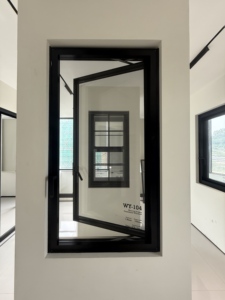
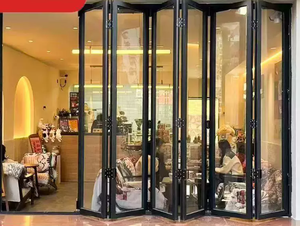
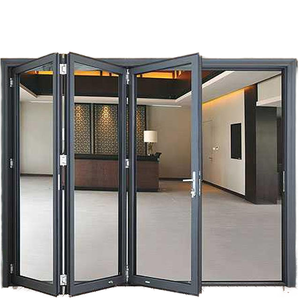
Architectural Whitepaper: The Evolution of Aluminium Jali Screens for Windows
The traditional "Jali"—historically sculpted from stone, terracotta, or seasoned timber in South Asian and Middle Eastern architecture—has undergone a radical material transformation. Driven by stringent global energy codes, urban high-rise wind loads, and extreme weather resilience mandates, international developers, facade consultants, and master builders are pivoting entirely to precision-engineered Aluminium Jali for Window systems. In tropical and sub-tropical regions spanning Southeast Asia, India, and the Gulf Cooperation Council (GCC), timber jalis rot and swell under monsoon rainfall, while mild steel jalis oxidize rapidly in chloride-dense coastal atmospheres.
Modern Chinese window manufacturing hubs—centered in Foshan, Guangdong—have industrialized the production of heavy-gauge, architectural aluminium jalis. Today's high-performance window jalis serve a dual engineering objective: they act as passive bioclimatic solar shading devices (reducing solar heat gain coefficients [SHGC] while maintaining natural cross-ventilation) and provide multi-point burglar-resistant physical envelopes without impeding sightlines. Through multi-axis CNC laser cutting, specialized aluminium profile punching, and automated TIG/laser seamless robotic welding, high-end Chinese factories produce custom lattice geometry matching intricate parametric CAD/BIM specifications with sub-millimeter tolerances.
| Technical Parameter | Primary Specification Standard | Engineering Significance in Fenestration |
|---|---|---|
| Base Alloy & Temper | Alloy 6063-T5 / 6063-T6 or 3003-H14 (Sheet) | High tensile strength (≥ 160 MPa), superior anodizing/coating reception, resistance to wind deflection. |
| Screen Thickness | 1.8 mm to 3.5 mm (Extruded/Sheet) | Prevents acoustic vibration humming under high wind vortex shedding; resists impact loads. |
| Surface Passivation | PVDF / Fluorocarbon (AAMA 2605 compliant, 3-coat) | Resists 4,000+ hours of continuous salt-spray testing without chalking, peeling, or fading in marine settings. |
| Window Integration | Sub-frame recessed, hinged sash, or sliding jali track | Allows internal glass cleaning access while maintaining airtight/watertight integrity of primary casement/sliding system. |
| Acoustic Isolation | EPDM co-extruded dampening gaskets | Decouples metal-to-metal contact, preventing rattle and structure-borne sound during gale-force wind turbulence. |
Top Sourcing Trends in Architectural Window Jalis
How global contractors and institutional developers are shifting their procurement frameworks for high-volume custom lattice fenestration.
1. Monolithic Fenestration Integration
Bifurcated procurement—buying windows from one supplier and external metal jalis from a local metal fabricator—is declining. Commercial buyers demand fully integrated, dual-track or triple-track extruded systems where the aluminium jali, fly screen mesh, thermal break frame, and double/triple insulated glass unit (IGU) are engineered, tested, and pre-fitted in a single factory.
2. Parametric CNC Perforation via Direct CAD-to-Machine
Architects no longer accept basic repeating square or diamond grids. Specifiers are uploading complex geometric tessellations and parametric perforations that vary aperture density across the window facade to match dynamic solar path simulations. Sourcing mandates direct connection between architect Revit/IFC models and factory fiber laser cutting beds.
3. Strict Structural and Anti-Burglary Verification
With urbanization driving higher density, window jalis must provide certified physical security without evoking prison-like aesthetic motifs. Global procurement contracts now routinely require testing documentation for dynamic impact resistance, EN 1627 RC2/RC3 security classification, and cyclical wind load deflection tests up to Australian AS 2047 N6 criteria.
Next-Generation Development Trends in Aluminium Window Jalis
Emerging manufacturing innovations shaping facade aesthetics, thermal performance, and smart building integration.
Motorized & Smart-Actuated Jalis
Integration of low-profile, concealed 24V DC brushless tubular motors within the window head jamb. Aluminium jalis can slide or pivot automatically based on ambient lux meters, solar heat sensors, and smart home protocols (KNX/Zigbee), maximizing winter solar gain and mitigating peak summer cooling loads.
Ultra-Durable Superdurable Powder & PVDF
Transitions away from standard architectural powder coatings to Qualicoat Class 2 superdurable polyesters and 70% Kynar 500 PVDF resins. These advanced polymer systems resist harsh UV degradation, high surface temperatures, and airborne maritime salinity along coastal villa developments.
Thermal Break Decoupling
Historically, external decorative jalis acted as thermal conductors, bridging outdoor heat directly into the structural window jamb. Modern DERCHI window profiles utilize polyamide (PA66 GF25) thermal barriers to completely isolate exterior jali mounting brackets from interior living zones, eliminating thermal bridge condensation.
Multi-Functional Mesh Fusion
Laminating architectural CNC laser-cut aluminium jali panels with marine-grade 316 stainless steel high-tensile security micro-mesh. This configuration delivers threefold performance: artistic geometric shadowing, absolute insect and mosquito prevention, and severe impact knife-shear resistance.
Why Top Developers Partner with DERCHI (Guangdong Dejiyoupin)
Recognized as one of the Top 10 premium door and window manufacturing enterprises in China, Guangdong Dejiyoupin Doors and Windows Co., Ltd. (DERCHI) operates from an expansive 180,000㎡ industrial manufacturing park in Foshan, Guangdong. With over 25 years of engineering mastery, a dedicated technical workforce exceeding 600 specialists, and more than 100 invention, utility model, and design patents, DERCHI is the recognized authority in custom fenestration engineering for international projects.
When sourcing aluminium window jali systems, bespoke entrance gates, pivot doors, and high-performance curtain walls, institutional buyers encounter substantial manufacturing bottlenecks with small-scale workshops: insufficient CNC bed sizes, warping caused by laser heat distortion, uneven coating coverage within intricate jali crevices, and lack of third-party compliance documentation. DERCHI systematically eliminates these operational risks:
Industrial Scalability
Equipped with ultra-large format fiber laser cutting centers, automated 5-axis profile machining stations, and continuous vertical electrostatic powder coating lines capable of processing massive commercial batches with exact shade consistency.
Free Engineering CAD & BIM
Our in-house facade structural engineering team provides complete opening-by-opening shop drawings, structural wind deflection calculations, water-management sill details, and BIM models free of charge prior to cutting raw billets.
International Certifications
Our systems carry authentic, laboratory-verified certifications including Australian AS 2047 (tested to N6 cyclonic wind loads), CE (EN 14351-1), ISO 9001 quality management, NFRC energy ratings, and UL fire-rated certifications.
Strategically situated in Foshan in the heart of the Pearl River Delta, DERCHI offers seamless maritime export logistics via Guangzhou, Shenzhen, and Hong Kong ports. Our GMT+8 dedicated project coordination team delivers rapid quotation response times and real-time project management tailored to developers, general contractors, and distributors across Southeast Asia, South Asia, the Middle East, Australia, and the Americas.
Frequently Asked Questions: Sourcing Window Jalis from China
Direct technical answers addressing the critical structural, finishing, and logistics questions posed by international project engineers.
For framed structural jali cassettes, architectural alloy 6063-T5 or 6063-T6 extrusions with minimum wall thickness of 2.0 mm are standard. For laser-cut flat fretwork sheets mounted into frames, we specify 3003-H14 or 5052-H32 aluminium alloy plates with a thickness of 2.5 mm to 4.0 mm to prevent aesthetic warping or flutter under high atmospheric wind pressures.
Standard manual spraying frequently leaves uncoated "shadow zones" inside narrow laser-cut edges, causing premature oxidation. DERCHI utilizes automated multi-stage chemical pre-treatment (chromate-free conversion) followed by electrostatic powder immersion and automated robotic reciprocating PVDF spray guns to achieve uniform 60–80 μm dry film thickness across every cut boundary.
Yes. We engineer three primary operation typologies: (1) Fixed exterior cassettes with concealed sub-frame fasteners, (2) Side-hung hinged jali sashes with integrated multi-point security espagnolette locks accessible only from indoors, and (3) Heavy-duty sliding jali tracks synchronized with primary sliding window sashes.
Every screen undergoes surface protection via static PE protective film, wrapped in heavy closed-cell foam buffering, edge-protected with rigid composite angle boards, and packed into custom fumigated solid plywood crates or steel shipping racks. Silica gel desiccant packs are integrated to neutralize ocean container condensation.