Featured Aluminum Architectural Door & Window Systems
Engineered to bridge structural aesthetics and commercial endurance, our systems integrate multi-chamber thermal breaks, aerospace-grade 6063-T6 aluminum alloys, and multi-point hardware configurations verified across demanding tropical and cyclonic climate zones.
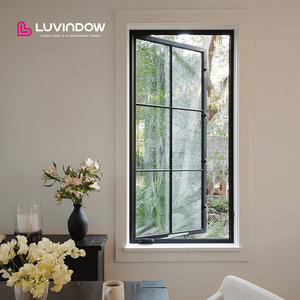
Americana Old Style Aluminium Casement Window Panels Black Single Hinged Fix Part Limit Device Hardware Supply for Sale
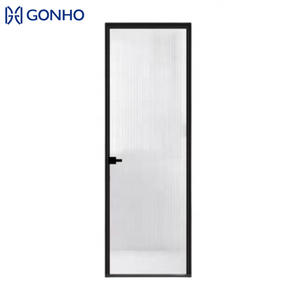
Gonho Modern Interior Aluminum Glass Swing Shower Casement Door Hinged Waterproof Scrub Commercial Hotel Bathroom 5 Year
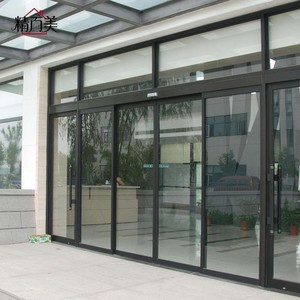
Modern Windproof Customized Hurricane Resistant Glass Soundproof Rigid Frame Weatherproof Aluminum Side Pressure Sliding Door
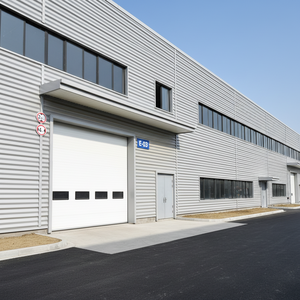
Aluminum Cutedoor Modern Industrial CE Certified Windproof Electric Side Opening Sectional Overhead Warehouse Door
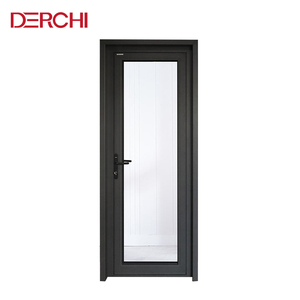
Foshan Cheap Smoked Glass Interior Doors White Aluminum Frame Bathroom Doors Hotel Interior French Double Swing Door
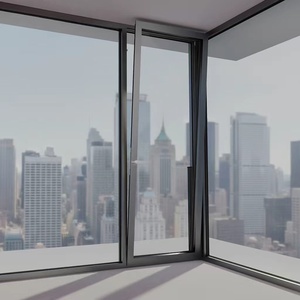
BOCHARM Modern Skyscraper City View Aluminum Tilt and Turn Window Corner Office Panoramic Double Glazing Heat Insulation Window
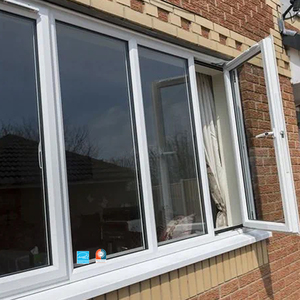
AMJ NFRC Outward Opening Aluminum Awning Hung Casement Window Double Glazing Thermal Break Hinged Frame With Insect Screens
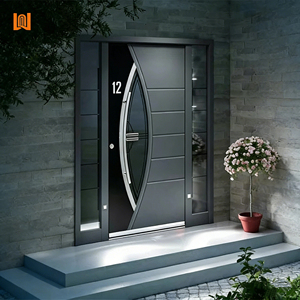
Modern Style Main Entrance Door Aluminum Double Glazed Glass Front Entry Doors Against Theft Bulletproof Security Door
System Performance & Material Grade Comparison
Specifying aluminum alloy door systems requires rigorous cross-referencing between architectural wind loads, thermal bridging, and metallurgical surface integrity. Below is an engineering benchmark from DERCHI's Foshan R&D technical testing laboratory.
| System Classification | Primary Aluminum Alloy | Thermal Barrier / U-Value | Wind Resistance (Design Pressure) | Corrosion & Finish Benchmark | Recommended Global Applications |
|---|---|---|---|---|---|
| Hurricane Pressure Sliding Doors | Primary 6063-T6 (Wall ≥ 2.5mm) | PA66 GF25 Isolator (Uw ≤ 1.8 W/m²K) | AS 2047 N6 (≥ 4500 Pa) | Fluorocarbon (PVDF) ≥ 40μm, AAMA 2605 | Coastal ASEAN, Florida Coast, Caribbean Resorts |
| Armored Pivot & Main Entrance Gates | High-Density Cast Al + 6061-T6 Frame | Aero-Foam Core (Uw ≤ 1.4 W/m²K) | Class 4 Security / 3000 Pa | AkzoNobel Interpon Powder ≥ 80μm | High-End Villas, Private Estates, GCC Mansions |
| Commercial High-Rise Tilt & Turn | 6063-T5/T6 Architectural Billet | Multi-Cavity Break (Uw ≤ 1.2 W/m²K) | ASTM E330 ≥ 3600 Pa | Electrophoretic Coating ≥ 20μm | Metropolitan Offices, Skyscraper Apartments |
| Acoustic Interior Glass French Doors | Precision Slim 6063-T5 (Wall 1.6mm) | Non-Thermal / Hollow Frame | Internal Grade (≥ 800 Pa) | Anodized Matt Black ≥ 15μm (Qualanod) | Luxury Hotels, Master Suites, Executive Boardrooms |
| Automated Overhead Warehouse Doors | Structural Double-Layer Alloy Plate | Injected Rigid Polyurethane (45kg/m³) | Class 3 Wind (EN 12424) | Continuous Coil Polyester Coating | Logistics Hubs, Industrial Plants, Fire Stations |
Future Global Procurement Trends for Aluminum Doors (2025–2030)
The global fenestration trade is undergoing systemic transformation. Procurement officers are shifting from transactional vendor inquiries to integrated supply-chain partnerships that prioritize carbon metrics, seismic/cyclonic resilience, and smart manufacturing governance.
Low-Carbon Billet & EPD Audits
International developers now mandate Environmental Product Declarations (EPD). Chinese top-tier smelters and extruders are shifting to hydropower aluminum with recycled scrap fractions (>30%), slashing embodied carbon to less than 4.5 kg CO2e per kg of primary billet to satisfy EU CBAM and LEED v4.1 criteria.
Turnkey Prefabrication & Glazed Crating
Skyrocketing jobsite labor costs across North America, Australasia, and Europe have elevated demand for unitized, fully glazed, factory-calibrated assemblies. Procurement schedules favor exporters who integrate German multipoint hardware, perimeter expanding gaskets, and sub-frame flashing channels directly at the factory dock.
Extreme Climate & Cyclonic Hardening
Rising hurricane frequency in the Pacific and Caribbean has made AS 2047 and ASTM impact certification non-negotiable. Importers now reject non-tested profiles in favor of heavy-duty multi-chamber tracks, reinforced steel stiffeners, and 12mm+ SentryGlas (SGP) interlayer storm glazing capable of withstanding 60+ m/s gust impacts.
Technological Developments Reshaping Aluminum Fenestration
From metallurgical refinement to algorithmic robotics, the modern Chinese door manufacturer operates at the intersection of aerospace extrusion precision and digital architectural engineering.
Next-Gen Polyamide Thermal Barriers
The obsolete pour-and-debridge technique has been comprehensively replaced by polyamide PA66 GF25 isolators reinforced with 25% chopped glass fiber. Advanced multi-cavity thermal struts engineered with internal low-emissivity foil baffles reduce overall profile U-values to sub-1.0 W/m²K, matching stringent Passivhaus guidelines.
5-Axis CNC & Robotic Corner Crimping
Automated manufacturing clusters leverage Italian and German CNC processing hubs that mill lock cavities, drainage weeping holes, and mortise slots to within ±0.1mm tolerances. Synchronized robotic quad-corner crimpers inject two-part structural polyurethane sealant, guaranteeing permanent water-tightness and structural deflection resistance under cyclical loads.
Smart IoT & Biometric Locking Architectures
Oversized villa pivots and hotel lobby doors increasingly incorporate concealed motorized pivots with integrated power loops. Systems support biometric facial scanning, RF transponders, home-automation bus control (KNX, Zigbee), and motorized latch retraction tested up to 500,000 continuous operating cycles.
Factory Strengths: Why DERCHI Dominates the Asian & Global Sourcing Landscape
Headquartered in Shishan Town, Foshan — the undisputed epicenter of China's aluminum extrusion industry — Guangdong Dejiyoupin Doors and Windows Co., Ltd. (DERCHI) stands among China's Top 10 fenestration enterprises, maintaining 25+ years of engineering rigor.
180,000㎡ Mega Production Base
Operating out of Shenke Chuangzhi Park with 600+ skilled technicians, our campus houses full-cycle extrusion anodizing, precision CNC lines, insulating glass assembly, and rigorous testing bays.
Global Code Certification
Tested and audited against Australian AS 2047 N6 cyclonic parameters, European CE standards, ISO 9001 quality frameworks, and UL 10C positive pressure fire-rating approvals.
Free CAD & BIM Shop Drawings
Our dedicated bilingual facade engineering team drafts project-specific CAD submittals, load calculations, and BIM models within 48 hours of initial architectural schedule receipt.
GMT+8 Fast-Response Supply
Synchronized with Southeast Asian and Middle Eastern time zones. Exhibited at Philippines WORLDBEX 2025, serving prestigious projects from Manila Bay luxury towers to Riyadh compound estates.
Frequently Asked Questions for Global Aluminum Door Importers
Answers to critical questions asked by international project estimators, facade engineers, and general contractors during the sourcing and compliance review phase.
What are the metallurgical differences between 6063-T5, 6063-T6, and 6061-T6 aluminum alloys in door fabrication?
In high-performance fenestration, 6063 is the industry-standard architectural alloy due to its superior extrusion surface finish, sharp profile definition, and optimal response to chemical anodizing and fluorocarbon PVDF coatings. The T5 temper indicates rapid cooling after extrusion followed by artificial aging, yielding a yield strength around 130–145 MPa — suitable for interior partitions and standard residential frames.
6063-T6 undergoes solution heat treatment followed by artificial aging to achieve a tensile yield strength exceeding 170–190 MPa and Webster hardness ≥ 12. This is essential for structural mullions, hurricane-rated sliding frames, and oversized exterior pivot doors subject to positive/negative wind loads. 6061-T6 contains higher magnesium and silicon levels plus chromium; it offers superior tensile strength (>240 MPa) but exhibits a rougher surface finish, making it optimal for internal reinforcement corner cleats, structural chassis plates, and heavy-duty concealed commercial hinges.
How does the Australian AS 2047 N6 wind test compare to ASTM hurricane impact testing?
Both standards evaluate structural air tightness, water penetration resistance, and ultimate structural strength under cyclic wind loads, but test parameters differ. AS 2047 N6 evaluates fenestration for unshielded coastal and cyclonic terrain (Region C and D in Australia). An N6 classification requires the assembly to survive an ultimate serviceability wind pressure (ULS) exceeding 4500 Pa and positive water penetration resistance up to 700 Pa with zero water leakage into internal drywall surfaces.
By contrast, American ASTM E1886 / E1996 and Florida Building Code (TAS 201/202/203) protocols mandate a missile impact test (firing a 9-pound 2x4 timber stud at 50 ft/s against the glass and sash) followed by 9,000 cycles of inward and outward air pressure loading. DERCHI doors can be specified with both AS 2047 N6 reports and multi-ply SGP laminated glass assemblies engineered to satisfy Miami-Dade Large Missile protocols.
What surface treatment ensures longevity in tropical, coastal, and high-salinity salt spray zones?
For coastal environments within 1 km of ocean shorelines (such as beachfront resorts in Bali, Cebu, Dubai, or Miami), standard powder coatings degrade quickly due to chloride ion attack. We mandate PVDF (Fluorocarbon) 3-Coat / 2-Bake finishes complying with AAMA 2605 specifications, containing at least 70% Kynar 500 or Hylar 5000 resin.
This formulation provides a minimum film thickness of 40–45 microns and resists 4,000 hours of continuous neutral salt spray (ASTM B117) with zero blistering or chalking. Alternatively, Class 1 Anodizing (Qualanod certified ≥ 25 microns) delivers an integral oxide layer that cannot peel or delaminate, providing exceptional resistance against aggressive tropical humidity and UV radiation.
What are the standard lead times, packaging standards, and container loading procedures for overseas shipment?
Production lead times for bespoke architectural aluminum doors range between 25 and 35 calendar days following CAD approval and hardware locking confirmation. Oversized bespoke cast-aluminum pivot systems requiring specialty molds require 35 to 45 days.
Export protection is critical: DERCHI products utilize a 5-layer protective packaging matrix: (1) low-tack protective film over aluminum profiles, (2) corner impact guards, (3) waterproof bubble wrap cushioning, (4) heavy-duty corrugated cartons, and (5) fully fumigated IPPC-certified solid plywood crates or steel A-frame glass racking. Crates are equipped with humidity desiccant bags and shock sensors, palletized for direct forklift discharge on overseas construction sites.
Begin Your Facade Engineering & Sourcing Consultation
Send your project door schedules, opening dimensions, or architectural elevation drawings. Our Foshan technical engineering desk provides complimentary CAD shop drawings, structural wind load evaluations, and CIF export cost estimates within 24 business hours.