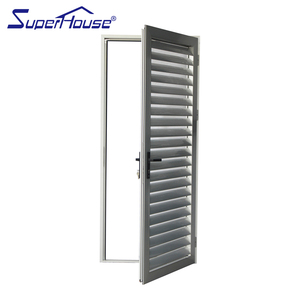
180,000㎡
Integrated Factory Base
25+
Years Manufacturing Authority
100+
Global Patents & Testing Marks
AS 2047
N6 Severe-Windline Certified
Architectural Showcase
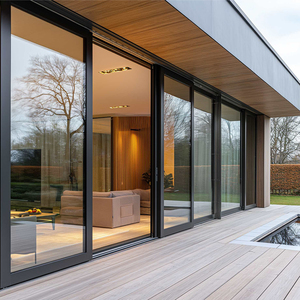
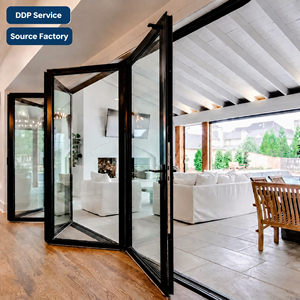
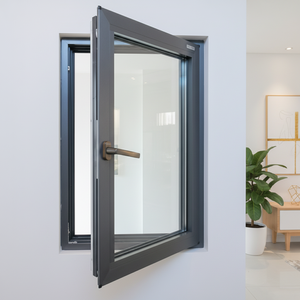
High-Performance Fenestration & Entrance Systems
Engineered to satisfy stringent global building energy directives, thermal boundary standards, and cyclonic design criteria across luxury residential and commercial structures.
Procurement Whitepaper
Engineering Verification: Aluminum Fenestration Export Quality
A technical guide for project architects, general contractors, and bulk distributors evaluating Chinese manufacturing capabilities, thermal break engineering, and glass performance specifications.
Profile Metallurgy & Alloy Purity
World-class fenestration demands strict adherence to 6063-T5 and 6063-T6 aluminum billet standards. Advanced Foshan extruders utilize virgin aluminum with tightly regulated silicon and magnesium ratios, ensuring high yield strengths exceeding 160 MPa. Structural wall thickness must strictly comply with regional building mandates—specifically maintaining ≥1.4mm to ≥2.0mm for heavy-duty fenestration and storefront configurations.
Polyamide Thermal Barrier Engineering
Inferior pouring polymers fail under prolonged solar expansion cycles. Tier-1 exporters deploy PA66 GF25 (polyamide reinforced with 25% glass fiber) extrusion strips. These multi-cavity thermal barriers minimize the thermal bridge, yielding window frame U-factors under 1.6 W/m²K when combined with warm-edge composite spacers and argon-filled insulating glass units (IGU).
Insulated Glazing & Low-E Sputtering
Optimal solar heat gain coefficients (SHGC) and visible light transmittance (VLT) are governed by double and triple silver Low-Emissivity offline magnetron coatings. Fully automated robotic sealing lines charge 90%+ pure argon gas, back-sealed by secondary structural silicone to eliminate gas permeation and dew point failure over a 20-year operational lifecycle.
Market Forecast 2026-2030
Future Procurement Trends in Architectural Glazing
Strategic movements driving the next generation of global commercial and residential building envelopes.
1. Passive House & Net-Zero Envelopes
Decarbonization policies across North America, the EU, and Oceania are shifting procurement mandates toward Uw values below 0.8 W/m²K. Sourcing managers are bypassing conventional aluminum units in favor of triple-chamber thermal breaks, vacuum insulated glass (VIG) integrations, and aerogel-insulated profile designs that eliminate exterior heating penetration.
2. Ultra-Minimalist Slim Sightlines
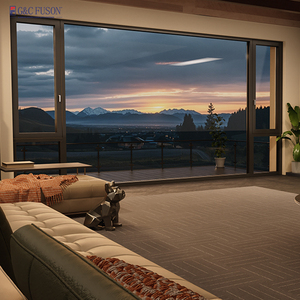
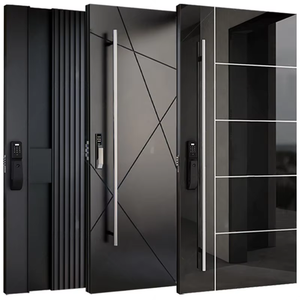
Contemporary architecture prioritizes expansive floor-to-ceiling panoramic glass with concealed frames. Modern sliding and pivot systems utilize embedded floor tracks, structural structural silicone-bonded panels, and motorized automated operators capable of carrying monolithic leaves exceeding 800 kg without operational deflection.
3. Severe Cyclonic & Acoustic Resilience
Rapid climate shifts have intensified wind load and water resistance criteria. Exporters now design to withstand wind pressures surpassing 4500 Pa (equivalent to AS 2047 N6 and ASTM E330 standards) coupled with multi-laminated acoustic interlayers (PVB/SentryGlas) dampening heavy metropolitan urban noise by up to 45dB Rw.
Why Partner With Us
Enterprise Strengths & Foshan Manufacturing Excellence
Combining industrial scale, European-standard precision engineering, and dedicated export logistics.
180,000㎡ Mega Base
Continuous robotic extrusion, CNC 4-axis milling, powder coating, and automated assembly operations run across dedicated workshops in Foshan, Guangdong.
Complete Certification
Every fenestration line is certified to CE, ISO 9001, Australian AS 2047/AS 1288, and UL fire-rated standards, ensuring zero project inspection holdups globally.
Full CAD/BIM Support
In-house facade engineers generate comprehensive shop drawings, structural calculation reports, and custom joinery detailing prior to production sign-off.
Maritime Export Advantage
Strategically situated within immediate distance of Pearl River Delta deepwater ports, with export-grade steel-reinforced plywood crate crating.
Technical Clarifications
Frequently Asked Procurement Questions
Essential guidance covering testing benchmarks, packaging protocols, and project workflows.
How do you guarantee air and water tightness for coastal hurricane zones?
Our systems use triple-gasket cellular EPDM continuous co-extruded seals paired with mechanical corner crimping injecting German OTTO-CHEMIE two-component corner cleats. This achieves cyclic wind resistance past 4500 Pa (AS 2047 N6 rating) and eliminates leakage under sustained 700 Pa dynamic water penetration testing.
What surface finishes are provided for severe marine or chemical atmospheres?
We provide fluorocarbon PVDF electrostatic spraying (minimum 3-coat, 40-micron dry film thickness complying with AAMA 2605 specifications) or Class 1 anodizing (25 microns). These finishes withstand salt spray acceleration tests past 4,000 hours without surface chalking, pitting, or color degradation.
Can you manufacture completely bespoke configurations from architectural schedules?
Yes. Our in-house engineering wing translates your architectural elevations and opening schedules into 1:1 CAD shop drawings and static calculation sheets. Every sash dimension, thermal break segment, glazing build-up, and European concealed hardware interface is engineered precisely to your project requirements.
How is heavy architectural glass protected against maritime breakage and micro-cracking?
All IGUs feature fully arrissed or polished ground edges to prevent thermal stress fractures. Units are packed into heavy-duty fumigation-free composite timber cases fitted with shock-absorbing foam spacers, perimeter steel banding, desiccant packs, and structural corner buffers suited for container ocean transit.