AS2047 / N6 Rated
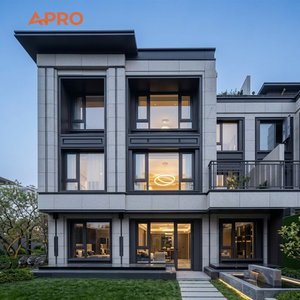
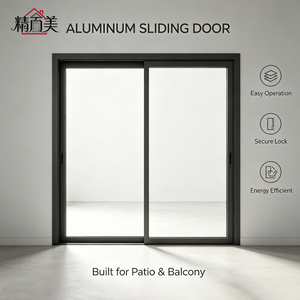
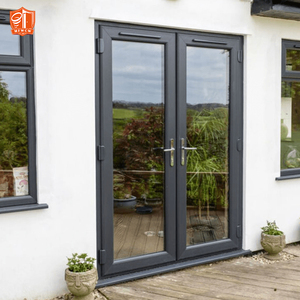
Apro Nrfc/CE/AS2047 Aluminum Hurricane Sliding Door
High Wind Load
Double Glazed
EPDM Seal
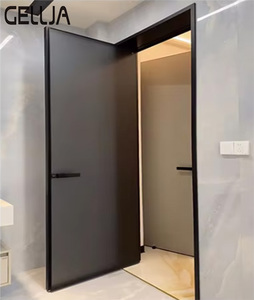
From slimline acoustic interior partitions to high-performance weather-rated external transitions, explore our precision-milled aluminum alloy door assemblies custom built for multi-residential, commercial, and luxury hospitality developments.
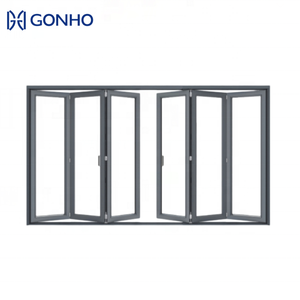
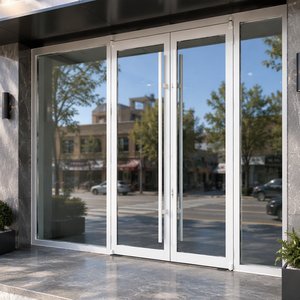
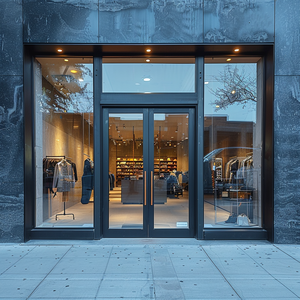
Guangdong Dejiyoupin Doors and Windows Co., Ltd. (operating internationally under DERCHI) represents the pinnacle of Chinese architectural fenestration and internal partitioning systems. Located in the industrial heartland of Nanhai, Foshan, our plant bridges large-scale output with micro-millimeter CNC processing precision.
Exhaustively audited against international benchmarks including Australian AS 2047 (N6 cyclone rating), European CE (EN 14351-1), ISO 9001 quality systems, and UL fire classifications.
Our engineering department translates your architectural elevations and door schedules into millimeter-precise CAD and BIM files, providing free shop drawing verification within 24 hours.
We utilize primary 6063-T5 and 6063-T6 virgin aluminum billets exclusively. Profiles undergo uniform quenching to guarantee high yield strength, tensile stability, and structural rigidity.
Strategically positioned in the Greater Bay Area near Nansha, Shekou, and Yantian maritime terminals, our shipping workflows guarantee rapid container consolidation, wooden crating, and minimal transit times.
In contemporary commercial and high-end residential architecture, the specification of interior doors has shifted from traditional heavy millwork and solid wood timber to precision-extruded aluminum alloy assemblies. Unlike timber—which absorbs environmental moisture, causing jamb binding, warping, and seasonal expansion in tropical or humid climates—extruded aluminum profiles maintain absolute dimensional equilibrium across 30-year operational lifespans.
At our Foshan production facility, internal door stiles and framing channels are formulated from architectural-grade 6063-T5 alloy with profile wall thicknesses ranging rigorously from 1.4 mm to 2.2 mm. This structural wall density provides exceptional torsional resistance without imposing redundant kinetic dead-weight on concealed pivot mechanisms or roller bearings. For acoustic demising applications, we integrate multi-chamber extrusion geometries packed with closed-cell polyurethane foam and continuous dual-durometer EPDM perimeter gaskets, achieving sound transmission class (STC) ratings between 34 dB and 42 dB.
| Profile Spec / Metric | Standard Commercial Grade | AICC / DERCHI Architectural Grade | Engineering Advantage |
|---|---|---|---|
| Alloy Composition | Remelted Scrap / Secondary Billet | 6063-T5 Virgin Ingot Extrusions | Prevents profile embrittlement and internal structural voids |
| Frame Wall Thickness | 1.0 mm – 1.2 mm | 1.4 mm – 2.5 mm Heavy Duty | Zero frame racking; supports ceiling-high 3.2m oversized doors |
| Acoustic Performance | Rw 22 dB (Single Pane 5mm) | Rw 36 dB – 42 dB (Laminated / Double) | Superior privacy for boardrooms, luxury bedrooms, and master suites |
| Corner Joint Method | Screw-fastened Butt Joints | Crimped Cast-Aluminum Corner Cleats + Epoxy | Impervious to joint separation under dynamic cycling loads |
| Hinge Engineering | Surface Flag Hinges | 3D Adjustable Concealed Pivot Systems | Completely flush, seamless aesthetic with 180° swing arcs |
The performance of an internal aluminum door relies heavily on the marriage between profile dampening and glazing configuration. In luxury residential fit-outs and Class-A commercial environments, single-glazed 5mm panels are no longer sufficient. Our manufacturing floor features automated insulating glass unit (IGU) lines and laminated safety glass autoclaves to deliver specialized interior glazing assemblies:
Acoustic PVB Lamination: By utilizing two sheets of 5mm or 6mm low-iron tempered glass bonded with a 0.76mm or 1.14mm acoustic-grade polyvinyl butyral (PVB) interlayer, vibrational sound waves are absorbed directly within the polymer matrix. This configuration dampens high-frequency office chatter, HVAC resonance, and residential foot traffic without increasing door leaf thickness beyond 40mm.
Decorative Privacy Inserts: For hotel ensuites, VIP lounges, and corporate executive offices, we laminate switchable PDLC smart film, fluted (Moro) architectural glass, wired safety glass, and acid-etched translucent glass directly into the slimline frame channels. Glazing is seated within continuous co-extruded Santoprene channels to eliminate glass rattle during rapid door cycling.
As international developers, architects, and procurement officers adjust to shifting building codes and occupant expectations, five major procurement dynamics are reshaping the wholesale aluminum door industry.
Commercial buyers are moving rapidly toward ultra-narrow sightlines (16mm to 20mm stiles). Concealed jamb systems embedded flush into drywall give the illusion of floating glass panels, providing maximum natural daylight penetration across interior spaces while maintaining structural integrity.
Post-pandemic commercial office floorplates require versatile, reconfigurable layouts. Sourcing demands have pivoted toward modular aluminum sliding partitions and bi-folding glass acoustic walls equipped with automatic drop-down bottom seals that activate silently upon closure.
Factory-installed smart hardware is replacing field-fitted mortise cuts. Wholesalers and developers now demand aluminum doors pre-milled and pre-wired for concealed magnetic access controls, biometric keypads, capacitive touch handles, and silent motorized locking mechanisms.
With western labor rates escalating, developers prioritize factory-pre-assembled door packages. Our modular knock-down (KD) and pre-hung aluminum casing systems reduce site installation times from hours to under 25 minutes per opening, eliminating costly on-site cutting and welding.
Tier-1 builders in Australia, North America, and Europe mandate Environmental Product Declarations (EPDs). Sourcing from suppliers using hydro-powered smelting and virgin billets allows projects to earn crucial LEED v4 and BREEAM sustainability credits.
Gone are the days of flat industrial silver anodizing. The global hospitality and residential market demands tactile architectural coatings—such as fine-grit basalt gray, warm bronze anodizing, and ultra-matte anti-fingerprint black—that emulate soft-touch organic materials.
Importing custom door schedules from China requires systematic risk mitigation. Wholesale importers and general contractors often experience schedule delays, glass breakage, or hardware incompatibility due to vague tender documentation. Below is the technical inspection matrix our project engineering team implements on every export consignment:
1. Thermal Bow & Deflection Testing: In tall door leaves (heights exceeding 2600mm), differential room temperatures (e.g., air-conditioned bedrooms versus non-conditioned corridors) can cause profile bowing. Ensure your manufacturer utilizes reinforced internal stabilizer rods or multi-chamber vertical stiles engineered to withstand thermal deflection loads.
2. Seaworthy Wooden Crate Packaging: Long-distance sea freight involves extreme container humidity, salt fog, and rough handling. AICC products are packed utilizing three layers of protection: electrostatic surface protective film, closed-cell pearl cotton corner wrapping, and fully enclosed, non-fumigation plywood crates with desiccant packs to prevent moisture condensation during maritime shipping.
3. Hardware Cycle Testing: The lifespan of an interior door is defined by its moving components. Demand cycle test certificates guaranteeing a minimum of 100,000 continuous open/close cycles for sliding rollers, concealed pivot bearings, and magnetic latch cases.
Clear, direct answers regarding custom engineering, factory lead times, quality audits, and international shipping protocols.
Submit your opening dimensions, door schedules, or architectural elevations. Our senior engineering team in Foshan will deliver complete shop drawings, glass optimization reports, and direct factory-gate pricing within 24 business hours.