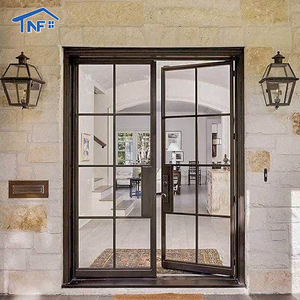
Customized Modern Thermal Insulation Villa Casement Glass Aluminum Door
Engineered with French SDL grill aesthetics and multi-chamber thermal broken profiles for supreme climate barrier.
Contact UsExplore our precision-machined 6063-T5 architectural aluminium framed doors, specifically customized for modern open-plan kitchens, light luxury partitions, and moisture-prone interior thresholds.
Engineered with French SDL grill aesthetics and multi-chamber thermal broken profiles for supreme climate barrier.
Contact Us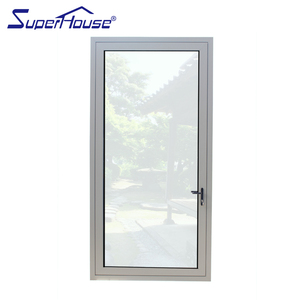
High-grade electrostatic white powder coating delivering oil-mist resistance, flush thresholds, and silent dampening hinges.
Contact Us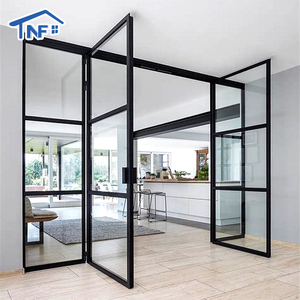
Bespoke curvilinear CNC profile bending featuring dual-sealed perimeter gaskets and precision manual operation.
Contact Us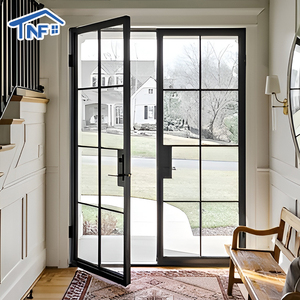
Ultra-narrow industrial sightlines combined with heavy-duty structural stability for luxury villa kitchen partitions.
Contact Us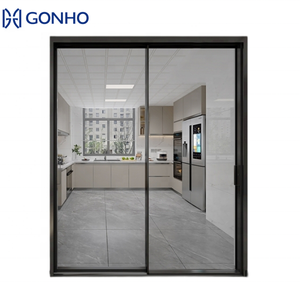
Concealed stainless steel top-hung track mechanisms delivering smooth, silent, effortless sliding operation.
Contact Us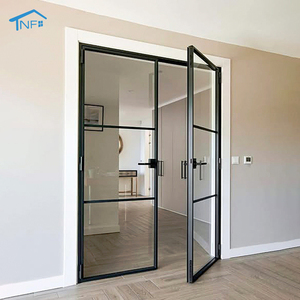
Acoustic attenuation up to 38dB, preventing cooking noise and vapor penetration into central residential living spaces.
Contact Us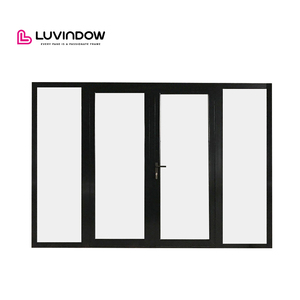
Multi-point locking hardware integrated with heavy wall profiles for maximum kitchen courtyard security.
Contact Us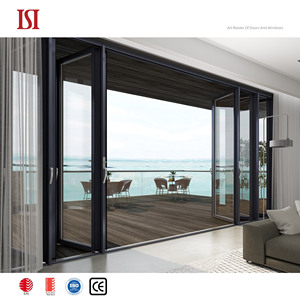
Space-saving bi-folding architecture opening 95% of aperture width for expansive entertaining zones.
Contact UsOperating as Guangdong Dejiyoupin Doors and Windows Co., Ltd. (DERCHI), our advanced fabrication facility leverages high-precision German CNC machinery, robotic extrusion assembly lines, and zero-defect powder coating stations to engineer bespoke kitchen door systems with tight tolerances (±0.5mm).
Every custom OEM profile exceeds rigorous building specifications. Certified according to CE, ISO 9001, Australian AS 2047, and UL fire-protection benchmarks, our assemblies satisfy strict architectural inspections across North America, Europe, Australia, and the Asia-Pacific.
We transform complex architectural concepts into high-yield mass production. Backed by dedicated CAD/BIM shop drawing teams, parametric modeling, rapid structural prototyping, and tailored marine-grade packaging, we ensure zero transit breakage directly from South China shipping ports.
In modern architectural joinery, kitchen glass doors serve a dual imperative: acting as an acoustic and chemical vapor barrier against high-heat cooking exhausts while enhancing visual continuity in open-concept floor plans.
Traditional wood doors warp under fluctuating kitchen moisture levels, and ferrous steel frames invite rust when exposed to humid aerosolized grease. Aluminum extrusion profiles formulated under GB/T 5237 or ASTM B221 standards (alloy 6063-T5/T6) provide the premier substrate for interior kitchen doors, maintaining ultimate tensile strength without thermal warping or seal failure.
When engineering OEM doors for high-volume hospitality developments or luxury residential projects, glass selection is equally critical. Incorporating tempered safety glass (EN 12150-1, ANSI Z97.1) with Low-Iron, Fluted (Mori), or Acid-Etched obscure finishes optimizes both privacy and ambient daylight distribution.
| Technical Parameter | Standard Configuration | Heavy-Duty Commercial Option | Architectural Benefit |
|---|---|---|---|
| Extrusion Alloy | 6063-T5 Primary Aluminum | 6063-T6 Structural Profile | Superior load-bearing, zero frame sagging over 3m heights |
| Wall Thickness | 1.4 mm – 2.0 mm | 2.2 mm – 3.0 mm Reinforced | Rigid support for multi-lite sliding and pocket layouts |
| Glazing Specification | 5mm + 9A/12A + 5mm Tempered | 6mm + 1.52PVB + 6mm Acoustic Laminated | Attenuates kitchen range hoods, blenders, and dishwashers |
| Surface Finish | Fluorocarbon (PVDF) / Powder Coat | Anodized Class I (25μm) | 100% resistant to grease splatter, moisture, and alkaline cleaners |
| Sealing Architecture | EPDM Continuous Co-extruded Gasket | Magnetic Compression Perimeter Seals | Blocks cooking odors, vapor migration, and drafts completely |
Anticipate evolving architectural demands. These four macro trends dominate global B2B procurement strategies among real estate developers, contractors, and interior joinery fabricators.
The shift toward Ghost Frame & Minimalist Crittall profiles (stiles under 16mm) dominates high-end urban spaces. Concealed top-hung guide tracks eliminate bottom floor channels, facilitating seamless barrier-free transitions between culinary workzones and dining rooms.
Next-generation OEM procurement integrates motorized sliding actuators with touchless radar triggers, obstacle sensors, and smart-home integration (Zigbee/Matter), allowing hands-free operation when handling raw food ingredients or hot dishes.
LEED and BREEAM certifications drive strict demands for low-carbon recycled aluminum billets (using over 75% secondary scrap) and chrome-free pretreatment powder coats, significantly mitigating embodied emissions in multi-family developments.
Incorporating Polymer Dispersed Liquid Crystal (PDLC) switchable smart glass into OEM aluminum doors allows instant shifting between absolute optical transparency and total frosted obscurity via wall switches or app commands.
Get authoritative technical insight on profile specifications, structural tolerances, MOQ parameters, surface engineering, and export logistics.
Whether you require bespoke CAD/BIM shop drawings, custom extrusion die engineering, or direct factory pricing for wholesale developments, our English-speaking technical engineering team provides detailed quotes and shop drawings within 24 hours.