Acoustic Series
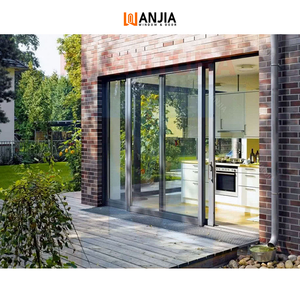
Explore our core engineering lines engineered in Foshan. From acoustic multi-chamber thermal break bay designs to narrow-frame casements and structural rooflights, our certified manufacturing lines support full OEM/ODM customization for builders, facade engineers, and volume importers worldwide.
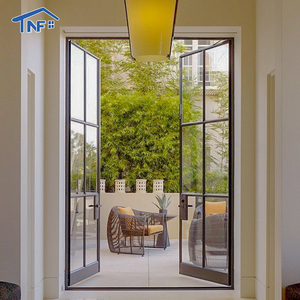
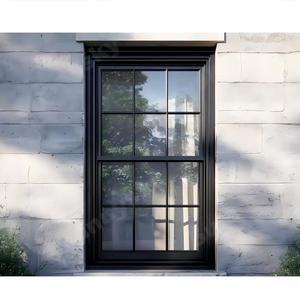
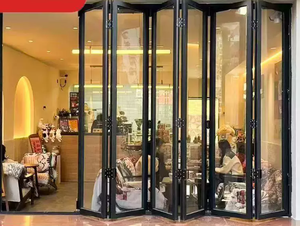
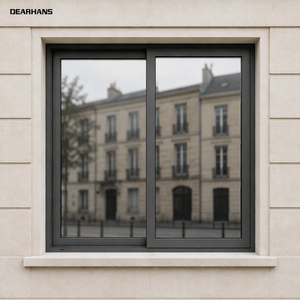
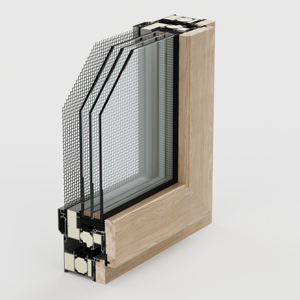
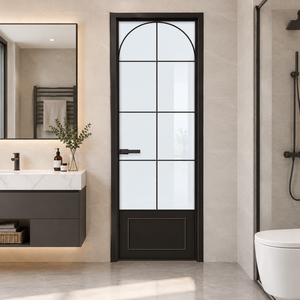
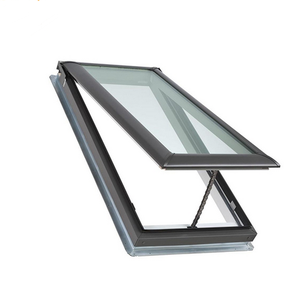
A bay window assembly is not simply a decorative projection; it is a complex structural cantilever system subject to multi-directional gravitational loads, windward shearing pressures, and severe temperature differentials.
Standard flat windows handle dead and live loads across a single parallel plane. In contrast, 30-degree, 45-degree, and 90-degree corner bay assemblies transfer massive eccentric loads back to the building envelope. Our OEM fabrication utilizes high-moment-of-inertia extruded structural mullions manufactured from 6063-T6 or 6061-T6 alloy, providing superior torsion resistance and deflection prevention under severe dynamic wind loads.
Because bay windows extend outward from the thermal envelope, they are vulnerable to extreme solar heat gain in summer and thermal bridge conduction in winter. We implement polyamide PA66 reinforced with 25% glass fiber (GF25) thermal isolators. When coupled with argon-gas-filled Low-E double or triple insulating glass units (IGUs) and warm-edge spacers, our systems achieve overall U-factors as low as 1.2 W/m²·K (0.21 BTU/h·ft²·°F).
The acute angle junctions of bay configurations create microscopic capillary paths where rainwater can penetrate during typhoon-grade rainstorms. Our factory utilizes multi-tier vulcanized EPDM gasketing, CNC-milled mechanical corner cleats injected with two-part polyurethane structural adhesive, and hidden drainage cascading sub-sills to ensure air infiltration under 0.05 m³/(m·h) and water tightness exceeding 700 Pa.
| Performance Criterion | DERCHI OEM Custom Standard | Generic Commodity Benchmark | Engineering Compliance Method |
|---|---|---|---|
| Alloy Composition & Temper | Primary Billets 6063-T5 / T6 (Tensile Strength ≥ 205 MPa) | Recycled billet 6063-T5 (Tensile ≤ 160 MPa) | Spectrometric chemical assay & ASTM B221 |
| Thermal Strip Specification | Imported Polyamide PA66 GF25 (24mm - 34mm multi-cavity) | PVC or inferior low-fiber polyamide strips | ISO 140-3 Acoustic & EN 14024 Thermal shear |
| Corner Joint Assembly | Crimped hydraulic cleats with injected German 2-part epoxy | Single-screw mechanical butt joint without sealant | Tensile pull-out & structural diagonal torsion testing |
| Glazing Integration | 6mm + 16Ar + 6mm Toughened Low-E, Technoform Warm Edge | 4mm + 9A + 4mm Annealed Clear, Aluminum Spacer | IGCC / CE / AS/NZS 2208 Architectural Safety Standards |
| Surface Coating Resilience | AkzoNobel / PPG PVDF Fluorocarbon or 25μm Anodized | Standard domestic powder coat < 40μm thickness | AAMA 2605 (4,000-hr accelerated salt spray compliance) |
Global architectural procurement is shifting from off-the-shelf retail window packages toward vertically integrated, precision-machined OEM assemblies. Here are the core structural shifts shaping project procurement pipelines through 2026 and beyond.
Developers are eliminating high-cost on-site assembly by procuring fully pre-framed, unitized bay window boxes. Shipped with factory-installed structural insulated panelling (SIP) bases and flashings, unitized bay systems decrease jobsite installation timelines by up to 65% while minimizing water-ingress liability.
Institutional commercial projects now mandate Environmental Product Declarations (EPD). Modern OEM factories must supply primary-grade aluminum smelted via hydropower, reducing the cradle-to-gate carbon footprint from 16 kg CO2e per kg of aluminum down to under 4 kg CO2e per kg.
The conventional heavy corner mullion is increasingly being replaced by specialized structural silicone bonded glass-to-glass (90-degree stepped IGU) bay corners. This minimalist aesthetic requires ultra-precise CNC tolerances of ±0.5 mm across all aluminum frame headers and sills to prevent point-load glass fracture.
Next-generation bay fenestration integrates hidden trickle micro-ventilation louvers with electrostatic insect barriers and embedded photovoltaic micro-cells that power automated smart-home motorized casement operators directly inside the mullion profile.
Operating from our 180,000-square-meter modern manufacturing base in Shishan Town, Foshan—the world's preeminent hub for architectural aluminum extrusions—DERCHI integrates over 25 years of master fenestration manufacturing with cutting-edge German elumatec 5-axis CNC machining centers.
Unlike trading intermediaries, our factory maintains complete end-to-end sovereignty across precision profile extrusion, thermal break assembly, automated electrostatic fluorocarbon coating, insulated glass production, and finished hardware integration.

Essential guidance covering structural engineering, MOQ protocols, coastal corrosion protection, and logistical workflows for architectural importers and general contractors.
Cantilevered bay configurations impose both torsional moment and downward gravity loads on the supporting facade. Our engineering department calculates the total window and glazing dead load against the project's regional design wind pressure (DP). Depending on the span, we engineer reinforced internal steel or aluminum structural stiffeners within the corner mullions. For large-format bay windows, we provide integrated header support tie-rods that anchor discreetly into the building's structural concrete slab or steel framing, preventing frame deflection, sash sagging, and seal degradation over time.
For projects utilizing our standardized library of certified thermal break dies, there is no strict minimum order quantity—we accommodate bespoke residential villa schedules starting from individual project orders. For proprietary custom profile extrusions requiring custom die development, our die-tooling cycle is 10 to 14 days, with an extrusion MOQ of 1.5 metric tons. Standard factory fabrication lead times range from 25 to 35 days from finalized CAD shop drawing sign-off and deposit receipt.
For coastal and humid environments across Southeast Asia, Australasia, the Caribbean, and the Gulf, we specify architectural-grade PVDF (polyvinylidene fluoride) fluorocarbon coatings or AkzoNobel Interpon D2000/D3000 hyper-durable powders complying with AAMA 2605 specifications. Our multi-stage chromate-free chemical pretreatment ensures maximum adhesion, delivering over 4,000 hours of continuous neutral salt spray resistance and blocking UV-induced chalking, cracking, and galvanic corrosion.
We provide both options depending on your logistics and handling preference. Most overseas contractors prefer fully factory-glazed and pressure-tested frames because our cleanroom IGU lines ensure automated desiccated warm-edge application, high-vacuum secondary structural silicone seals, and verified 95%+ argon gas fill rates. However, for remote markets or extremely heavy oversize bay configurations, we can ship precision knock-down (KD) frames with pre-cut gasket kits, numbered snap-in glazing beads, and detailed installation schematics for local glass placement.
Every commercial production run undergoes a formal 5-stage QA/QC sign-off protocol. Clients receive: (1) Raw material chemical test certificates for alloy billets, (2) Coating thickness and cross-hatch adhesion inspection reports, (3) Air/water pre-shipping mock-up test data, (4) High-resolution visual inspection photographs with dimensional verification checklists, and (5) Detailed packing manifests cross-referenced to your architectural window schedules for rapid site triage upon unloading.