Featured OEM Custom Aluminum Outside Doors
Engineered for luxury residential villas, hospitality complexes, and commercial architectural facades. Our exterior door assemblies undergo stringent hydrostatic, cyclical structural, and thermal transmittance evaluations.
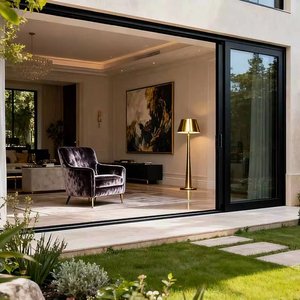 CSA Certified
OUNA Canadian CSA Standard Heavy-Duty Modern Energy Efficient External Glass Large Sliding Patio Doors
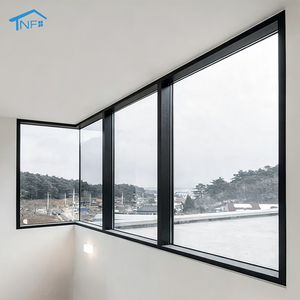 Corner Panorama
Modern Aluminum Alloy Frameless Fixed Glass Corner Window & Door Systems with SS Mesh Netting
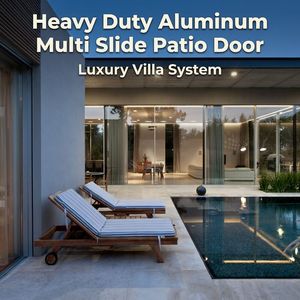 German Hardware
Heavy Duty Aluminum Multi Slide Patio Door with German Hardware & Ultra Slim Minimalist Sightline
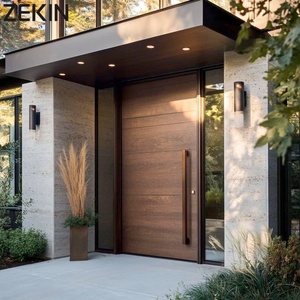 Heavy Pivot System
ZEKIN Modern Luxury Thermal Insulation & Fire Prevention Exterior Entrance Pivot Door
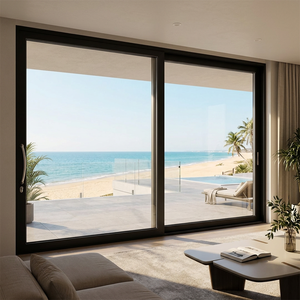 Architectural Slim
DERCHI Narrow Slim Stile Aluminum Exterior Sliding Patio Door System with Concealed Rollers
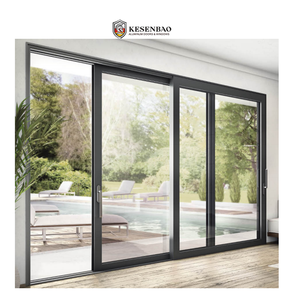 Commercial Grade
Commercial Heavy-Duty Double Glazed High-Traffic Exterior Sliding Door for Hospitality & Retail
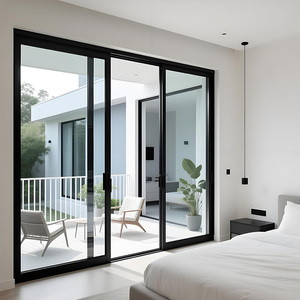 Soundproof Rated
Acoustic Insulation Tempered Glass Balcony & Veranda Sliding Door System for High-Rise Residences
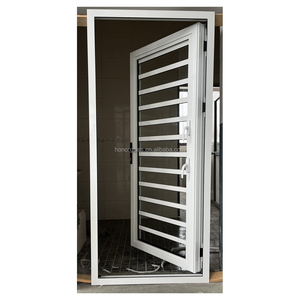 Ventilation Control
Architectural Adjustable Louver Exterior Door & Shutter System for Tropical Climate Aeration
In modern fenestration and facade engineering, the exterior entrance system serves as both an aesthetic focal point and the primary physical barrier against extreme environmental loads. As commercial developers, general contractors, and structural engineers specify building envelopes across diverse geographic regions—from typhoon-exposed coastlines in Southeast Asia to desert thermal extremes in the Gulf Cooperation Council (GCC)—aluminum exterior doors must deliver quantifiable structural stability, airtightness, hydrostatic containment, and low U-value thermal transmittance.
1. Extrusion Metallurgy and Structural Integrity: 6063-T5 vs. 6063-T6
A resilient aluminum outside door depends on billet purity and extrusion tempering. High-volume manufacturers commonly utilize primary architectural alloy 6063-T5 or 6063-T6. For heavy-duty exterior sliding doors, oversized pivot doors exceeding 3.5 meters in height, and high-span commercial entrances, the alloy specification directly dictates allowable deflection under cyclic wind pressures. Our manufacturing protocol enforces a minimum profile wall thickness of 2.0mm to 3.0mm on load-bearing mullions, complying with AS 2047 and ASTM E330 testing standards.
By undergoing precipitation heat treatment (artificial aging) to T6 temper, tensile strength reaches ≥205 MPa with a yield strength of ≥170 MPa and Webster hardness ≥12 HW. This structural modulus prevents sag and frame racking on monumental exterior assemblies weighing upwards of 450 kilograms per sash.
2. Thermal Barrier Architecture: Polyamide Strip Optimization
Aluminum is naturally conductive (k ≈ 200 W/m·K). To prevent energy loss and internal condensation in cold climates or excessive heat gain in tropical climates, our OEM outside door lines integrate advanced mechanical thermal breaks. Rather than poured polyurethane, we engineer dual multi-cavity glass-fiber reinforced polyamide strips (PA66-GF25) with widths ranging from 24mm to 34mm.
Reinforcing polyamide with 25% transverse glass fibers aligns the coefficient of thermal expansion (α ≈ 2.3 × 10⁻⁵ /K) precisely with that of the surrounding aluminum profiles. This prevents delamination, warping, and shear failure when the exterior facade surface exceeds 75°C under direct solar radiation while indoor conditioning maintains 22°C.
Thermal Transmittance (U-Value)
Overall door assembly U-values engineered down to 1.1 - 1.4 W/m²K using warm-edge spacers, argon-filled low-E insulated glass units (IGUs), and 34mm PA66-GF25 thermal breaks.
Acoustic Attenuation (STC / Rw)
Laboratory certified sound reduction index ranging between Rw 38dB to 44dB through acoustic PVB laminated interlayers and continuous co-extruded vulcanized EPDM perimeter gaskets.
Typhoon & Impact Resistance
Evaluated to Australian AS 2047 Class N6 (Serviceability Wind Pressure 3000 Pa, Ultimate 4500 Pa) and ASTM E1886/E1996 large missile impact criteria for extreme coastal safety.
3. Surface Passivation and Coastal Environmental Corrosion Resistance
Exterior doors deployed in marine microclimates face accelerated chloride-induced pitting corrosion. Our OEM manufacturing base operates closed-loop pre-treatment lines adhering to Qualicoat Class 2 and AAMA 2605 specifications. Architectural finishes include:
- Fluorocarbon (PVDF) 3-Coat / 2-Bake: Incorporating 70% Kynar 500 resin to withstand 4,000+ hours of continuous salt-spray testing (ASTM B117) with zero chalking or peeling.
- Architectural Anodizing (Class I - 25μm): Chemical etching followed by continuous electrolytic deposition of tin salts creates an integral barrier resistant to abrasive dust in desert environments.
- 3D Thermal Woodgrain Sublimation: Vacuum transfer of non-fading polyurethane pigments onto powder base coats gives authentic timber warmth without the rot, expansion, or termite vulnerability of natural timber.
Comparative Matrix: Exterior Door Substrate Performance
Assessing physical performance indices across standard commercial door categories for international property development.
| Evaluation Parameter | Thermal Break 6063 Aluminum | 316 / 304 Stainless Steel | Solid Cast Aluminum Plate | Solid Hardwood (Teak/Oak) |
|---|---|---|---|---|
| Structural Rigidity / Weight Ratio | Exceptional (High strength-to-weight) | High (Excessive sash mass) | Very High (Heavy monolith) | Moderate (Susceptible to grain slip) |
| Dimensional Stability (Humidity) | ΔV = 0.00% (Absolute Zero Swelling) | ΔV = 0.00% (No moisture pickup) | ΔV = 0.00% (No moisture pickup) | High Distortion (3% to 7% swelling/warp) |
| Design Profile Slimness | Ultra-Slim (16mm - 38mm sightlines) | Medium (50mm - 80mm profiles) | Heavy / Monumental Relief | Bulky (80mm - 120mm stiles) |
| Design Flexibility & Finishes | PVDF, Qualicoat Powder, Anodized, Woodgrain | Brushed, PVD Titanium, Mirror | Hand-carved 3D Artistic Castings | Stains, Varnishes, Oiled coats |
| Service Life in Coastal Zones | 30+ Years with PVDF Coating | 35+ Years (Requires periodic wash) | 50+ Years (Zero structural decay) | 5 - 8 Years before refinishing/rot |
| Recyclability & Circularity | 100% Recyclable (95% energy recovery) | 100% Recyclable | 100% Recyclable | Biodegradable (Deforestation impact) |
Future Procurement Trends: 2025–2030 Global Outlook
How architectural evolution, environmental regulations, and automation technologies are reshaping global outside door supply chains.
1. Carbon Traceability & Low-Carbon Billet Sourcing
Global architectural standards such as LEED v4.1, BREEAM, and European CBAM increasingly require Environmental Product Declarations (EPD). Tier-1 OEM suppliers are migrating toward hydro-powered green aluminum billets with embodied carbon below 4.0 kg CO₂/kg Al, replacing legacy thermal coal-powered smelting.
2. Smart IoT Access & Motorized Automation Integration
Architects are eliminating exposed mechanical mortise locksets in favor of concealed multi-point electro-mechanical locking hardware (e.g., KFV, Winkhaus, GU). Modern exterior doors come pre-milled and pre-wired for facial recognition, 3D fingerprint biometrics, and BACnet/KNX home automation integration.
3. Monolithic Over-Height Openings & Flush Thresholds
The boundary between interior living spaces and outdoor landscapes has dissolved. Future procurement favors oversized panels up to 4 meters high with recessed, zero-barrier linear drainage tracks that maintain 600 Pa hydrostatic water penetration resistance while complying with ADA barrier-free access regulations.
Guangdong Dejiyoupin (DERCHI) Industrial Strength
Ranked among the Top 10 door and window manufacturers in China, DERCHI operates a premier fenestration manufacturing base in Foshan, Guangdong, serving major residential and hospitality developments worldwide.
Full-Chain OEM/ODM Manufacturing Capabilities
Our Foshan manufacturing ecosystem integrates the entire lifecycle of custom exterior door engineering. From custom die tooling and extrusion billet aging to CNC multi-axis milling, automated glass insulating, and robotic powder coating lines, every tolerance is maintained within ±0.5mm.
- Pre-Production CAD/BIM Engineering: Free custom shop drawings and 3D mockups generated by our structural team for fast architect approval.
- Global Regulatory Compliance: Certified against CE (EN 14351-1), Australian AS 2047, ISO 9001 quality management, and UL fire-rating testing.
- Export-Grade Protective Packaging: Multi-layer PE foam wrapping, shock-absorbing corner caps, and fumigated steel-strapped plywood crates ready for container shipping.
- Pearl River Delta Shipping Efficiency: Direct container staging from Guangzhou, Shenzhen, and Foshan ports with fast transit times across the globe.

B2B Procurement & Engineering FAQ
Detailed technical and commercial answers to help procurement managers, architects, and facade contractors make informed decisions.
What are the minimum structural specifications required for an aluminum outside door in high wind and cyclone zones? +
How does your OEM factory handle custom sizing, architectural hardware integration, and shop drawings? +
What surface finish provides the highest longevity against UV chalking and salt-spray corrosion? +
What is your typical production lead time and minimum order quantity (MOQ) for custom OEM projects? +
How do you prevent glass and profile transit damage during international sea shipping? +
Can your exterior aluminum door assemblies meet local energy rating and fenestration codes? +
Initiate Your Custom Exterior Door Engineering Proposal
Send our senior engineering team your project schedules, CAD architectural elevations, and environmental performance requirements. We will deliver a comprehensive OEM proposal, custom CAD shop drawings, and competitive direct-factory pricing within 24 business hours.