Technical Insight & Engineering Guide
The Strategic Evolution of Modern Architectural Aluminium Designer Doors
In high-end architectural fenestration, the specification of exterior entry and patio doors has transitioned from basic boundary enclosing to high-precision structural building envelope engineering. Commercial specifiers, developers, and facade consultants no longer assess OEM/ODM aluminium designer doors merely on superficial powder-coated aesthetics. Contemporary procurement strategies mandate rigorous verification of mechanical alloy stability (6063-T5 vs. 6063-T6), isobaric water-tightness chamber design, glass thermal transmittance ratings (U-factor), and structural resistance against extreme wind-loading events such as regional monsoons and oceanic typhoons.
Guangdong Dejiyoupin Doors and Windows Co., Ltd. (DERCHI) operates at the nexus of European architectural detailing and high-throughput Chinese precision manufacturing. As a recognized industry standard-setter among China's Top 10 fenestration enterprises, our Foshan facility integrates computer-aided design (CAD) precision extrusion tooling with automated CNC multi-axis milling machines. This industrial infrastructure allows DERCHI to deliver bespoke architectural statements while maintaining micron-level repeatability across high-volume container shipments to developers, luxury builders, and commercial project managers across Southeast Asia, the Middle East, Australia, and the Americas.
1. Precision Structural Engineering: Thermal Break & Extrusion Metallurgy
The core structural integrity of an exterior designer door relies on virgin aluminium alloy composition. DERCHI strictly utilizes prime-grade 6063-T6 architectural billets with controlled magnesium and silicon ratios, avoiding degraded remelt scrap that induces surface micro-pitting, structural brittleness, and premature oxidation under tropical coastal climates. To neutralize conductive energy transfer, our thermal break systems incorporate imported Polyamide (PA66 GF25) insulating struts reinforced with 25% glass fiber. These structural barriers ensure thermal expansion coefficients match the adjacent aluminium profiles, completely eliminating structural warping, frame delamination, and interior condensation under severe outdoor-to-indoor temperature differentials.
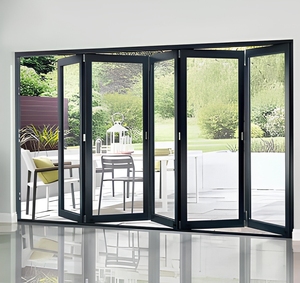
Furthermore, our heavy-duty pivot, sliding, and casement profiles boast wall thicknesses reaching 2.0mm to 3.0mm, well exceeding generic residential parameters. This elevated structural rigidity provides critical resistance against cyclic wind loads, enabling structural architects to realize dramatic, light-filled spatial expressions with door leaf heights reaching up to 4.5 meters without supplementary steel stiffening beams.
2. Material Specification & Performance Benchmark Matrix
| Profile Category |
Alloy Spec & Thermal Barrier |
Acoustic & U-Value Rating |
Climatic Adaptability |
Architectural Application |
| Architectural Pivot Series |
6063-T6 Aluminium (3.0mm), Dual PA66 24mm Struts |
STC 38dB | U ≤ 1.6 W/m²K |
High Coastal Salinity & Wind Pressure |
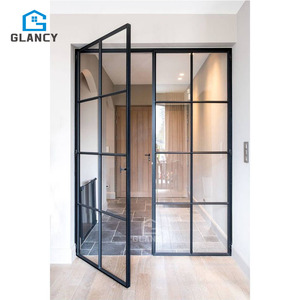
Grand Villa Portals, Hotel Main Foyers |
| Cast Aluminium Security Doors |
Solid Cast Aluminium Skin (8-12mm) + Internal Steel Armor |
STC 42dB | Anti-Theft Level 1 |
Extreme Weather, Sun Radiation Resilient |
Private Luxury Estates, Diplomatic Enclaves |
| Minimalist Panoramic Sliding |
Ultra-Slim 2.0mm Interlock Sightline (20mm Visible) |
STC 35dB | Water Tightness 700Pa |
Monsoon Typhoon Zones (AS2047 N6 Benchmark) |
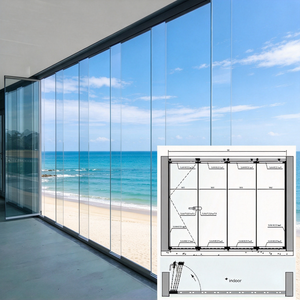
Penthouses, Oceanfront Patios, Modern Condominiums |
| Thermal Break Casement Systems |
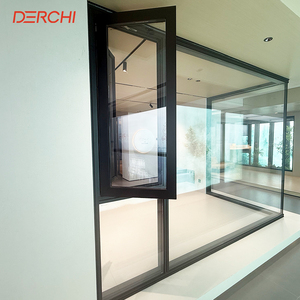
Multi-Chamber Extrusion with German Multi-point Hardware |
STC 40dB | U ≤ 1.4 W/m²K |
Extreme Cold / Tropical Thermal Shock |
Acoustic Luxury Bedrooms, Commercial Offices |
3. Future Procurement Trends in the Global Aluminium Fenestration Market
A data-informed analysis of international fenestration procurement highlights three decisive macro-trends transforming commercial and residential specifications worldwide: