Featured Architectural & Door Solutions
High-durability aluminium profile assemblies, fire-rated commercial concealed partitions, and custom fenestration engineered to meet international building specifications.
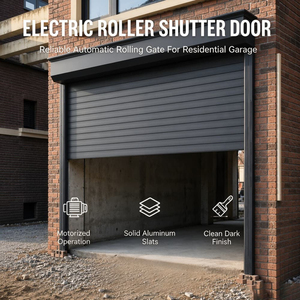 Automated Roll-Up
Remote Control Aluminum Rolling Shutter Door Electric Motor Operated For Garage Parking Home Residential Use
- 6063-T5 Extruded Heavy-Duty Slats
- Quiet Tubular Motorized Drive
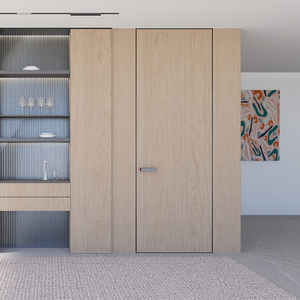 Concealed Minimal
Custom Frameless Door Manufacturer Fire Rated Sound Proof Interior Aluminum Wooden Hidden Frame Door For Commercial Project
- Certified Fire-Rated Infill Core
- Seamless Jamb Flush Alignment
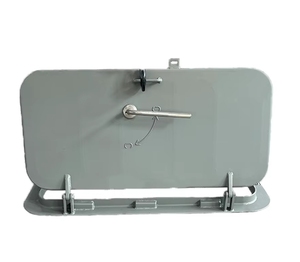 Marine Grade
Xinchen Aluminium Weathertight Marine Ship Hatch Door Equipment Door for Ship
- Anti-Corrosion 5083/6063 Alloy
- Heavy Weathertight Gasket Seal
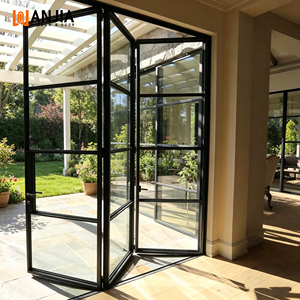 Slim Bi-Fold
Soft Close System Interior Folding Door House Custom Size Lift and Folding Door Aluminum Frame Glass Bifold Door
- German Engineered Soft-Close
- Minimal Ultra-Slim Sightline
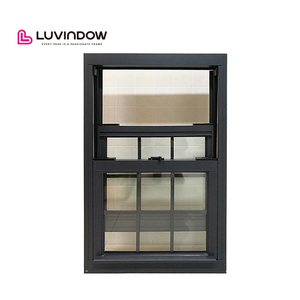 Thermal Efficiency
Australia Aluminum Top Sash Low E Glass Single Moser Top Anderson Double European Style Single Hung White Color Slide Window
- Australian AS 2047 Verified
- Double Glazed Low-E Glass
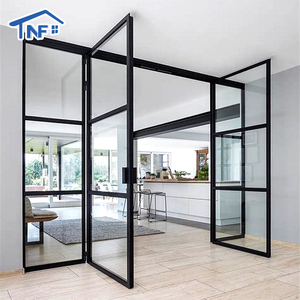 Architectural Arch
Modern Interior Aluminium Glass Arched French Doors NFRC Casement With Manual Opening Finished Surface
- Precision CNC Roll-Bending
- NFRC Rated Glazing Casement
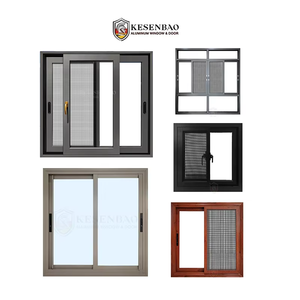 Triple Insulated
Modern Triple Glazed Aluminum Glass Sliding Windows With Screen & Mosquito Net
- Triple-Pane Acoustic Barrier
- Integrated Stainless Steel Mesh
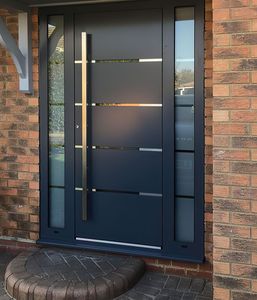 Heavy-Duty Pivot
Security Main Pivot Front Doors For Aluminum Alloy Villa Modern Glass Windproof Customized Stainless Steel
- 500kg Load German Pivot Axle
- Multi-Point Smart Locking
Engineering White Paper: Precision Metallurgy & Structural Architecture of Aluminium Kitchen Cupboard Doors
Modern commercial kitchen spaces and high-end residential joinery systems demand materials that withstand severe environmental degradation. Traditional medium-density fibreboard (MDF) and high-pressure laminates (HPL) suffer delamination, warping, microbial proliferation, and swelling when exposed to relative humidity levels exceeding 65% and fluctuating kitchen thermal conditions. As an industry-leading OEM/ODM manufacturer in Foshan, Guangdong Dejiyoupin Doors and Windows Co., Ltd. (DERCHI) engineers advanced 6063-T5 and 6061-T6 architectural-grade extruded aluminium kitchen cupboard door profiles, integrating structural stability with minimalist Italian aesthetic frameworks.
Extruded through high-tonnage horizontal hydraulic presses, our aluminium alloy profiles undergo thermal solution heat treatment and artificial aging to achieve a Webster hardness of ≥12 HW and a tensile strength exceeding 160 MPa. This structural integrity guarantees that cabinet frontages ranging up to 3,000 mm in height maintain absolute planarity with deflections restricted to <1.0 mm per linear meter, completely eliminating the door-sagging vulnerabilities typical of timber or plastic composite alternatives.
6063-T5 Extrusion Rigidity
Silicon and magnesium alloy composition optimized for tight dimensional tolerances (±0.15mm), flawless mitre assembly, and zero risk of angular warping.
Anodized & PVDF Passivation
Micro-crack-free anodic oxide films (15–25μm) and triple-coat fluorocarbon coatings certified by Qualicoat and Qualanod against organic kitchen grease and acids.
Glass & Infill Hybridization
Seamless co-extruded EPDM gaskets securing 4mm-8mm tempered fluted glass, ceramic-coated safety panels, and micro-perforated acoustic metal grilles.
Surface Passivation and Aesthetic Durability in Aggressive Kitchen Environments
Cooking activities release airborne volatile fatty acids, moisture vapor, and saline compounds that corrode untreated metal surfaces. Our manufacturing facility applies proprietary surface treatments designed to exceed ASTM B117 salt spray testing thresholds of 1,000+ hours without pitting or discoloration:
- Deep Matte Chemical Anodizing: Delivers velvety champagne, titanium grey, deep bronze, and satin black tones with zero light-refraction variation across production batches.
- Super-Durable Electrostatic Powder Coating: Utilizing AkzoNobel and Tiger Drylac architectural thermoset polymers that resist boiling water immersion (ASTM D870) and everyday chemical cleaners.
- Anti-Fingerprint Nano-Coating: A hydrophobic and oleophobic fluoro-silane polymer bonded via atmospheric plasma deposition to ensure glass and aluminium stay free from oily fingerprints and smudges.
Custom OEM/ODM Extrusions & Integrated Handle Kinematics
To support high-end modern kitchen concepts such as handleless "J-Pull", recessed "Gola" channels, and edge-integrated finger-pull profiles, DERCHI engineers integrated extrusion geometry where the ergonomic handle profile is an inseparable, solid component of the door frame itself.
Our computerized numerical control (CNC) machining centers execute high-speed milling, hinge-pocket recessing, and angle cutting to tolerances of ±0.05 mm. This exactness accommodates European concealed pivot hinge systems (including Blum, Salice, and Grass concealed systems) with integrated hydraulic soft-close damping tested to exceed 200,000 operating cycles.

Comparative Technical Performance: Aluminium Cupboard Fronts vs. Conventional Substrates
When specifying kitchen cabinetry for multi-residential towers, high-end private villas, and marine or hospitality applications, evaluating material longevity is critical to mitigating post-handover warranty claims. The following engineering matrix compares architectural aluminium against traditional substrates:
| Evaluation Parameter | DERCHI Extruded Aluminium | MDF / HDF with PVC Wrap | Solid Marine Timber | Stainless Steel Honeycomb |
|---|---|---|---|---|
| Moisture Absorption & Swelling | 0.00% Impermeable | 8.0% - 15.0% (Risk of Edge Burst) | 3.5% - 7.0% (Seasonal Shift) | 0.00% Impermeable |
| Thermal Expansion Coeff. (20-80°C) | 23.2 × 10⁻⁶ / K (Highly Stable) | Variable / Internal Tension | Anisotropic Shrinkage | 16.5 × 10⁻⁶ / K |
| Fire Safety Classification | EN 13501-1 Class A1 / Non-Combustible | Class B2 / Combustible Core | Class B2 - C / High Flame Load | Class A1 / Non-Combustible |
| Formaldehyde Emission (VOC) | Zero VOC / CARB P2 Exempt | E1 / E0 Level Emitting Resins | Trace / Dependent on Lacquer | Zero VOC Emission |
| Structural Weight / Door Rigidity | Optimized Lightness (2.7 g/cm³) | Excessive Mass (Hinge Sag) | Heavy / Prone to Bowing | Dense / Shell Drum Noise |
| Biological Attack (Termites/Mold) | 100% Completely Resistant | Vulnerable in Moist Voids | Requires Toxic Preservatives | 100% Immune |
*Data compiled from DERCHI in-house metallurgy lab testing and independent third-party testing according to ISO 9001 and Australian AS 2047 fenestration standards.
Future Procurement Trends in Aluminium Kitchen Cupboard Doors (2026–2030)
As international construction specifications evolve toward environmental sustainability, lifecycle cost management, and refined interior aesthetics, global procurement managers are fundamentally shifting their supply chain strategies. Leading architectural specifiers across Southeast Asia, the Middle East, Australia, and North America report the following trends driving aluminium joinery procurement:
1. Circular Economy & Low-Carbon Billet
Global developers demand verified Environmental Product Declarations (EPD). Modern tenders require aluminium billets cast using renewable hydroelectric smelting with post-consumer recycled content over 40%.
2. Micro-Slim Profile Sightlines (<12mm)
Cabinet designs have transitioned away from chunky frame bezels. Ultra-thin profiles with visible sightlines under 12 mm that house concealed perimeter lighting grooves dominate contemporary minimalist interiors.
3. Acoustic & Tactile Multi-Material Hybrids
Demand is surging for aluminium frames structurally bonded with sintered porcelain stoneware, ribbed architectural glass, woven metallic fabrics, and ultra-thin timber veneers to combine warmth with metal stability.
Modular Pre-Fabricated Assembly Kits vs. Fully Glazed Export Crates
Shipping economics play a defining role in modern procurement decisions. To counter rising ocean freight tariffs, international B2B importers are increasingly utilizing DERCHI's precision-engineered Knocked-Down (KD) Flat-Pack Profile Kits. By delivering precision-mitered, pre-punched, and pre-tapped aluminium profiles alongside patented corner-cleat brackets, international cabinet makers can assemble high-end finished cupboard doors locally. This reduces container shipping volume by up to 65% compared to pre-assembled glazed units, drastically slashing per-unit transport and duty overheads while retaining factory-calibrated assembly precision.
Factory Strength: Why Global Importers Rely on Guangdong Dejiyoupin (DERCHI)
Headquartered in Building 19, Shenke Chuangzhi Park, Shishan Town, Nanhai District, Foshan—the world's most consolidated epicenter for architectural aluminium processing—Guangdong Dejiyoupin Doors and Windows Co., Ltd. (DERCHI) ranks among China's Top 10 luxury fenestration and door manufacturing groups. For over 25 years, our engineering facilities have provided certified, end-to-end OEM and ODM services to architectural firms, commercial builders, interior fit-out contractors, and international importers across Asia, Australasia, the Middle East, and the Americas.
-
180,000㎡ Intelligent Manufacturing Center: Houses automated horizontal extrusion lines, precision German multi-axis CNC machining centers, and automated dust-free vertical powder coating tunnels.
-
Rigorous Engineering & Free CAD/BIM Support: Our dedicated project engineering division prepares 2D shop drawings, 3D cross-sectional profiles, and structural static load calculations within 24 to 48 hours.
-
Stringent Compliance with Global Benchmarks: Products are tested and certified to ISO 9001 quality systems, European CE EN standards, UL fire safety protocols, and Australian AS 2047 N6 cyclonic wind resistance ratings.
-
South China Strategic Export Hub: Located within immediate reach of Guangzhou and Shenzhen deepwater maritime terminals, facilitating expedited transits and optimized multi-container project staging.

Frequently Asked Questions: B2B Sourcing of Aluminium Kitchen Cupboard Doors
Direct technical guidance compiled by our senior structural engineering team to address common search inquiries, procurement parameters, and installation requirements.
- Anodized: Brushed or matte finishes in Clear Natural, Champagne, Bronze, Charcoal, and Deep Titanium Black (15–25μm film thickness).
- Architectural Powder Coating: Full RAL color spectrum via AkzoNobel powders in ultra-matte, fine texture, and anti-fingerprint finishes.
- Fluorocarbon (PVDF): 2-coat and 3-coat finishes providing maximum chemical, grease, and UV resistance.
- Vacuum Wood Grain Transfer: Heat-sublimated organic timber grain textures that offer the look of natural wood without swelling or rot.
- Reeded / Fluted Moru Glass for diffused semi-privacy.
- Ultra-Clear Low-Iron (Starphire) Glass for accurate color transmission.
- Smoked Grey, Bronze, and Black Tinted Float Glass for modern vitrine aesthetics.
- Ceramic Frit Back-Painted Glass for opaque, high-gloss splash-resistant door fronts.