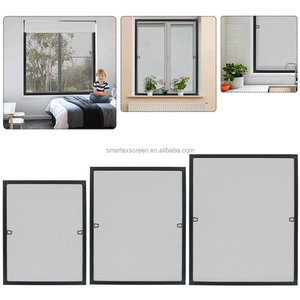
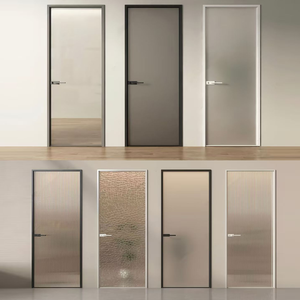
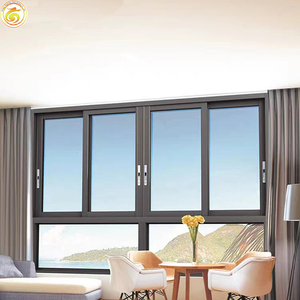
Industrial Whitepaper: The Evolution of Aluminum Security Mesh Doors
A comprehensive examination of high-tensile woven alloy integration, cyclonic wind-loading resilience, and modern OEM/ODM manufacturing standards.
Executive Architectural Brief: Modern commercial and residential developments no longer view aluminium mesh doors simply as insect screens. Contemporary project specifications require multifunctional building envelope solutions: ballistic-grade impact resistance, AS 2047 cyclonic compliance, continuous airflow thermodynamics, and precision architectural aesthetics matching ultra-narrow profile systems.
1. Material Science & Structural Mechanics of High-Spec Alloy Systems
The manufacturing architecture of high-performance architectural mesh doors rests primarily upon the chemical composition of the extrusion profiles and the tensile resilience of the incorporated mesh infill. Leading engineering protocols rely heavily on 6063-T5 or 6063-T6 structural aluminium framing, providing optimal yield strength against physical levering while accommodating complex thermal-break internal barrier geometries.
When engineering premium security mesh assemblies, the barrier infill is subjected to intense stress dynamics. Marine-grade 316 stainless steel woven wire mesh—featuring wire diameters typically engineered between 0.80mm and 1.00mm with an 11×11 or 12×12 mesh count per inch—delivers tensile strengths exceeding 900 MPa. Unlike conventional expanded metal grilles, high-tensile 316 mesh allows complete optical clarity from within while presenting an impenetrable barrier against knife shear attacks (complying with AS 5041 standards) and repetitive blunt-force dynamic impacts.
Severe Impact Dissipation
Multi-point mechanical wedge anchoring locks the mesh uniformly across perimeter frame channels, distributing sudden perpendicular shock loads through structural extrusions rather than localized fastener points.
Thermal & Acoustic Optimization
By pairing micro-aperture woven security screens with thermally broken dual-glazed panels, building envelopes dramatically reduce solar heat gain coefficients (SHGC) while maintaining constant passive ventilation.
Electrochemical Isolation
Direct contact between stainless steel mesh and aluminium framing creates galvanic corrosion. Our automated assembly incorporates non-conductive Santoprene gaskets and UPVC isolating retainers to guarantee 3,000+ hours salt-spray resistance.
2. Global Procurement Trends: Shifting Priorities for Enterprise Buyers (2025–2030)
Institutional procurement trends across Southeast Asia, Australasia, the Middle East, and North America demonstrate a clear migration toward single-source factory accountability. International developers are eliminating disjointed supply chains where door frames, hardware systems, and mesh components are assembled by separate downstream contractors.
Key procurement vectors currently driving the industry include:
Decarbonization and Low-Carbon Smelting: Global project sustainability certifications (LEED v4.1 and BREEAM) increasingly mandate documented Environmental Product Declarations (EPDs). Specifiers favor extrusion manufacturers utilizing clean-energy hydroelectric aluminium billets that deliver verifiable low-embodied carbon metrics.
Integrated Smart Access Geometries: Conventional keyed deadbolts are being phased out in high-end developments. Procurement tenders specify factory-milled mortise pockets ready for smart biometric, RFID, and IoT-connected multi-point motorized locking assemblies directly integrated within the door's structural profile.
| Performance Parameter | Standard Flyscreen Doors | Commercial Diamond Grille | High-Tensile Woven Security Mesh Door |
|---|---|---|---|
| Mesh Material Spec | Fiberglass / Standard Vinyl | Cast Aluminium Grille + Soft Screen | 0.8mm–1.0mm 316 Marine Stainless Steel |
| Knife Shear Resistance | Zero (Instant Failure) | Low (Vulnerable Screen Element) | Exceeds AS 5041 Industry Test Standards |
| Corrosion Barrier Life | 2 to 4 Years (UV Degradation) | 5 to 7 Years (Electrolytic Oxidation) | 20+ Years (Fluorocarbon / AkzoNobel Powder) |
| Airflow & Transparency | High Airflow / Moderate Haze | Restricted Visibility / Visual Clutter | Optimized Laminar Airflow / Unobstructed View |
| Building Code Integration | Basic Insect Screening Only | Non-Cyclone Structural Rating | AS 2047 Cyclonic / CE / High-Rise Rated |
3. Future Development Trajectories in Aluminium Fenestration Technology
As micro-climatic disruptions yield higher cyclonic events and extreme thermal spikes, aluminium mesh doors are transforming into engineered dynamic building barriers. We anticipate three foundational innovations dominating the next decade of manufacturing:
Aerodynamic Pressure Equalization: Next-generation mesh door framing integrates engineered micro-cavities that equalize sudden negative pressure fluctuations caused by severe hurricane-force gusts. By dissipating static pressure across hidden chambers, door leaves prevent perimeter seal distortion and water blow-by during extreme monsoonal storms.
Photocatalytic Self-Cleaning Finishes: Factory-applied titanium dioxide coatings cured over architectural fluorocarbon finishes break down airborne organic matter under direct UV exposure. Rainwater simply sheets down the surface, washing away coastal salt particulates without requiring aggressive manual chemical washing.