Featured Commercial & Residential Fenestration Systems
Direct-from-factory architectural systems engineered for ultra-low air leakage, robust hurricane impact ratings, and flexible OEM/ODM fabrication.
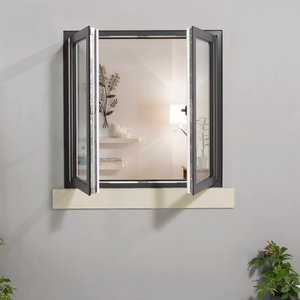
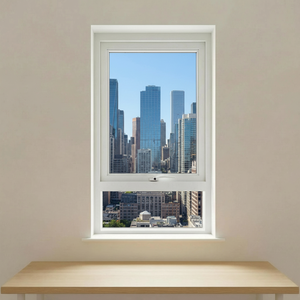
Engineering Trends in Aluminum Vertical Sliding Fenestration
Strategic insights for volume importers, façade contractors, and commercial developers managing international supply chains.
Next-Generation Architectural Trends: Beyond Simple Hung Sash Mechanisms
The global demand for aluminum vertical sliding windows (single hung and double hung variants) has shifted dramatically from legacy light-gauge residential components to high-load architectural envelope systems. Modern low-carbon commercial and multi-family residential building standards mandate severe air permeability limitations alongside demanding structural resilience.
Historically, vertical sliders suffered from friction-related sash droop, rapid pile-weatherstrip degradation, and poor thermal performance caused by conductive aluminum sash frames. Today, leading export-focused OEM/ODM manufacturing facilities have transformed this typology through two primary structural breakthroughs: engineered polyamide (PA66 GF25) thermal breaks and high-torsion constant-force spiral balance mechanisms.
By decoupling the interior and exterior aluminum profiles with 24mm to 34mm fiberglass-reinforced polyamide struts, modern aluminum vertical sliding windows achieve overall U-values well below 1.6 W/m²·K when paired with argon-filled low-E insulated glazing units (IGUs). Furthermore, advanced dual-sash vertical configurations integrate secondary tilt-latch systems, allowing both counterbalanced sashes to tilt inward for safe, maintenance-free interior glass cleaning—a mandatory parameter in high-density urban residential towers.
Performance Benchmark: Thermal Break vs. Non-Thermal Break Vertical Sliders
Procurement teams managing multi-unit housing or luxury hospitality developments must balance capital outlay against lifecycle durability and compliance with regional energy codes such as ASHRAE 90.1, Australia's NCC BCA, and European CE standards.
| Engineering Attribute | Standard Aluminum Slider | Thermal Break Vertical Slider (DERCHI) | Impact Commercial Hung Variant |
|---|---|---|---|
| Alloy Composition & Temper | Commercial Grade 6063-T5 | Primary Virgin Billet 6063-T5 / T6 | Structural Grade 6061-T6 / 6063-T6 |
| Thermal Insulation (U-Value) | 3.8 – 5.2 W/m²·K | 1.4 – 1.9 W/m²·K | 1.6 – 2.2 W/m²·K |
| Counterbalance System | Basic Spiral Spring / Weight Pulleys | Stainless Steel Constant-Force Coil | Heavy-Duty Class 5 Hybrid Torsion Balances |
| Acoustic Attenuation (STC/Rw) | 25 – 28 dB | 35 – 42 dB (with laminated IGU) | 38 – 45 dB (acoustic PVB/SGP) |
| Design Wind Load (AS 2047) | 1200 Pa to 1800 Pa | 3000 Pa (N4 / N5 compliant) | Up to 4500 Pa (N6 Ultimate Rating) |
| Air/Water Penetration Resistance | 150 Pa Water / Low airtightness | 450 Pa Water / Dual EPDM Compression | 600 Pa+ Water / Hurricane Deflector Sill |
Global Procurement Forecast: 2026–2030 Strategic Imperatives
As international construction schedules compress and overseas shipping variables fluctuate, institutional buyers are recalibrating their vendor selection rubrics. Three primary sourcing trends govern the global supply chain for aluminum vertical sliding windows:
- Integrated Hardware Co-Engineering: Specifiers are terminating contracts with assemblers that rely on generic hardware. Long-term durability hinges on balance mechanisms tested to 25,000+ cycle fatigue tests and extruded cam locks cast from zinc alloy or 304/316 stainless steel to prevent sash-drop failures.
- Sub-Assembly & Knock-Down (KD) Shipping: High volume importers increasingly source pre-machined, punched, and CNC-milled knock-down frames alongside unitized glazed sashes to maximize shipping container cube utilization by up to 280%, assembling finished units in destination-country staging hubs.
- Environmental Product Declarations (EPD) & Low-Carbon Aluminum: BREEAM and LEED v4.1 certification protocols are prompting contractors in North America, Europe, and Oceania to prioritize manufacturers utilizing hydropower-smelted primary billets, reducing embodied carbon per metric ton of extruded profile below 4.0 tCO2e.
Guangdong Dejiyoupin Doors and Windows Co., Ltd. (DERCHI) meets these exact sourcing requirements through in-house mold tooling, surface treatment automation (PVDF, fluorocarbon, and zero-VOC electrostatic powder coating), and stringent full-aperture mock-up testing prior to batch palletization.
Why Importers Partner with DERCHI Foshan
Over 25 years of engineering mastery, a 180,000㎡ industrial complex, and comprehensive international credentials.
Industrial-Scale Precision (180,000㎡)
Equipped with computerized multi-axis CNC double-head cutting saws, automated 45°/90° crimping centers, and continuous processing lines manned by 600+ skilled personnel, our Foshan factory ensures sub-millimeter sash and frame tolerances across large-volume hospitality and residential runs.
AS 2047 N6 & Global Compliance
Our fenestration assemblies are rigorously tested by third-party NATA-accredited and notified bodies, holding certifications for CE, ISO 9001, Australian AS 2047 (N6 cyclone rating), and UL standards. We eliminate regulatory bottlenecks during destination-port inspections.
Bespoke OEM/ODM Engineering & Free CAD
Our dedicated engineering department drafts shop drawings, structural wind-load deflection calculations, and custom extrusion dies to match specific architectural schedules. From specialized sill drainage pans to bespoke interlocks, every element is designed to order.
Same-Time-Zone Dedicated Support (GMT+8)
Our multilingual sales engineers provide real-time coordination during standard Asian and Australasian business hours, managing project submittals, production milestone reporting, container optimization schemes, and detailed installation schematics.
Comprehensive One-Stop Portfolio
Beyond aluminum vertical sliders, DERCHI provides consolidated project shipments that include heavy-duty pivot doors, cast aluminum security entry doors, hurricane sliding systems, curtain wall units, and acoustic interior doors, substantially reducing overall logistical overhead.
Export-Grade Protective Packaging
Every sash and frame is treated with protective peelable surface films, high-density polyethylene corner cushions, waterproof wrapping, and fully enclosed fumigated plywood crates to ensure zero-defect maritime delivery across worldwide sea lanes.
Frequently Asked Questions for Project Buyers
Essential technical and logistical considerations for architectural fenestration orders.
What are the minimum thickness and alloy specifications for OEM commercial vertical sliders? +
How do vertical sliding windows perform against typhoons and high wind loads? +
Which counterbalance systems are utilized, and what is their operational lifespan? +
What surface finish options are recommended for coastal marine environments? +
What is the standard production lead time and sample policy for custom OEM orders? +
Can DERCHI coordinate mixed container shipments containing windows, entry doors, and glass pivot doors? +
Request Technical Specifications & Architectural Catalog
Connect directly with our Foshan engineering division to discuss structural profiles, custom die extrusion tooling, testing certifications, and project-based pricing schedules.