Engineered Interior Door Systems for Discerning International Projects
Constructed with architectural-grade 6063-T5 aluminium alloy, German silent magnetic mortise locking mechanisms, and acoustic tempered safety glazing.
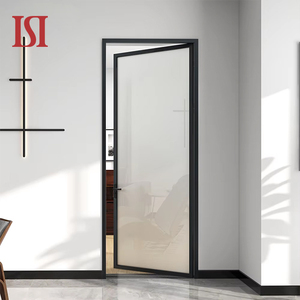
Top Brand Modern Single Swing Door Narrow Double Glazed Waterproof Aluminum Soundproof Villa Casement Door
- Rw 38dB Acoustic Attenuation
- Narrow Visual Stile Profile
- 100% Moisture & Termite Proof
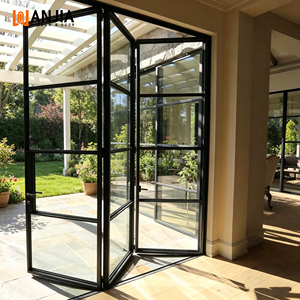
Soft Close System Interior Folding Door House Custom Size Lift & Folding Door Aluminum Frame Glass Bifold Door
- Heavy-Duty Top-Hung Track
- Hydraulic Dual Damper Buffer
- Space Saving 90% Clear Aperture
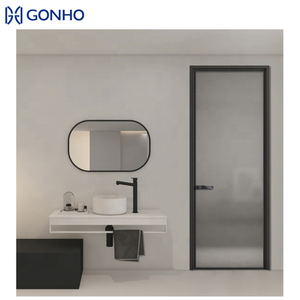
Narrow Frame Interior Glass Casement Doors Aluminum Frame Toilet Casement Door for Bathroom
- 16mm Minimalist Face Sightline
- Corrosion-Resistant Anodizing
- Frosted / Moru / Fluted Glazing
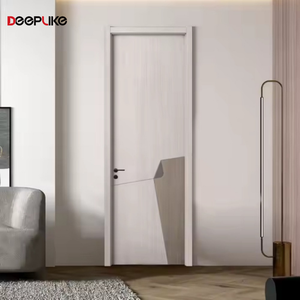
Modern Aluminum Frame Slab Interior Door Waterproof Polymer Solid Wood MDF Finished for Villa Bedroom
- Extruded Structural Perimeter
- Polymer Veneer Anti-Scratch Skin
- Zero Formaldehyde Core
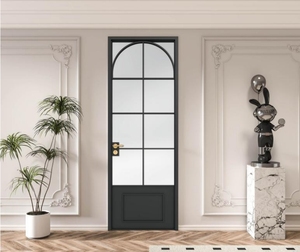
Custom Aluminum Frame Door with Modern Minimalist Design French-style Doors for Indoor Bedrooms and Bathrooms
- Architectural Georgian Glazing Bar
- Matte Carbon Black Powder Finish
- Single & Double Leaf Options
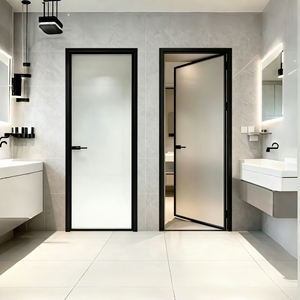
Modern Slim Frame Aluminum Glass Swing Door For Bathroom Waterproof Anti-rust Internal Door Fluted Glass
- Tempered Architectural Reeded Glass
- Fluorocarbon Anti-Fingerprint Layer
- Seamless Corner Jointing
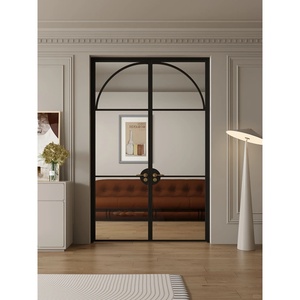
Modern Indoor Aluminium French Casement Swing Glass Door Internal Glass Walls Divider Interior Metal Framed Doors
- Full-Height Partition Integration
- Concealed Continuous Hinge
- Kitchen Odor & Smoke Isolation
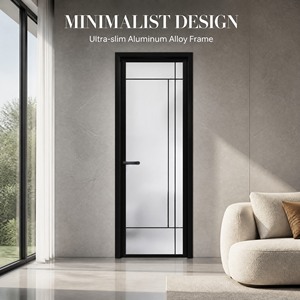
10 Years Warranty Factory Price Ultra Slim Aluminum Alloy Frame Swing Door Interior Glass Door Silent Lock
- German Silent Magnetic Latch
- Aircraft-Grade 6063-T6 Extrusion
- Tested over 200,000 Cycles
1. Comprehensive Engineering Matrix: Material Science of Modern Internal Door Assemblies
Achieving structural rigidity across tall interior doors—frequently reaching ceiling heights of 2,700mm to 3,200mm—requires rigorous metallurgical selection. As an established top-tier exporter based in Foshan, China’s global capital for architectural aluminium, DERCHI (Guangdong Dejiyoupin Doors and Windows Co., Ltd.) processes prime 6063-T5 and 6063-T6 aluminium alloy billets. Through precise homogenization and automated extrusion die technology, profile wall thicknesses are maintained strictly between 1.8mm and 2.5mm at critical structural junctions, preventing the bowing, sagging, and torsion characteristic of sub-standard commercial profiles.
Unlike hollow residential extrusions, our commercial-grade framing integrates internal structural web stiffeners, stainless steel reinforced corner cleats (die-cast alloy inserts), and CNC-machined mitred joints treated with two-part polyurethane structural bonding adhesives. When installed in high-traffic hotel environments or multi-family residences, the door leaf retains structural squaring within 0.5mm tolerance over decades of intensive operation.
| Performance Parameter | Aluminium Framed Interior Door | Standard Solid Timber Door | Hollow Core / PVC Composite Door |
|---|---|---|---|
| Dimensional Stability | Thermal expansion only (<0.02mm/m); completely immune to RH fluctuations. | Swelling/shrinkage up to 4-7mm across grain under 85% RH; prone to sticking. | High thermal distortion; creeping under ambient heat differentials. |
| Moisture & Termite Resistance | 100% inert, zero mold spore cultivation, non-corrosive Qualicoat Class 2 finishes. | Absorbs moisture, fosters mold, susceptible to dry rot and subterranean termites. | Resistant to water, but internal filler prone to degradation and delamination. |
| Acoustic Decoupling (Rw/STC) | Up to Rw 38dB - 42dB with perimeter EPDM co-extruded gaskets & laminated glass. | Typically Rw 26dB - 30dB unless equipped with costly acoustic seals. | Sub-standard acoustic isolation (Rw 18dB - 22dB), hollow resonance. |
| Visual Sightline / Stile Width | Ultra-narrow 16mm - 28mm stiles providing 92%+ visible daylight aperture. | Heavy rails and stiles (typically 100mm - 140mm) required to prevent cupping. | Thick profiles required for structural support; bulky, dated aesthetics. |
| Embodied Lifecycle Cost | 30+ year lifespan; 100% recyclable billet alloy; zero routine re-painting. | Requires regular stripping, lacquering, hinge re-hanging, and perimeter sanding. | 5-8 year service life; non-recyclable composite disposal. |
2. What Makes a World-Class Aluminium Framed Internal Doors Exporter?
In the B2B supply chain, selecting an international fenestration exporter involves far more than comparing baseline FOB quotations. Engineering compliance, delivery timelines, precision tolerances, and regional code adaptations dictate overall project feasibility. A premier exporter must demonstrate measurable competence across four vital vectors:
Structural Code Attestation
Verified adherence to CE certifications, ISO 9001 quality management, Australian AS 2047 standard compliance (including AS 1288 safety glass mandates), and UL fire ratings. Complete structural test reports on deflection and cycle endurance.
BIM & Parametric CAD Support
Seamless design coordination via Revit models, parametric DWG shop drawings, and tailored opening schedules. Every threshold, sub-frame, and wall return detail is reviewed by factory fenestration engineers before extrusion cuts occur.
Export Crating & Maritime Rigor
Reinforced fumigated solid plywood crating, multi-layer shockproof PE film buffering, corner guards, and desiccant placement. Designed for long-haul intermodal sea freight and zero transit abrasion through humid equatorial trade lanes.
3. Future Procurement Trends: Where Interior Fenestration Is Headed (2025–2030)
Market analysis of commercial specifications in urban developments across Singapore, Sydney, Dubai, London, and New York reveals five decisive procurement shifts shaping the architectural door sector:
A. The Rise of "Ghost Frame" & Concealed Trimless Engineering
Architectural minimalism demands the elimination of traditional architraves, casings, and visible hardware. Procurement trends are heavily biased toward flush-to-wall frameless invisible door systems with concealed sub-frames plastered directly into drywall or masonry. The internal door merges flush with gypsum boards or wood veneer wall panels, accented only by a recessed 3mm shadow reveal. DERCHI's proprietary hidden frame systems incorporate heavy-duty 3D adjustable concealed hinges capable of supporting door leaves up to 120kg without sag.
B. Multi-Sensory Acoustic Decoupling & Magnetic Quiet-Closing Hardware
With open-concept master suites and dedicated home offices now standard in modern floorplans, interior acoustic transmission is a top homeowner priority. Future-proof procurement schedules specify dual continuous hollow-core EPDM perimeter compression gaskets combined with drop-down automatic acoustic bottom seals that engage mechanically upon door closure. Coupled with German-patented silent magnetic mortise latches, the audible "click" of mechanical metal latches is completely eliminated, securing effortless closing acoustics.
C. Smart Glass Integration & Fluted Architectural Glazing
Rather than plain clear tempered panels, interior designers are ordering tactile glass surfaces that manipulate daylight while preserving privacy. Moru (fluted/reeded) tempered glass, tinted bronze/grey laminated panels, and switchable liquid crystal PDLC (Polymer Dispersed Liquid Crystal) privacy smart glass allow occupants to toggle between 99% clear daylight transmission and total frosted opacity via wall switches or smart home automation hubs.
D. High-Durability Hybrid Slab Assemblies
For hotel bedrooms, commercial executive suites, and luxury villas requiring the warm touch of wood paired with the indestructible stability of metal, hybrid slab doors represent the fastest-growing export segment. Featuring an internal structural aluminium skeleton, high-density sound-dampening core, and external scratch-resistant polymer or wood veneer facings sealed inside extruded aluminium edge bands, these doors resist heavy impacts, humidity, and chemical cleaning agents.
4. Industry Development Trends: Advanced Manufacturing, Sustainability, and Circularity
The international fenestration industry is undergoing rapid structural transformation driven by decarbonization standards, robotic fabrication, and closed-loop material cycles:
Carbon-Neutral Primary Metallurgy: International green building standards such as LEED v4.1, BREEAM, and Green Star penalize carbon-intensive building components. Tier-1 manufacturers are adopting low-carbon certified aluminium billets refined using hydroelectric power. When integrated into building schedules, our 100% recyclable alloy profiles significantly lower embodied carbon quotients across multi-story developments.
Automated 5-Axis CNC Machining: Hand routing and manual hardware cutting are obsolete in precision export manufacturing. Modern factories employ fully automated 5-axis CNC machining centers that mill lock pockets, hinge recesses, and sub-frame connection tabs with 0.05mm robotic accuracy directly from digitized CAD shop drawings. This ensures that every handle set, concealed closer, and magnetic striker fits with factory tolerance on site, slashing installation labor costs by up to 40%.
Advanced Fluorocarbon (PVDF) & Micro-Ceramic Anodizing: Coastal hospitality developments in the Mediterranean, Southeast Asia, and the Caribbean experience intense saline mist that degrades standard indoor coatings through air conditioning ventilation systems. Modern extrusion finishes now leverage 25-micron hard-anodizing and Qualicoat-certified fluorocarbon (PVDF) electrostatic powder coating capable of withstanding 3,000-hour neutral salt spray tests without blister or color fade.
5. Professional Procurement FAQ: Strategic Solutions for Importers & Contractors
Architectural Specialty Systems in the DERCHI Portfolio
In addition to standard hinged and folding configurations, DERCHI's export lines include high-performance niche systems engineered for specific spatial envelopes:
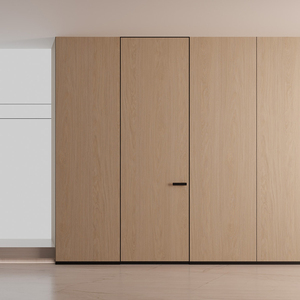
Self-Closing Hidden Aluminum Frame Interior Frameless Invisible Door System
- Patented Hidden Flush Sub-Frame
- Integrated Hydraulic Soft-Closer
- Primed for Drywall Matching Paint
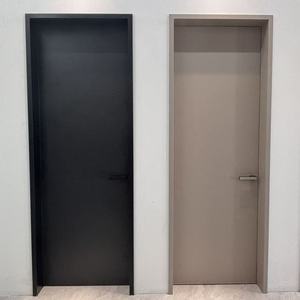
Soundproof Moisture-Resistant & Insect-Proof Aluminum-Wood Interior Doors
- Natural Hardwood Tactile Surface
- Structural Core Aluminum Spine
- Engineered Zero-Swelling Structure
Custom Architectural Specifications
Need custom anodized champagne finishes, bespoke mullion grids, or integrated electronic access control mortises?
Partner with an Industry-Leading Aluminium Door Exporter
Connect directly with our Foshan engineering headquarters. Access complete CAD libraries, test reports, physical sample swatches, and factory-direct project pricing within 24 hours.