Engineered Aluminium Sliding Doors & Window Systems
Direct factory manufacturing audited against international standards. Verified thermal-break alloys, heavy-duty tandem stainless steel rollers, and acoustic multi-point locking mechanisms for global distributors and developers.
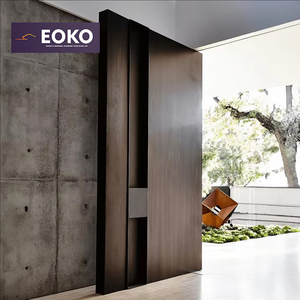 Security & Smart Tech
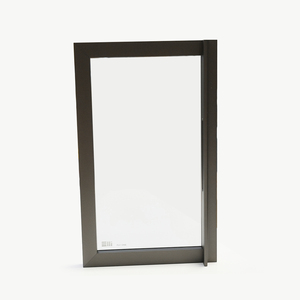 Minimalist Slim Frame
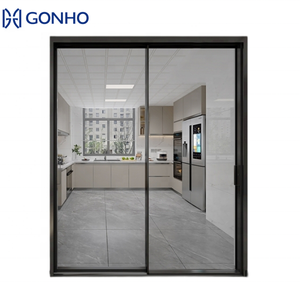
 Certified AS2047
 Typhoon Resistant
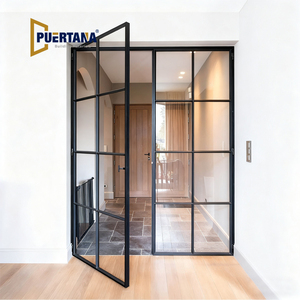 Architectural Acoustic
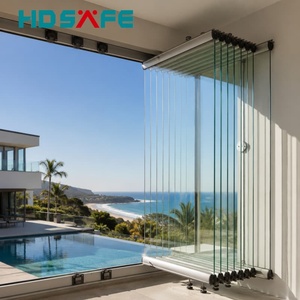 Panoramic Bi-Fold
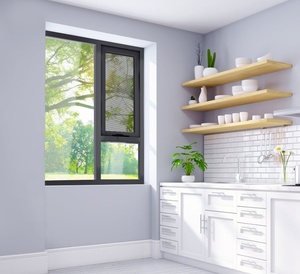
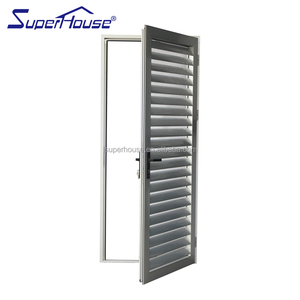 Ventilation & Shade
Vetting Top 10 Aluminium Sliding Door & Window Exporters
Procuring architectural fenestration systems from international manufacturing hubs requires examining deeper technical metrics than superficial aesthetics. Commercial developers, facade engineers, and volume import distributors face critical performance demands: wind shear at high altitudes, cyclic water penetrations during monsoon conditions, thermal transmittance compliance in stringent jurisdictions, and long-term mechanical reliability under relentless operating cycles.
The global export market for aluminium sliding doors and architectural windows is dominated by industrial manufacturing clusters equipped with advanced CNC profile machining centres, in-house extrusion lines, automated glass tempering and insulating glass unit (IGU) facilities. When evaluating an exporter's qualification among the elite top ten manufacturers globally, procurement committees evaluate four engineering pillars:
| Evaluation Parameter | Commercial Export Grade (Standard) | Tier-1 Engineering Exporter Benchmark | DERCHI In-House Factory Protocol |
|---|---|---|---|
| Aluminium Alloy & Temper | Recycled billet 6063-T5 | Primary Billet 6063-T6 (EN AW-6063) | Virgin 6063-T6 / High-Yield Structural |
| Thermal Break Technology | Pour-and-debridge polyurethane | Multi-cavity PA66GF25 polyamide strips | Technoform PA66GF25 with Aerogel infill |
| Structural Wind Load Testing | 1200 Pa to 2000 Pa | 3000 Pa (ASTM E330 / AS 4055) | AS2047 N6 Cyclonic Rating (>4500 Pa) |
| Hardware & Roller Durability | 10,000 continuous sliding cycles | 50,000 cycles (EN 13126-15) | 100,000 heavy-load tandem cycles |
| Surface Treatment Resilience | Standard polyester powder (40-60µm) | Qualicoat Class 1 / AAMA 2604 | Qualicoat Seaside Class 2 / PVDF 3-Coat |
Leading exporters demonstrate end-to-end trace control over raw extrusions. Profile wall thicknesses adhere rigorously to structural codes: residential sliders demand a minimum of 1.4mm to 1.6mm web thickness, whereas commercial oversized sliding doors require 2.0mm to 3.0mm structural wall thicknesses to withstand continuous dynamic pressures and prevent panel deflection that could compromise weather seals.
Future Procurement Trends in Architectural Fenestration
Emerging shifts in international trade, decarbonization mandates, and high-performance building enclosures shaping global export contracts.
Low-Carbon Aluminium (CBAM Compliance)
The European Union's Carbon Border Adjustment Mechanism (CBAM) and North American green building initiatives are shifting supply orders toward hydro-powered smelter aluminium and recycled post-consumer scrap billets, keeping embedded carbon below 4.0 kg CO2 per kg of extruded profile.
Bespoke Oversized Architectural Panes
Commercial luxury developments increasingly specify motorized sliding panels exceeding 3.5 meters in height and up to 500 kilograms per leaf. Exporters must integrate engineered structural silicone glazing (SSG), concealed zero-threshold drainage channels, and brushless direct-drive motors.
BIM Integration & Real-Time Engineering
Global procurement has transitioned away from generic 2D paper schedules. Top tier exporters now operate dedicated project departments that generate full Building Information Modeling (BIM) LOD 400 models, custom shop drawings, and wind shear calculations prior to profile die extrusion.
Furthermore, the convergence of building automation systems (BAS) with smart sliding mechanisms has rendered passive doors obsolete in luxury sectors. Modern exporters furnish systems pre-channeled for concealed electromagnetic contact sensors, automated perimeter multipoint locks, and smart climate control interlocks that prevent HVAC operation while balcony panels remain open.
Technological Innovations in Aluminium Window & Door Engineering
The window and door manufacturing sector is undergoing an engineering renaissance driven by thermal thermodynamics, material science, and precision CNC processing. Leading exporters maintain a clear technological edge across three fundamental areas:
Warm-Edge & Vacuum Insulating Glazing (VIG)
Moving beyond basic air-filled double glazing, modern export configurations deploy warm-edge composite spacers (stainless steel/polypropylene) filled with desiccant matrices, argon gas infills (90%+ retention), and hybrid vacuum insulating glass achieving overall window U-values below 0.85 W/(m²·K).
Fluorocarbon PVDF & Anodic Hard-Coating
For installations within 500 meters of open oceans or in high-humidity tropical zones, advanced continuous fluoropolymer resin coatings (Kynar 500/PVDF 70%) and Class 1 architectural anodizing (25µm depth) guarantee 25+ years of resistance against salt-spray corrosion, blistering, and chalking.
Concealed Sub-Sill Pressure Equalization
Water intrusion during severe wind-driven storms is solved by pressure-equalized drainage chambers. By equalizing the air pressure inside the sill chamber with the exterior gusts, gravity drives water out through staggered one-way weep valves, eliminating capillary pull into interior floors.
Guangdong Dejiyoupin Doors and Windows Co., Ltd. (DERCHI)
Recognized among the Top 10 premium door and window manufacturing enterprises in China, Guangdong Dejiyoupin Doors and Windows Co., Ltd. (operating internationally under the DERCHI brand) provides over 25 years of specialized metallurgical and fenestration engineering. Located in the core manufacturing district of Foshan, Guangdong, our industrial infrastructure is designed specifically to serve international developers, architects, and high-volume commercial importers across Southeast Asia, Australasia, North America, and the Middle East.
Frequently Asked Questions on Aluminium Door & Window Sourcing
Essential technical, logistical, and compliance considerations when purchasing direct from premier Chinese fenestration exporters.
What is the minimum profile thickness required for export-grade sliding doors and windows?
Under international structural codes (including Australian AS 2047, European EN 14351-1, and American AAMA/WDMA/CSA 101), residential sliding windows require a minimum wall thickness of 1.4mm. For heavy exterior sliding doors, villa patio doors, and high-rise installations exposed to wind loads exceeding 2500 Pa, structural stiles and frames must feature profile wall thicknesses between 2.0mm and 3.0mm. DERCHI utilizes primary 6063-T6 virgin billets extruded to precise tolerances to prevent bowing under dynamic positive and negative pressures.
Why is AS 2047 N6 certification critical for projects in coastal and cyclone-prone areas?
AS 2047 is Australia's definitive standard for window and sliding door performance, recognized globally as one of the most rigorous testing regimens. The N6 classification represents the highest non-cyclonic/cyclonic rating, requiring systems to resist extreme ultimate limit state (ULS) wind pressures exceeding 4500 Pa and water penetration resistance pressures up to 450 Pa. Procuring doors certified to AS 2047 N6 guarantees that coastal villas and towers in tropical storm zones remain air-tight and structurally stable without glass blowout or gasket displacement.
How are delicate glass units and extruded profiles protected during ocean freight?
Ocean transit subjects cargo to container humidity, salt fog, and severe kinetic acceleration during handling. Elite exporters execute a multi-tier protective packaging standard: profiles are protected with static-free protective film, corners are wrapped in high-density EVA foam protectors, and entire frames are packed in vacuum-sealed moisture-barrier polythene with silica gel desiccant packs. For glazed panels, units are strapped into fumigated, non-coniferous steel-reinforced plywood crates with interior shock-absorbing rubber cushioning.
What is the standard production lead time for fully customized architectural orders?
Standard customized residential orders involving verified CAD shop drawings, bespoke anodizing or powder-coating colors, and double-glazed tempered IGUs typically require 25 to 35 calendar days from drawing sign-off to factory loading. For massive commercial contracts involving custom extrusion dies, specialized fire-rated certifications, or curved panoramic glass configurations, lead times average 40 to 50 days. DERCHI's in-house 180,000㎡ industrial capacity ensures predictable manufacturing schedules without third-party outsourcing delays.
Can DERCHI engineer custom sizes such as oversized pivot doors and villa main entrances?
Yes. Every architectural unit is manufactured to bespoke millimeter-accurate dimensions. Our engineering team routinely produces oversized pivot entrance doors reaching heights up to 4.5 meters and widths up to 2.2 meters, equipped with concealed German hydraulic floor closers capable of handling up to 800 kilograms. Prior to profile cutting, our engineering office prepares comprehensive 2D/3D CAD shop drawings for architect approval.
Ready to Source Architectural-Grade Doors & Windows?
Connect directly with Guangdong Dejiyoupin (DERCHI) engineering team. Review complete CAD cross-sections, structural load test reports, certification dossiers, and trade pricing schedules for your upcoming projects.