Engineered Fenestration, Security Screen Enclosures & Barrier Systems
In modern commercial architecture and high-end residential engineering, selecting an aluminum net door manufacturer requires a multi-dimensional evaluation beyond surface aesthetics. Whether engineering a storm-resistant coastal estate in Southeast Asia, an ultra-quiet urban condominium, or an expansive tropical villa, selecting an authentic aluminum net door factory guarantees structural longevity, corrosion resistance against salt mist, and mechanical resistance against forced entry. Below are eight certified fenestration and net door systems engineered to fulfill rigorous international safety criteria.
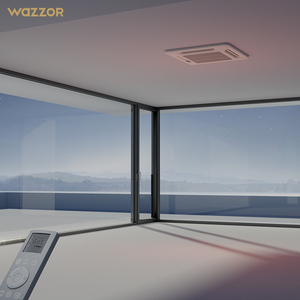 AS 2047 / Impact Rated
Wazzor Hurricane Proof High Impact Black Aluminum Casement System
Integrated 304/316 marine-grade security netting paired with Low-E glass casement framework designed for cyclonic coastal zones.
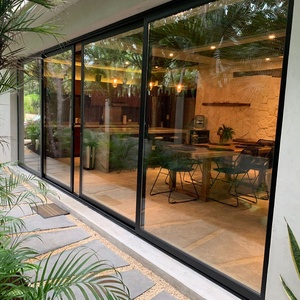 Heavy Stacker Screen
Thermal Insulation Modern Aluminum Stacker Net Doors & Sliding Windows
Multi-track sliding architecture equipped with stainless wire flyscreen barriers, sound dampening acoustic seals, and windproof interlocks.
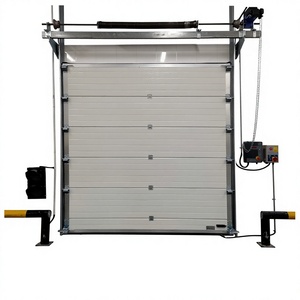 Industrial / Automated
Industrial Electric Lift Windproof Insulated Overhead Door System
Automated heavy-gauge extruded aluminum slats with optional ventilation mesh sections for high-traffic warehouse and manufacturing logistics.
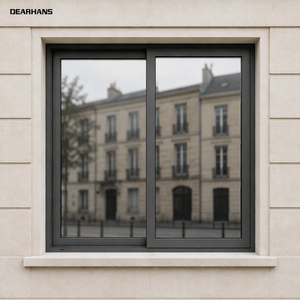 Villa Enclosure
Custom Aluminium Low-E Insulated Sliding Patio & Screen Enclosures
Precision extruded 6063-T6 aluminum frames integrating stainless woven insect screening for sunrooms, balconies, and exterior remodels.
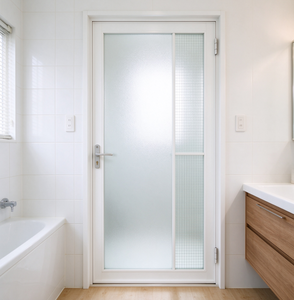 Moisture Barrier
White Aluminum Frame Interior Safety Glass & Screen Partition
Corrosion-proof fluorocarbon coating, crystal white tempered safety glazing, and optional concealed venting net slots for sanitary spaces.
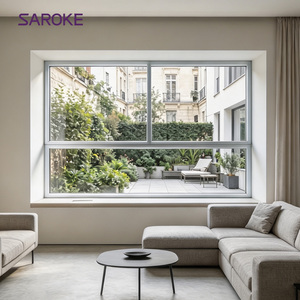 Polyamide Thermal Break
Thermal Insulated White Aluminum Sliding Door & Window Units
Equipped with durable PA66 nylon thermal break barriers and ultra-fine diamond mesh security screens for natural climate ventilation.
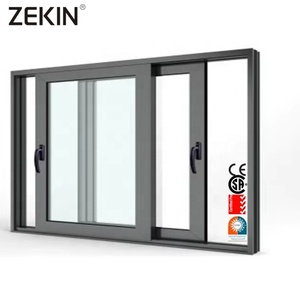 NFRC / AS2047 Certified
Customized Energy Efficient AS2047 Hurricane Impact Sliding Systems
Double insulated glass structural profiles integrated with heavy 0.8mm-1.0mm 316 stainless security netting, proofed against cyclonic debris.
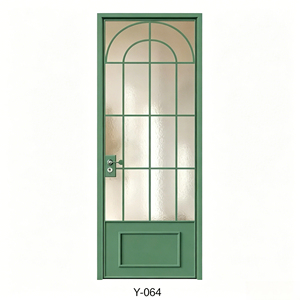 Modern Architectural
Architectural Scandinavian Carved Water-Resistant Aluminum Doors
Modern minimalist door assemblies featuring CNC laser-carved aluminum motifs, reinforced hinges, and moisture-sealed insect barriers.
Engineering Taxonomy: Classifying Aluminum Net & Screen Door Architectures
Industrial fenestration engineering classifies aluminum net door systems not simply as auxiliary flyscreens, but as vital building envelope components delivering physical intrusion deterrence, thermal stability, daylight transmittance, and natural convective airflow. When evaluating suppliers among the top 10 aluminum net door manufacturers and factories, commercial procurement teams must cross-examine four structural typologies:
| Door Typology | Net Specification | Wind Load / Structural Rating | Target Installation Area | Durability Grade |
|---|---|---|---|---|
| Heavy King-Kong Mesh Casement Door | 0.8mm-1.0mm SUS316 Black AkzoNobel Coated | AS 2047 N6 Cyclic Pressure Compliant (>4500Pa) | Villa Perimeter Entrances, Coastal Balconies | Grade A+ (25+ Yrs) |
| Multi-Track Stacker Sliding Net Door | 0.7mm SUS304 High-Tensile Wire Mesh | Interlock Wind Pressure: 3000Pa Resistance | Terrace Walkouts, Resort Sunrooms | Grade A (20 Yrs) |
| Pleated Retractable Accordion Net Door | High-Density Organ-Fold Polymer/Fiber Composite | Standard Residential Air-Tightness (Class 4) | Interior Room Dividers, Kitchen Entrances | Grade B (8-10 Yrs) |
| Industrial Overhead Perforated Net Door | 2.0mm Micro-Perforated Aluminum Alloy Plate | Heavy Storm Deflection: Class 5 Wind Resistant | Factory Bays, Warehouses, Parking Garages | Grade A+ (30 Yrs) |
Future Procurement Trends in Aluminum Net Doors (2025–2030)
Global supply chain diversification, decarbonization mandates, and tightening building energy conservation codes are dramatically changing international B2B procurement criteria.
Low-Carbon Recycled Billet Utilization
Architectural firms in Europe, Oceania, and North America increasingly demand Environmental Product Declarations (EPD). Tier-1 manufacturers are migrating to hydro-powered electrolytic smelting, supplying aluminum billets with recycled content exceeding 65%, slashing embodied carbon footprint while sustaining 6063-T6 hardness.
Typhoon-Proof Coastal Enclosures
Due to escalating climate disruptions in the Pacific rim, coastal Florida, and the Indian Ocean, contractors are replacing decorative mesh with tested AS 2047 N6, NFRC, and ASTM E1886/E1996 cyclic pressure impact netting assemblies capable of repelling flying storm debris.
Elimination of Regional Wholesaler Margins
Commercial project general contractors increasingly bypass domestic trading intermediaries, working directly with Chinese mega-factories in Foshan. Real-time BIM/CAD digital detailing and factory-prehung modular door shipments compress building schedules by 30% to 45%.
Technological Innovations Reshaping the Modern Net Door Factory
State-of-the-art aluminum net door manufacturing has evolved from basic mechanical extrusion and riveting to high-precision robotic milling, micro-weave weaving, and smart security integrations.
Multi-Point Concealed Deadbolt Integration
Modern aluminum security net doors feature 3-point to 7-point perimeter locking assemblies driven by stainless shoot-bolts. The locks interface with smart biometric keyless entry pads, Zigbee automation nodes, and magnetic interlocks embedded within the thermal break profile cavities.
Fluorocarbon & Qualicoat Powder Metallurgy
Coastal salt mist accelerates surface galvanic pitting. Advanced factories employ 7-stage pre-treatment pickling baths followed by Qualicoat Class 2 or fluorocarbon (PVDF) electrostatic baking, achieving salt spray resistance exceeding 3,000 hours per ASTM B117 testing benchmarks.
High-Clarity "Invisible" Micro-Aperture Weaving Technology
Traditional security netting often obscured architectural sightlines and restricted passive airflow. Evolutionary micro-wire weaving technology utilizes 0.9mm ultra-high-tensile stainless steel wire calibrated to 14-mesh precision, yielding 82% luminous light transmittance and superior cross-ventilation while providing impenetrable physical resistance against shear cutters, blunt impacts, and biting insects.
Guangdong Dejiyoupin Doors and Windows Co., Ltd. (DERCHI)
Ranked among China's Top 10 fenestration and door brands, DERCHI operates an integrated 180,000㎡ industrial manufacturing campus in Foshan, Guangdong. Over 25 years of specialized metallurgical and precision fenestration mastery enables us to deliver custom-engineered aluminum net doors, pivot doors, and architectural systems directly to contractors, architects, and estate builders globally.
End-to-End Vertical Manufacturing
From raw 6063-T6 aluminum extrusion, thermal-break assembly, precision CNC mitering to stainless steel wire weaving and automated powder coating—every stage occurs within our Foshan industrial plant under ISO 9001 quality audits.
Rigorous Global Certification
Our structural doors hold CE, ISO 9001, Australian AS 2047 N6 cyclonic testing approvals, and UL fire-rated credentials. Every overseas consignment passes exhaustive air-infiltration, water-tightness, and acoustic dB attenuation testing.
International Project Engineering & Logistics
With active installations spanning the Philippines, Singapore, Malaysia, UAE, Saudi Arabia, and Australia, our English-speaking engineering desk prepares custom CAD shop drawings, BIM families, and export-grade fumigated steel-crate packaging for zero-damage maritime delivery.
B2B Procurement Inquiries for Aluminum Net Doors
Addressing the exact technical, contractual, and logistics considerations raised by real estate developers, commercial contractors, and facade consultants.
AISI 304 contains 18% chromium and 8% nickel, providing standard rust resistance for inland metropolitan projects. AISI 316 contains 2% to 3% molybdenum, significantly resisting pitting corrosion in chloride-heavy coastal environments (within 5 km of seawater). For maritime villas and coastal resorts, 316 King-Kong mesh is mandatory to prevent rust staining and structural weakness.
DERCHI aluminum door frames are engineered with wall thicknesses of 2.0mm to 3.0mm using primary architectural alloy 6063-T6. When tested under Australian AS 2047 protocols, our doors achieved an N6 structural wind rating (>4500 Pascals), preventing frame deflection, sash pop-out, or fastener pull-through under typhoon wind gusts.
Yes. Our in-house engineering team provides complete 2D CAD cross-sectional drawings, rough opening schedules, glass and mesh stress calculations, and 3D BIM models free of charge. Fabrication only initiates upon sign-off by your consulting architect or project manager.
We utilize certified AkzoNobel, PPG, or Tiger dry-lacquer fluorocarbon and powder coatings applied over chrome-free conversion coats. This guarantees high UV resistance, gloss retention, and zero cracking or blistering across a 15-to-25-year lifespan in equatorial tropical climates like Southeast Asia and the Arabian Gulf.
Each door unit is wrapped in protective PE film, corner-protected with high-density EVA shock bumpers, sealed in moisture-proof bubble wrap, and strapped inside export-grade custom plywood crates or galvanized steel racking designed for forklift handling and zero container transit movement.
Standard modular configurations require 20 to 25 business days. Highly customized architectural schedules (such as thermal-break multi-slide stacker doors with motorized automated net drives) require 30 to 35 business days from verified shop-drawing sign-off to port loading in Shenzhen or Guangzhou.
Partner Directly with an Elite Aluminum Net Door Factory
Connect with our senior facade engineering team in Foshan. Share your door schedules, project opening dimensions, architectural elevations, and local performance requirements to receive a fast, factory-direct quotation and comprehensive CAD proposal.