Precision Architectural Fenestration & Security Systems
Explore our certified line of heavy-duty sliding doors, thermal break profiles, cyclone-resistant security screens, and commercial entry systems manufactured to ASTM, AS 2047, and CE directives.
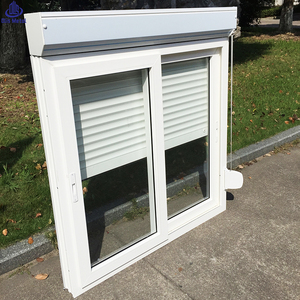
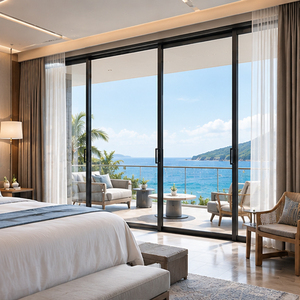
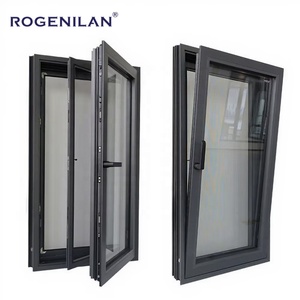
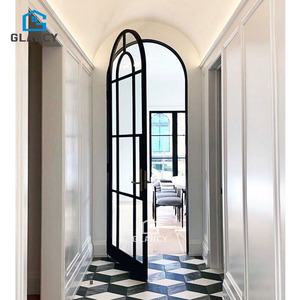
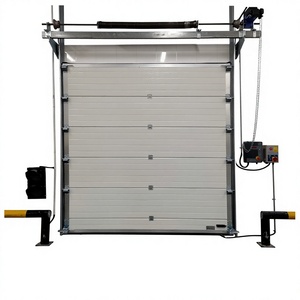
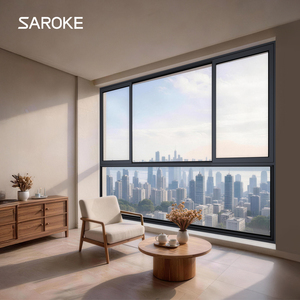
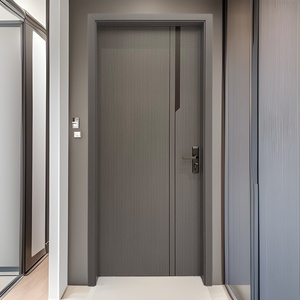
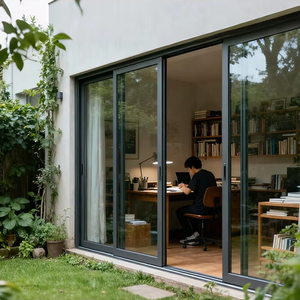
Anatomy of Heavy-Duty Aluminium Net Sliding Doors (Security Screen Systems)
In contemporary architectural design, the boundary between interior sanctuaries and outdoor landscapes has blurred. However, modern fenestration requires uncompromising physical security, tropical insect deterrence, and resilient environmental resistance without degrading visual transparency. An aluminium net sliding door (widely specified by engineers as an integrated security mesh patio door or crimsafe-style multi-track sliding door) unites structural primary glazing with an independently articulated or monolithic high-tensile stainless steel wire mesh barrier.
Engineered with primary extrusions of 6063-T6 or 6061-T6 architectural grade aluminium alloys, these door systems possess a minimum wall profile thickness ranging from 2.0mm to 3.5mm for heavy-duty commercial spans. Unlike standard insect screens fabricated from PVC-coated fiberglass or fine wire cloth, the high-security woven mesh utilizes 0.80mm to 1.0mm 304 or 316 marine-grade austenitic stainless steel wire. The wire exhibits a tensile strength exceeding 900 MPa, woven into an ultra-dense 10-mesh to 14-mesh grid that withstands knife-shear attacks, lever-arm jemmying, and hurricane-borne debris impacts up to Australian Standard AS 5041/5039 and US impact criteria.
The mechanical fixation of the stainless steel net into the perimeter aluminium sash represents a pivotal engineering differentiator. Lower-tier manufacturers rely on friction splines or exposed self-tapping screws, which cause localized galvanic corrosion between dissimilar metals (aluminium and stainless steel) and pull out under lateral dynamic shock. Derchi utilizes a continuous structural screw-clamp retention system with EPDM/Santoprene insulating gaskets. This proprietary assembly isolates the metals, preventing electrochemical corrosion, while mechanically clamping the perimeter mesh into an internal rebate. Dynamic load transferred from an intruder impact is evenly dispersed across the entire structural frame, dissipating destructive kinetic energy.
Engineering Matrix: Mesh Types & Profile Formats
Comprehensive performance comparison across high-tensile security mesh configurations, glass integrations, and structural thermal barriers.
| Specification Feature | King Kong 316 Marine Net | 304 High-Tensile Security Net | Micro-Perforated Aluminium Mesh | Dual-Track Thermal Break Glass+Net |
|---|---|---|---|---|
| Wire Diameter / Thickness | 0.80mm - 1.00mm Woven Wire | 0.70mm - 0.90mm Woven Wire | 1.5mm - 2.0mm Perforated Plate | 0.8mm Mesh + 6mm+12A+6mm DGU |
| Atmospheric Resistance | C5-M Very High Marine (ISO 12944) | C3 - C4 Urban & Coastal | C4 High Industrial / Urban | C5 Marine Coastal Sealed |
| Mechanical Impact Rating | Passes 5 x 100J Dynamic Impact (AS 5041) | Passes 5 x 80J Dynamic Impact | High Static Load, Rigid Shear | N6 Wind Load (AS 2047) + Forced Entry |
| Visual Light Transmittance | 58% - 64% Open Aperture | 62% - 68% Open Aperture | 42% - 48% Directional Screen | Customized by Glazing & Mesh Tone |
| Thermal Insulation (U-Factor) | N/A (Natural Airflow Ventilation) | N/A (Direct Free Area Ventilation) | Partial Solar Shading Coefficient | 1.6 - 2.2 W/m²·K (PA66 Polyamide) |
| Primary Target Application | Coastal Villas, Island Resorts | Suburban Residences, Condos | Privacy Balconies, Commercial Entry | Luxury Hotels, High-Rise Penthouses |
Evolutionary Trends in Aluminium Net Sliding Engineering
How next-generation material science and architectural requirements are redefining sliding mesh systems from 2026 through 2030.
Narrow-Bezel Minimalist Geometry
Architects demand unobstructed sightlines. Traditional 80mm-120mm interlockers are being engineered down to slim 20mm-35mm profiles. Through reinforced structural alloys and internal steel tie-rods, narrow stile panels support expansive heights up to 4.5 meters without flexing under cyclic wind loads.
Tri-Track Thermal Decoupling
Strict energy efficiency codes (such as Title 24, ASHRAE 90.1, and European nZEB mandates) require low overall U-values. Multi-track systems now integrate continuous 24mm-34mm polyamide insulation strips (PA66 GF25) directly within the sliding threshold, head, and jambs to stop thermal bridging.
Smart IoT Automation & Concealed Multipoint Locks
Modern net sliding doors increasingly feature electromagnetic automated drives, remote biometric sensors, and concealed motorized multi-point latches. Occupants can safely secure the mesh panel for fresh night air while interlocking the primary deadbolts into automated building management systems.
Future Global Procurement Trends (2026–2030)
Actionable insights for project developers, façade consultants, and general contractors navigating global supply chains.
Consolidated Envelope Sourcing
Developers are eliminating multi-tier vendor fragmentation. Procurement teams prefer single-source manufacturing partners who fabricate matching entry doors, panoramic sliders, security screens, and commercial curtain walls under a unified warranty.
Qualicoat Class 2 & Fluorocarbon Demands
Coastal and tropical developments across Southeast Asia, Australia, and the Caribbean reject entry-level standard architectural coatings. Specifications require Qualicoat Seaside / Class 2 powder coats or PVDF 70% fluorocarbon resins rated for 3,000+ hours of continuous salt-spray exposure.
Digital BIM & CAD Submittal Integration
Standard static catalogs no longer suffice for competitive commercial bids. Procurement workflows require parametric Revit BIM objects, shop drawing production within 48 hours, and exact structural load deflection analysis tailored to project wind pressures.
Green Building & Circular ESG Criteria
With LEED v4.1 and BREEAM certifications dictating premium developments, tier-one manufacturers must provide verified EPDs (Environmental Product Declarations) and utilize low-carbon recycled aluminium billets powered by clean hydroelectric smelting.

Foshan Manufacturing Excellence: Guangdong Dejiyoupin Doors & Windows Co., Ltd.
Operating under the recognized DERCHI industrial brand, Guangdong Dejiyoupin Doors and Windows Co., Ltd. ranks consistently among the Top 10 premium door and window manufacturers in China. Centered in Foshan's Shishan industrial hub (Nanhai District), our production ecosystem covers an expansive 180,000 square meter smart facility powered by high-precision German elumatec CNC profile machining centers, robotic corner-crimping suites, and automated continuous electrostatic coating lines.
- Over 25 Years of Fenestration Expertise: Deep domain mastery spanning thermal break systems, cast aluminum security entry doors, large pivot systems, and stainless steel mesh integration.
- Exhaustive International Certifications: Fully certified under ISO 9001, European CE directives, Australian AS 2047 (N6 cyclone rating), AS 5039 security screen standards, and UL fire ratings.
- Precision CAD/BIM Shop Drawings: Free engineering submittals, load deflection verification, and door schedules provided within 24 to 48 hours for global project tenders.
- Robust Export Logistics: Proximity to major South China deep-water container ports (Nansha, Shenzhen, Hong Kong) coupled with heavy-duty fumigated wooden crating for flawless ocean transit.
Frequently Asked Questions by Project Engineers & Importers
Essential guidance covering technical tolerances, surface corrosion, wind resistance, and shipping mechanics.
How does 316 marine-grade security net perform against coastal salt spray compared to standard 304 mesh?
AISI 316 stainless steel contains 2% to 3% molybdenum, significantly boosting resistance against pitting and crevice corrosion caused by airborne chlorides. In coastal zones situated within 5 kilometers of the shoreline, standard 304 mesh will eventually exhibit superficial "tea staining." For oceanfront villas, island resorts, and beachfront condominiums, specifying 316 marine-grade mesh pre-treated with epoxy primer and finished in architectural AkzoNobel thermoset powder is crucial to guarantee a 10-to-15 year corrosion-free lifespan.
Can the aluminium net sliding screen be combined with heavy double-glazed low-E glass panels?
Yes. Derchi specializes in multi-track monolithic configurations (e.g., three-track and four-track sliding systems). This architectural configuration accommodates two sliding double-glazed insulated panels (such as 6mm Low-E + 12A Argon + 6mm Tempered Clear) on the primary inner tracks, while the exterior track houses the heavy-duty 316 stainless steel security mesh panel. This allows occupants to slide open the heavy glass sash for unobstructed natural ventilation while maintaining complete physical security and pest protection.
What quality testing standards are conducted prior to container dispatch?
Every production batch undergoes strict quality control protocols: 1) Spectrometer chemical alloy composition verification; 2) Dry film coating thickness (DFT) checks ensuring ≥ 60-80 microns; 3) Cross-hatch adhesion testing; 4) AS 2047 / ASTM E283 air infiltration, ASTM E331 water penetration, and ASTM E330 structural deflection under maximum design wind load; 5) 100,000-cycle continuous hardware sliding endurance testing; and 6) 100% factory pre-assembly and leveling calibration.
What is the standard production lead time and minimum order quantity (MOQ)?
Our standard manufacturing lead time for customized architectural projects is 25 to 35 calendar days following client approval of CAD shop drawings and finish swatches. For standard extrusion dies and stock architectural color configurations (Matte Black, Architectural Bronze, Basalt Grey), expedited 20-day runs are available. Our flexible OEM/ODM manufacturing capability accommodates custom villa packages starting at a minimum order of 1 full set up to multi-container commercial hotel deliveries.
How are heavy sliding panels packaged to eliminate transit damage across transoceanic shipping?
Derchi utilizes an export packing standard: All aluminum frames and mesh panels are initially wrapped in protective peel-off electrostatic film, capped with heavy cellular foam edge guards, enclosed within 5-layer corrugated shock-absorbing cartons, and finally secured inside bespoke, fully enclosed fumigated plywood crates (ISPM 15 compliant). Desiccant silica gel packets are placed inside every package to prevent condensation and moisture oxidation during long ocean voyages.
Collaborate with China's Premier Door Engineering Factory
Submit your door schedules, opening dimensions, or architectural elevations. Our engineering team will supply parametric CAD shop drawings, wind load calculations, and competitive direct factory pricing within 24 business hours.