High-Performance Fenestration & Entrance Systems
Explore our certified aluminum sliding configurations, high-impact barrier doors, and energy-rated fenestration components manufactured to exceed rigorous international building envelopes.
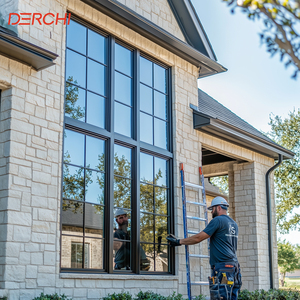
DERCHI Crank Casement Window Thermal Break Double Glass
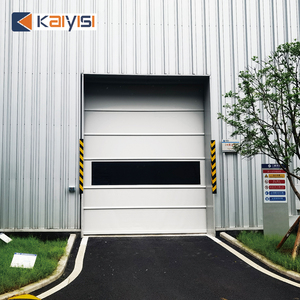
Windproof Insulated Industrial High Speed Roll Up Door
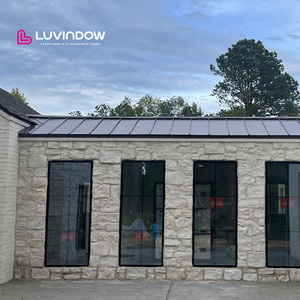
Slim Frame Aluminum Tilt Turn Windows NFRC Certified
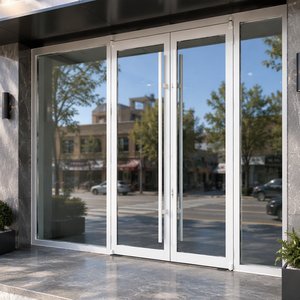
Thermal Break Aluminum Double French Exterior Door
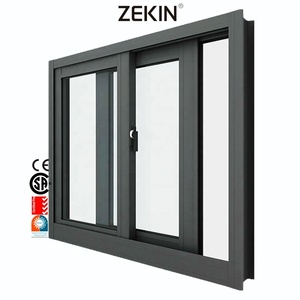
Hurricane Certified Tempered Glass Aluminum Sliding Window
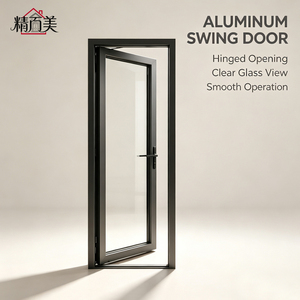
Modern High Security Aluminium Glass Swing Door
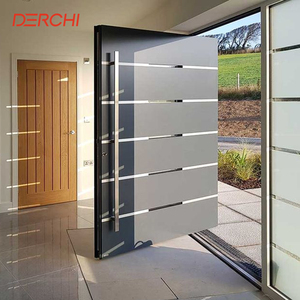
Hurricane Impact Heat Insulated Residential Security Entry Door
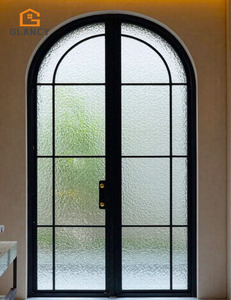
Black Aluminum Interior French Arch Custom Glass Door
The Global Shift in High-Performance Aluminium Sliding Window Sourcing
Modern fenestration is no longer treated as a simple aesthetic boundary; it has evolved into a high-load, thermally dynamic mechanical assembly. Global procurement directors, façade engineers, and real estate developers face increasingly stringent energy codes (such as ASHRAE 90.1, Australia NCC, and European EnEV), paired with escalating extreme weather patterns. As a result, the demand for precision-engineered aluminium sliding windows has surged.
China has long occupied the core of global fenestration manufacturing, yet the industrial landscape has shifted decisively. Generic fabricators are rapidly being replaced by vertically integrated engineering hubs centered in Foshan, Guangdong. Sourcing from a Tier-1 Chinese supplier requires comprehensive insight into metallurgical integrity, polyamide thermal barrier composition, multi-point structural locking dynamics, and localized building certification compliance.
- Primary Ingot Traceability: Exclusive utilization of 6063-T5/T6 architectural-grade billet alloys.
- Polyamide Isolation: PA66 GF25 reinforced thermal breaks eliminating thermal bridges.
- Engineered Cycle Life: Heavy-duty, anti-corrosive stainless steel multi-wheel tandem carriages.
- Code Compliance: Validated compliance testing under AS2047, NFRC, CE, and ISO 9001.

Structural, Thermal, and Acoustic Performance Matrix
A granular engineering comparison illustrating how industrial-grade aluminium sliding systems contrast with standard consumer-grade alternatives across critical envelope metrics.
| Performance Indicator | DERCHI Heavy Commercial Spec | Standard Export Market Grade | Testing & Compliance Protocol |
|---|---|---|---|
| Aluminium Alloy & Temper | Primary 6063-T6 / 6060-T6 Billet | Recycled / Secondary Scrap Blends | GB/T 5237, ASTM B221 |
| Profile Wall Thickness | 2.0 mm – 3.2 mm Structural Wall | 1.2 mm – 1.4 mm Residential Wall | AS 2047 / EN 12020-2 |
| Thermal Barrier Core | PA66 GF25 Polyamide (24mm–34mm) | PVC Strip or Non-Insulated Bridged | DIN 16941 / ASTM D638 |
| Thermal Transmittance (U-Value) | 1.2 – 1.8 W/m²·K (Low-E Triple Glazed) | 3.2 – 5.4 W/m²·K (Single/Double Air) | NFRC 100/200, ISO 10077-1 |
| Cyclonic Wind Load Rating | AS 2047 N6 (> 4500 Pa Serviceability) | N2 / N3 Low Wind Ratings (< 1500 Pa) | AS/NZS 4420, ASTM E330 |
| Water Penetration Resistance | 700 Pa Static / Continuous Sub-sill | 150 Pa – 250 Pa Standard Drainage | AAMA 501.1, EN 12208 |
| Acoustic Attenuation (STC/Rw) | Rw 42 dB – 48 dB (Acoustic PVB Lami) | Rw 25 dB – 28 dB (Standard Double IGU) | ASTM E90, ISO 717-1 |
| Roller Mechanism Durability | 100,000+ Cycles (SUS316 Sealed Bearings) | 10,000 – 15,000 Cycles (Nylon Rollers) | EN 13126-15 Class 4 |
Future Procurement Trends in Aluminium Sliding Window Systems
B2B fenestration procurement is undergoing structural disruption. Forward-looking architects, EPC contractors, and distributors must align their supply chains with four decisive macro developments.
Embodied Carbon & EPD Audits
Global developers now demand Environmental Product Declarations (EPD). Procurement contracts increasingly specify low-carbon smelting powered by hydro or solar grids, alongside scrap closed-loop recycling quotas to achieve LEED v4.1 and BREEAM certifications.
Minimalist Ultra-Slim Sightlines
The architectural mandate for panoramic vision has driven interlocking sightlines from historical 50mm widths down to 18mm–22mm. Modern systems require micro-structural engineering where outer frame jambs are fully recessed into floor, ceiling, and lateral drywall reveals.
Smart Automation & Maglev Glide
Commercial-scale sliding sashes weighing upwards of 400kg–800kg are rapidly departing from manual friction operation. Integrated brushless DC motors, concealed chain transmissions, and magnetic levitation (maglev) linear drive systems are becoming standard contract specifications.
Severe Weather & Impact Hardening
Accelerating coastal typhoon hazards in Southeast Asia, the Pacific Rim, and North America necessitate verified impact resistance. B2B buyers now mandate missile impact tests (TAS 201/202/203, ASTM E1886/E1996) for large sliding window modules without exterior shutter dependencies.
Technological Frontiers in Next-Generation Fenestration
How cutting-edge material science, concealed kinematics, and advanced thermal management are revolutionizing aluminium sliding assemblies.
Vacuum Insulated Glass (VIG) Hybridization
While double and triple argon-filled insulated glass units (IGU) are common, the frontier lies in hybridizing vacuum insulated glass (VIG) within slim aluminium profiles. A 0.3mm vacuum micro-cavity achieves center-of-glass U-values below 0.50 W/m²·K without excessive glass thickness, reducing profile dead-load significantly.
Multi-Cavity Polyamide Extrusions with Aerogel
Thermal breaks have transitioned from simple flat isolation strips to multi-chambered, hollow-chamber PA66 GF25 matrices infused with silica aerogel inserts. This micro-cellular structure drastically minimizes internal radiant and convective loops, enabling aluminum sliding profiles to meet rigorous Passive House standards.
Hidden Drainage & High-Velocity Water Dissipation
Traditional sliding windows rely on visible, punched weep holes vulnerable to wind backdraft during tropical downpours. Modern technology utilizes concealed, pressure-equalized cascading sub-sills with integrated check-valves, discharging water at high static pressures exceeding 700 Pa without internal siphoning.

The DERCHI Advantage: Industrial Strength in Foshan
Operating under Guangdong Dejiyoupin Doors and Windows Co., Ltd., DERCHI stands among China's Top 10 fenestration and entrance brands. Headquartered in Shenke Chuangzhi Park, Shishan Town, Nanhai District, Foshan, our sprawling 180,000㎡ industrial manufacturing campus integrates over 25 years of metallurgical and fenestration engineering mastery.
With an active production force exceeding 600 skilled technicians, state-of-the-art multi-axis CNC machining centers, and an in-house testing laboratory, DERCHI delivers architectural custom windows and doors certified under CE, ISO 9001, Australian AS 2047, and UL fire-rated standards. We maintain complete traceability across extrusion, powder coating (Qualicoat Class 2), thermal assembling, double glazing fabrication, and multi-point hardware calibration.
- Precision Tolerances: German automated 5-axis corner crimping ensuring hermetic seal consistency.
- Surface Resilience: Fluorocarbon (PVDF) and AkzoNobel powder finishes tested for 3,000+ hrs salt spray (ASTM B117).
- Pre-Shipment Trial Assemblies: 100% dry-fit modular alignment verification prior to export crating.
- Direct Port Access: Proximity to major South China seaports (Nansha, Shekou, Yantian) guaranteeing efficient container departures.
Frequently Asked Questions for Project Specifiers & Importers
Authoritative technical, commercial, and logistical clarifications for global buyers sourcing aluminum sliding fenestration from China.
What distinguishes a true commercial-grade aluminium sliding window from cheap residential fabrications?
How does DERCHI ensure structural compliance with regional standards such as AS 2047, NFRC, or CE?
What surface finishing options are recommended for aggressive coastal or tropical marine environments?
What are the minimum order quantities (MOQ), standard lead times, and ocean freight logistics?
How does DERCHI safeguard large glass window panels against breakage and distortion during transoceanic shipping?
Partner with China's Premier Fenestration Engineering Factory
Submit your architectural drawings, window schedules, or tender specifications. Our dedicated technical sales engineering team operates on GMT+8 to deliver optimized bill-of-materials, thermal calculations, and factory-direct proposals within 24 hours.