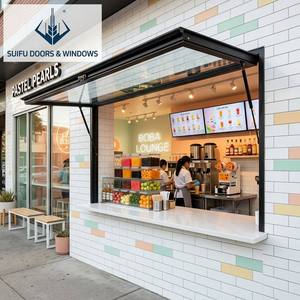
 AS 2047 / Impact
Architectural Product Catalog
High-Performance Aluminum Awning Windows & Fenestration Systems
Explore our export-certified portfolio manufactured according to international structural and thermal standards, designed to satisfy stringent project specifications worldwide.
AS 2047 / Impact
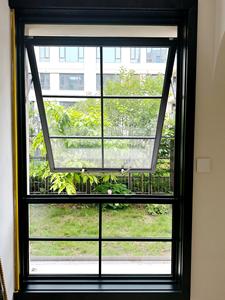 Architectural French
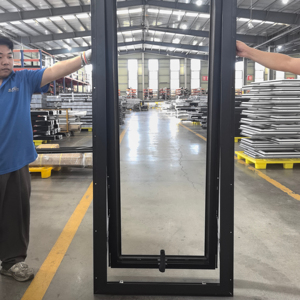 Heavy Commercial
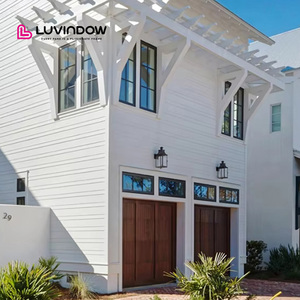 Thermal Break
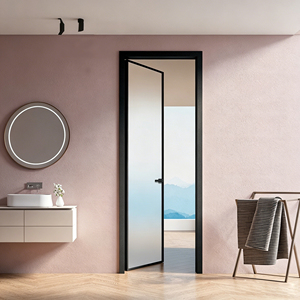 Villa Doors
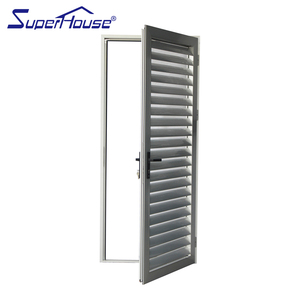 Vented Louver
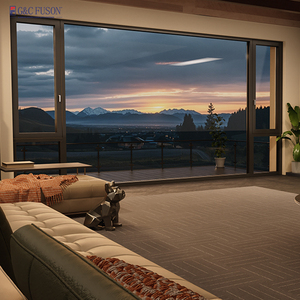 Triple Glazed
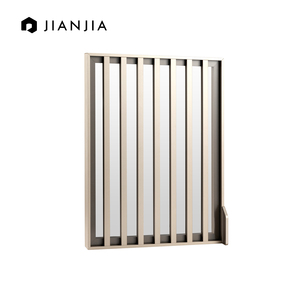 Interior Glazing
Engineering Whitepaper
Structural Anatomy & Atmospheric Dynamics of China Awning Windows
A deep technical review of multi-chamber extrusion geometries, weather-barrier integration, and why top-hung awning fenestration commands commercial building schedules.

Aviation-Grade 6063-T5/T6 Alloy Architecture
Aluminum awning windows represent a critical intersection of architectural aesthetics and physical structural resilience. Unlike traditional horizontal sliding or inward hopper formats, the top-hung external outward projection of awning sashes utilizes gravity to assist compression against structural multi-point EPDM gaskets. As a premier China exporter, DERCHI applies primary billet 6063-T5 and 6063-T6 aluminum alloys featuring nominal wall thicknesses of 1.8mm to 2.2mm for heavy-duty architectural windows, far surpassing light-residential benchmarks.
- Isobaric Multi-Chamber Pressure Equalization: Internal internal drain chambers engineered to redirect wind-driven rainwater back outward via gravity weep-valves under severe pressure gradients.
- Precision Friction Stay Hinges: High-tensile AISI 304/316 austenitic stainless steel arms tested beyond 25,000 cycles without sash drop or angular deflection.
- Continuous Gasket Compression: Co-extruded vulcanized EPDM triple-seal barriers providing hermetic perimeter contact, arresting airborne sound waves up to 42 dB.
Innovation Trajectory
Key Development Trends in Aluminum Fenestration Engineering
How cutting-edge surface metallurgy, thermal barrier mechanics, and mechatronic facade integration are redefining top-tier Chinese exports.
Polyamide Thermal Barrier Systems
The global demand for low carbon footprint building envelopes has accelerated the adoption of PA66 GF25 thermal breaks (polyamide reinforced with 25% glass fiber). Chinese extruders have shifted from poured-and-debridged urethane to multi-cavity thermal struts with warm-edge IGUs, delivering overall fenestration U-values as low as 1.4 W/m²·K (0.24 BTU/hr·ft²·°F) for high-efficiency and LEED-certified building assemblies.
Coastal Fluorocarbon & Qualicoat Coatings
Atmospheric salinity and high UV exposure degrade inferior organic surface finishes within 36 months. Top Foshan exporters now prioritize architectural powder coating (Qualicoat Class 2 certified) and 3-coat PVDF (Fluorocarbon) electro-deposition containing over 70% Kynar 500 resin. These treatments resist chalking, blistering, and saline corrosion for over 30 years in extreme littoral and tropical environments.
Smart Actuation & Automated Smoke Ventilation
Commercial facades increasingly specify mechatronic awning window applications. Integrated chain and linear spindle concealed actuators interface seamlessly with Building Management Systems (BMS) and EN 12101-2 natural smoke/heat exhaust ventilation (SHEV) standards, activating instantaneous emergency outward venting while maintaining clean interior architectural profiles.
Strategic Procurement Insights
Future Procurement Trends for Global Architects, Builders & Wholesalers
Navigating geopolitical supply logistics, pre-construction verification protocols, and high-efficiency direct sourcing strategies.
B2B Procurement Evolution Matrix: 2026–2030
Strategic structural shifts observed across international architectural supply contracts and wholesale container purchasing.
| Procurement Dimension | Traditional Legacy Practice | Future Global Best Practice | China Exporter Strategic Advantage |
|---|---|---|---|
| Verification Protocol | Post-delivery on-site testing; destructive sampling. | Factory VR Tours & Third-Party Lab Testing (AS 2047, AAMA, CE). | Transparent live factory audits, pre-dispatch mock-up chamber testing in Foshan. |
| Shop Drawing Integration | 2D CAD drafting; prolonged paper-based revisions. | Full BIM LOD 350 / Revit modeling with thermal boundary simulation. | Dedicated in-house facade engineers delivering parametric files inside 48 hours. |
| Supply Chain Integration | Fragmented purchasing (doors from source A, windows from B). | Single-Source Envelope Bundling (Awning, Pivot, Louvers, Curtain Walls). | DERCHI integrated factory ecosystem cutting freight container dead-space by 28%. |
| Hardware Specification | Unbranded generic hinges and zinc alloy latches. | German-engineered multi-point locking (Siegenia, Hoppe, CMECH, Hopo). | Volume procurement relationships providing Tier-1 hardware at OEM factory pricing. |
Enterprise Core Strengths
Why Tier-1 Contractors and Global Developers Partner with DERCHI
Combining over a quarter century of manufacturing rigor with deep expertise across Asia-Pacific, North American, and Middle Eastern construction codes.
180,000㎡ Modern Production Base
Operating out of Shishan Town, Nanhai District, Foshan—the global epicenter of advanced aluminum extrusion—DERCHI houses multi-axis CNC machining centers, automated corner-crimping lines, and robotic insulated glass unit assembly lines guaranteeing sub-millimeter tolerances on oversized architectural apertures.
Comprehensive Global Testing Approvals
Our aluminum fenestration products have undergone rigorous laboratory cyclic loading and water leakage testing. Certified to Australian AS 2047 (N6 Cyclone Rating), European CE EN 14351-1, ISO 9001 quality systems, and UL fire ratings, DERCHI systems clear municipal project inspections without delay.
End-to-End International Export Logistics
Proximity to Shenzhen and Guangzhou deepwater container ports enables rapid maritime transit across Southeast Asia, Australasia, and North America. Shipments feature export-grade fumigated wooden crates, high-density edge corner protectors, and moisture-barrier vacuum plastic wrapping ensuring zero-defect job site arrivals.
Professional Procurement FAQ
Frequently Asked Questions by Commercial Buyers & Importers
Direct technical answers addressing glazing specifications, structural ratings, and project scheduling for international container orders.
What are the key technical differences between awning and casement windows for high-wind regions?
Awning windows are hinged along the horizontal top rail and push outward from the bottom sill, whereas casement windows are side-hung. In typhoon, cyclone, and high-wind environments, awning windows offer structural superiority because positive external wind pressure forces the sash firmly against the structural frame gasket, creating a tighter seal. Furthermore, awning units allow open-air ventilation during heavy downpours, as the outward-pitched sash acts as a protective protective glass canopy preventing rainwater intrusion.
How does DERCHI ensure Australian AS 2047 and American AAMA compliance during fabrication?
Compliance begins with structural alloy selection (primary 6063-T5/T6 with verified tensile strength) and structural silicone glazing (Dow Corning / Sika). Every batch undergoes dimensional checks, corner crimp pull testing, and water chamber tightness simulations up to 450Pa–600Pa static water head pressures. For projects requiring AS 2047 N6 ultimate wind load ratings (up to 4400Pa), internal steel reinforcements and heavier multi-point locking cams are integrated according to structural engineering calculations.
What is the standard manufacturing lead time for custom container orders from Foshan?
Upon final sign-off of architectural CAD shop drawings and finish approvals, standard factory production cycles range from 25 to 35 business days. Bespoke finishes such as specialized AkzoNobel custom color matching or specialized low-iron triple-laminated glass configurations may require 35 to 42 days. We coordinate container loading directly inside our 180,000㎡ plant to maximize volumetric stowage and protect delicate corner joints during sea transit.
Can we bundle aluminum awning windows with heavy pivot entry doors and curtain walls in one shipment?
Yes. This is one of DERCHI’s principal competitive advantages. Commercial developers and villa builders routinely consolidate aluminum awning windows, oversized cast aluminum security doors, commercial pivot entrances, and interior partition systems into single consolidated 40-foot HQ containers. This eliminates the complexity of coordinating multiple factories, unifies surface finish color profiles across the facade, and significantly reduces total ocean freight expenditure.
How are shop drawings and engineering submittals managed for custom fenestration schedules?
Our engineering design department operates on GMT+8 and interfaces seamlessly with client design schedules. Upon receipt of window schedules, rough opening dimensions, and site wind load requirements, we produce fully dimensioned 2D shop drawings (plan, elevation, and structural mullion section details) along with 3D BIM/Revit models within 48 to 72 hours. Production never commences until the client’s licensed architect or structural engineer reviews and stamps the final submittal.