Certified Industrial Directory
Featured Architectural Aluminum Door & System Collections
Explore top-tier manufacturing outputs adhering to rigorous international fenestration and interior casing criteria, engineered for commercial multi-family, hospitality, and bespoke residential deployments.
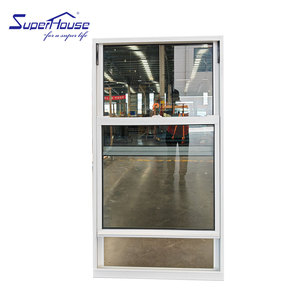
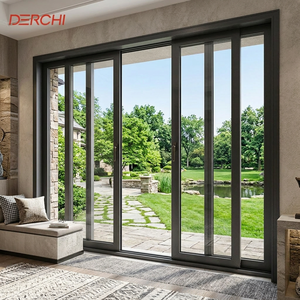
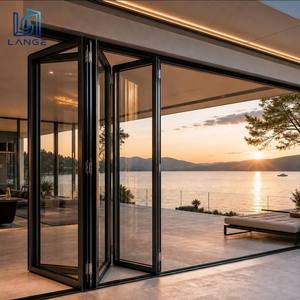
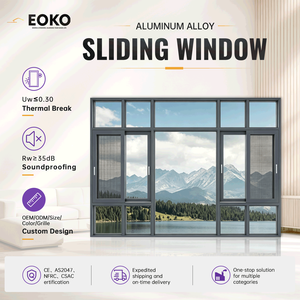
180,000㎡
Production Infrastructure
25+ Yrs
Industrial Engineering
100+
Patents & Certifications
600+
Skilled Workforce
Industrial Foresight
Global Procurement Matrix: Aluminum Cupboard Doors & Millwork Systems
Analyzing the material dynamics, automated manufacturing workflows, and architectural transitions driving commercial cabinetry and interior door procurement through 2026–2030.
Alloy Metallurgy & Extrusion Precision
Modern commercial architectural millwork has definitively transitioned away from standard commercial 6063-T5 aluminum extrusions toward homogenized 6063-T6 and 6060 high-tensile alloys. The contemporary procurement imperative dictates profile wall thicknesses between 1.2mm and 2.0mm to guarantee that tall cupboard leaves—often exceeding 2,700mm in ultra-modern ceiling-height layouts—retain zero lateral deflection or torsional bow under sustained mechanical loading and thermal micro-climates.
Surface Passivation & Anodizing Standards
Architects and tier-1 contractors demand surface longevity capable of withstanding acidic vapor, culinary oils, and humid coastal atmospheres. Leading Guangdong manufacturing complexes deploy Qualicoat Class 2 certified powder coating and 20-micron deep-tank architectural anodizing. Modern fluorocarbon (PVDF) electrostatic dispersion ensures zero micro-pitting, peel back, or edge oxidation, particularly across custom brushed brass, deep titanium grey, and organic champagne finishes.
Composite Infill Integration (Honeycomb & Sintered Stone)
Cupboard and wardrobe door architecture has progressed past simple hollow-core extrusions. The latest production standards integrate hexagonal aerospace-grade aluminum honeycomb substrates laminated between ultra-thin sintered porcelain stone (rock slab) or tempered fluted glass. This composite sandwich configuration delivers total acoustic dampening, Class A fireproofing, and complete moisture impermeability that wood-based substrates (MDF, HDF) fail to maintain in tropical and sub-tropical environments.
| Evaluation Parameter | Architectural Grade Aluminum (DERCHI Standard) | Standard MDF / Melamine Infill | Solid Natural Timber Core |
|---|---|---|---|
| Dimensional Stability (2800mm Height) | Zero deflection (<0.5mm variance over 3 years) | Moderate to severe bowing (>4.0mm deflection) | Sensitive to grain orientation; twisting risk |
| Moisture Absorption & Hydrophobicity | 0.00% absolute impermeability (ASTM D570) | Swelling index 8% to 18% in high humidity | Dynamic expansion/contraction cycles (12–15%) |
| Fire Retardancy Rating | Class A1 Non-combustible (EN 13501-1) | Class B2 / Class E (combustible with binders) | Class D (combustible without intumescent seals) |
| Surface Hardness & Scratch Resistance | Barcol Hardness >80 (Anodized/PVDF treated) | 2H–3H pencil test; prone to edge chip out | Variable (2H–4H depending on polyurethane coat) |
| VOC Emissions & Chemical Safety | Zero Formaldehyde / Zero TVOC (Green Guard Gold) | E1 or E0 certified (continuous formaldehyde trace) | Dependent on curing lacquer and adhesive compounds |
Future Procurement Directives
Emerging Production Architectures: What Buyers Must Plan For
Ultra-Slim Sightlines (Minimalist 8mm Faces)
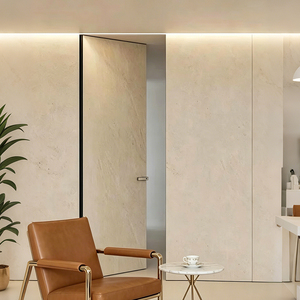
The contemporary interior movement has eliminated chunky 40mm framing profiles. Leading factories now machine sub-8mm peripheral frames with recessed concealed hinge systems that sit completely flush within the cabinetry carcass, accommodating integrated smart LED lighting channels within the structural profile.
Concealed Hardware CNC Machining
Global procurement teams favor vendors providing single-setup, 5-axis CNC hinge pocket routing. Milling pocket recesses for Italian-standard concealed pivot hinges, invisible self-closers, and magnetic latching profiles directly from production CAD drawings eliminates field errors and saves substantial site installation time.
BIM & ERP Interoperability
Elite manufacturers operate unified ERP systems connected directly to Autodesk Revit and ARCHICAD BIM libraries. Every door leaf, jamb extrusion, and structural gasket is parametrically defined, giving procurement managers precise weight tolerances, acoustic ratings, and lead times down to specific batch numbers.
Circular Economy & Closed-Loop Smelting
With global green building codes (LEED v4.1, BREEAM) demanding comprehensive Environmental Product Declarations (EPDs), Chinese manufacturers increasingly utilize low-carbon post-consumer scrap billets, slashing embodied carbon footprints by up to 65% across finished cupboard structures.
Enterprise Competence
Why Top Global Developers Align with Guangdong Dejiyoupin (DERCHI)
Headquartered in Shishan Town, Foshan—China's prime architectural fabrication corridor—our advanced manufacturing park represents high-volume precision, institutional engineering, and global logistics capability.
180,000㎡ Mega-Scale Industrial Park
Operating out of Building 19, Shenke Chuangzhi Park, our facility houses high-speed profile cutting arrays, dual-direction automated powder-coating lines, CNC milling centers, and specialized structural glass lamination chambers. With over 600 full-time specialists, we handle commercial contracts exceeding tens of thousands of square meters without splitting production schedules.
Stringent Multi-Standard Certifications
Our systems comply with the world's most demanding regional building inspections. DERCHI products maintain CE compliance (Europe), ISO 9001 quality management, Australian AS 2047 cyclonic pressure benchmarks (tested up to N6 ratings), and UL fire-rated safety credentials. Procurement professionals bypass third-party compliance hurdles straight to project handover.
Single-Point Engineering & GMT+8 Workflow
Our multilingual sales engineers work directly on GMT+8, overlapping with commercial trading centers across Asia, Australasia, the Middle East, and the European morning window. From opening size surveys and shop drawings through to multi-layer reinforced plywood export packing, DERCHI eliminates middlemen delays.
Direct Clarifications
Frequently Asked Technical Questions (FAQ)
Clear, engineer-backed insights addressing international procurement, structural durability, lead times, and factory QA checkpoints.
Why choose aluminum-framed cupboard and wardrobe doors over engineered wood (MDF/HDF) in tropical and coastal climates? +
Engineered wood cores (MDF, HDF, chipboard) rely on formaldehyde-based resin glues vulnerable to moisture vapor. When relative humidity consistently exceeds 65%—as across Southeast Asia, coastal North America, and the Middle East—timber products swell, experience edge-banding delamination, and develop mold. Extruded architectural aluminum alloy (6063-T5/T6) offers total moisture and corrosion resistance. Anodized or fluorocarbon-treated aluminum doors experience zero seasonal dimensional drift, ensuring hardware stays aligned for the lifetime of the installation.
What are the minimum and maximum profile wall thicknesses recommended for ceiling-height cupboard systems?
+
For small base cupboards or low vanity units (heights under 900mm), a frame wall thickness of 1.2mm is generally sufficient. For tall, floor-to-ceiling configurations (2,400mm to 3,000mm+), we specify high-strength profiles between 1.6mm and 2.0mm, paired with internal structural corner cleats. In applications utilizing heavy infills such as sintered rock slab, double-laminated fluted glass, or composite panels, internal perimeter reinforcing ribs prevent profile warping and keep operating tolerances within ±1mm.
How does DERCHI verify hinge compatibility and milling tolerances for European and American hardware? +
We partner with major international hardware systems including Blum, Salice, Grass, and Hafele, while also engineering proprietary concealed pivot assemblies. Every extrusion design features verified screw-retention channels. Our 5-axis CNC processing centers drill hinge cups, routing slots, and integrated handle mortises according to digital templates, holding positional tolerances within ±0.2mm. We can perform physical hardware test fit-ups on sample runs before mass batch machining.
What quality assurance documentation accompanies export shipments from your Foshan factory? +
Every production batch leaves our facility backed by an export documentation package: alloy spectrometry composition certificates (verifying silicon/magnesium balance to GB/T 5237 or ASTM B221), coating thickness reports (anodizing micron verification or dry-film thickness test for powder coats), surface adhesion cross-hatch test records, and comprehensive dimensional inspection reports. Finished shipments are packed inside fumigated, foam-cushioned wooden crates labeled with corresponding room and floor schedule codes for streamlined site distribution.
What is the standard production lead time for custom commercial volume orders? +
Standard shop drawings and BIM schedules are completed within 48 to 72 hours of receiving opening schedules. Following client drawing sign-off and color-sample verification, typical batch manufacturing timelines run between 25 and 35 days for container-load volumes. With direct access to deep-water shipping berths in Guangzhou and Shenzhen, marine transit can be scheduled directly to ASEAN hubs (7–12 days), Australasia (14–20 days), the Middle East (18–25 days), and North America/Europe (22–35 days).