Engineered Aluminum Window & Door Solutions for Manufactured Housing
Direct from Foshan's 180,000㎡ manufacturing base: robust thermal-break extrusions, impact-rated tempered glazing, and weather-sealed sliding and casement systems designed specifically for mobile residences, tiny houses, transportable modular buildings, and prefab villa projects.
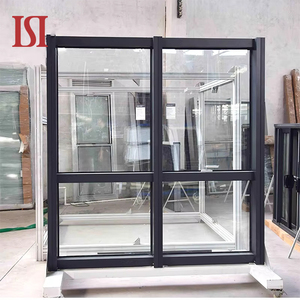
Floor Ceiling Fixed Aluminum Alloy Louver Window Double Glass
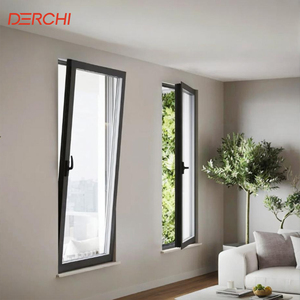
Hurricane Impact Thermal Break Casement & Tilt-Turn Windows
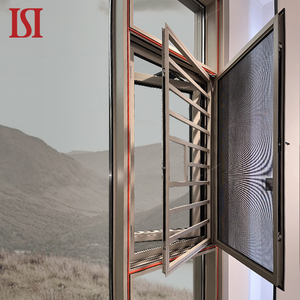
Security Burglar Proof Swing Casement Windows with Blackout Shades
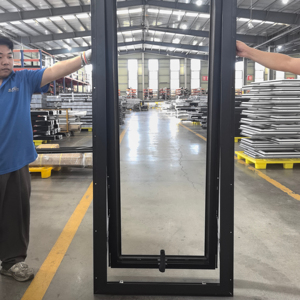
European Style High Durability Aluminum Crank Tall Awning Window
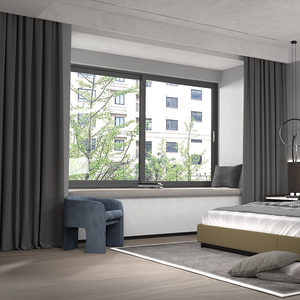
Australian Standard AS2047 Double Glazed Sliding Windows with Flyscreen
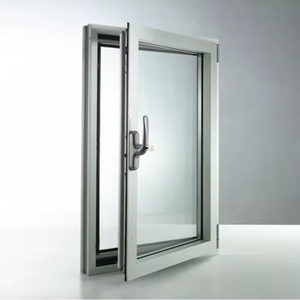
Heavy-Duty Hurricane & Ballistic Resistant Aluminum Casement System
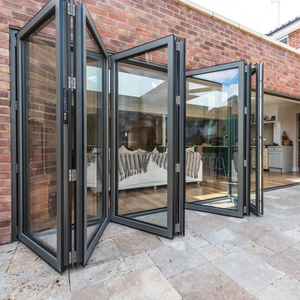
Thermal Break Aluminum Bi-Fold Folding Doors Low-E Glazing
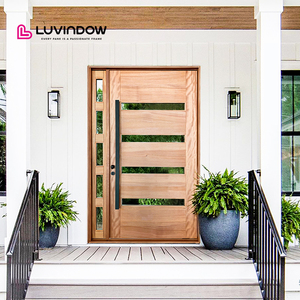
Engineered Teak & Oak Aluminum Composite Front Entry Portal
Engineering Mobile Home Fenestration: Why Aluminum Outperforms Vinyl and Wood in Off-Site Prefabrication
Manufactured housing, modular relocatable buildings, tiny homes, and mobile residences operate in a mechanical environment distinct from conventional stationary architecture. Units must withstand dynamic torsional flexure during highway transport, repetitive vibrational shock, intense exposure to changing microclimates, and stringent structural limits imposed by road-haulage weight regulations.
Dynamic Torsional Rigidity
Highway transit subjecting manufactured home modules to constant lateral racking causes vinyl (uPVC) frames to twist, leading to seal failure, corner weld cracking, and glass edge chipping. Extruded 6063-T5 aluminum provides an ultimate tensile strength exceeding 185 MPa, maintaining dimensional stability across thousands of transport miles.
PA66GF25 Thermal Insulation
Modern Chinese aluminum window exporters eliminate thermal bridging via structural polyamide insulating struts reinforced with 25% glass fiber (PA66GF25). This ensures mobile home envelope thermal transmittance values as low as $U_w \le 1.4\ \text{W/(m}^2\cdot\text{K)}$ ($R\text{-value}\approx 4.0$), satisfying US HUD Phase II and European passive envelope codes.
Weight-to-Strength Optimization
Trailer chassis and modular floor spans are constrained by strict Department of Transportation (DOT) and axle load envelopes. Aluminum windows deliver ultra-slim sightlines that maximize natural illumination while reducing fenestration tare weight by 35% compared to solid timber or steel frames of equivalent wind load resistance.
| Performance Attribute | Thermal-Break 6063-T5 Aluminum | Standard Vinyl (uPVC) | Solid Architectural Timber |
|---|---|---|---|
| Highway Transport Racking Stability | Superior (Zero flex failure) | Moderate (Prone to corner weld tear) | High (Risk of joint displacement) |
| Thermal Expansion Coefficient ($10^{-6}/\text{K}$) | 23.1 (Stable pairing with glass) | 50.0–80.0 (High differential stress) | 5.0 (Hygroscopic moisture swelling) |
| Cyclonic Wind Resistance (AS 2047 / ASTM E330) | N6 Rating / Up to 4500 Pa (DP65+) | Limited to N2/N3 (Max 1500–2000 Pa) | Varies by species (Requires heavy frames) |
| UV & Tropical Monsoonal Durability | AAMA 2605 Fluorocarbon (>25 Years) | Yellowing, surface chalking, embrittlement | Rotting, swelling, high maintenance |
| Fire Safety Rating | Class A Non-Combustible (Melting >660°C) | Combustible, emits toxic dioxins/HCl | Combustible (Flame spread issues) |
| Recyclability & Circular LCA | 100% Infinite Recyclability (High scrap value) | Difficult multi-polymer degradation | Biodegradable but chemically treated |
Key Procurement & Technological Trends in Mobile Home Aluminum Fenestration (2025–2030)
As global housing crunches drive the industrialization of off-site construction, modular builders and mobile home developers are radically shifting how they source building envelopes. The next five years will reward procurement directors who align with intelligent, integrated, and carbon-certified manufacturing pipelines.
Pre-Assembled "Plug-and-Play" Cassettes with Integral Nailing Fins
Conventional field-flashing is being phased out in high-speed modular production lines. Future-ready Chinese factories supply custom aluminum window sub-assemblies with pre-punched continuous nailing fins (1-1/4" setback), pre-fitted J-channels for vinyl/metal siding integration, and factory-injected polyurethane flashing gaskets. This cuts modular framing bay cycle times from 45 minutes down to under 8 minutes per window opening.
Lean Factory Assembly Zero-Leak Perimeter SealsLow-Carbon Aluminum Billets & Environmental Product Declarations (EPD)
With the European Union's Carbon Border Adjustment Mechanism (CBAM) and North American green building mandates expanding to prefabricated structures, Chinese extruders are pivoting to hydro-powered primary aluminum smelting and recycled post-consumer scrap blending. Importers must demand third-party verified EPDs demonstrating embodied carbon metrics below $4.0\ \text{kg CO}_2\text{e per kg of extruded aluminum}$.
Decarbonized Sourcing LEED & BREEAM CreditsDecentralized Micro-Ventilation & Acoustic Attenuation for Compact Spaces
Compact living environments like mobile homes and tiny houses face severe interior humidity condensation and airborne noise infiltration in high-density manufactured housing communities. Leading exporters now integrate pressure-equalized acoustic trickle vents directly into the upper window transoms, offering passive air exchange of 30 m³/h while preserving sound transmission class (STC) ratings up to 38 dB.
Indoor Air Quality (IAQ) STC 38+ Acoustic CoreExtreme Weather Resilience: Florida High Velocity (HVHZ) & Cyclonic AS 2047 N6
As manufactured home parks expand across severe storm corridors in the Gulf of Mexico, coastal Southeast Asia, and northern Australia, baseline window specifications are migrating toward hurricane-rated glass units. Top tier factories employ SentryGlas® (SGP) and multi-layer PVB interlayers coupled with reinforced corner keys and stainless steel multi-point shootbolts that resist missile impact and design pressures beyond 5000 Pa.
Missile Impact Level D HVHZ CompliantGuangdong Dejiyoupin Doors & Windows (DERCHI): Foshan's Premier Manufacturing Center
Consistently ranked among the Top 10 high-end door and window manufacturers in China, Guangdong Dejiyoupin operates a sprawling 180,000㎡ industrial complex in Nanhai District, Foshan. Our specialized export lines engineer heavy-duty mobile home windows, thermal-break entry systems, and acoustic architectural glass engineered to surpass global testing mandates.
- Free Parametric CAD/BIM Shop Drawings: Direct engineering coordination with your modular structural schedules before tooling cuts.
- Dedicated Sea-Freight Nesting Packaging: Moisture-barrier shrink wrap, edge corner guards, and reinforced wooden crates engineered for maximum container stuffing volume without in-transit surface friction.
- Global Project Track Record: Proven delivery across the United States, Australia, the Philippines (Worldbex Exhibitor), the Middle East, and Pacific Rim islands.
Quality Assurance Protocols
Every batch of aluminum profiles undergoes spectrophotometer surface color matching, cross-hatch adhesion testing (ASTM D3359), and barcol hardness verification prior to CNC miter cutting.
The 5-Step B2B Factory Auditing Framework for Sourcing Windows from China
Experienced international buyers avoid intermediaries and trading agents by evaluating prospective Chinese fenestration suppliers across five vital operational checkpoints:
1. Raw Billet & Ingot Provenance
Ensure your supplier utilizes primary A00 grade aluminum ingots rather than contaminated remelt scrap. Inspect the factory's mill test certificates (MTC) verifying the alloy chemistry conforms strictly to standard 6063-T5 or 6063-T6 composition.
2. Corner Joint Mechanical Crimp
Check whether the manufacturer uses cheap plastic corner cleats or pneumatic double-head corner crimping machines with dual-component epoxy injection. Mechanical corner crimping guarantees water-tight corners under heavy wind pressure.
3. Hardware & Gasket Resilience
Cheap PVC gaskets shrink and crack under sunlight within 24 months. Verify that your exporter exclusively uses automotive-grade co-extruded EPDM or silicone rubber gaskets paired with grade 304 or 316 stainless steel friction hinges and rollers.
4. Insulated Glazing Unit (IGU) Dual Seal
Inspect the automated glass fabrication line. Double and triple glazing units must feature primary polyisobutylene (PIB) inner sealing and secondary structural silicone or polysulfide perimeter seals containing 3A molecular sieve desiccant to stop fogging.
5. Export Staging & Container Packaging
Assess the packaging strategy. Professional exporters avoid loose loading; windows should be packed in custom fumigated A-frame steel racks or heavy-duty plywood crates with air-cushion corner caps to survive multimodal crane handling.
Direct Project Technical Consultation
Need immediate evaluation of your architectural door and window schedules? Connect with our Foshan engineering directors in the GMT+8 time zone for live CAD analysis and wholesale export container quotations.
Frequently Asked Questions for Importers & Modular Contractors
Clear, technically rigorous answers addressing the most common engineering, shipping, and code compliance queries encountered when sourcing aluminum mobile home windows from China.
What specific building codes apply to aluminum windows for manufactured and mobile homes?
How do Chinese factories prevent window leakage caused by transport vibration in modular buildings?
Can you customize integrated nailing fins, J-channels, and reveal returns for timber and LGS wall studs?
What is the difference between non-thermal break and thermal-break aluminum for transportable homes?
How does Guangdong Dejiyoupin (DERCHI) package aluminum windows to prevent ocean transit damage?
What are typical production lead times and Minimum Order Quantities (MOQ) for custom project schedules?
Accelerate Your Mobile Home & Modular Fenestration Sourcing
Submit your window opening dimensions, architectural elevations, or project door schedule. Our Foshan engineering department provides free CAD shop drawings, structural wind load calculations, thermal performance simulations, and container-optimized wholesale quotes within 24 hours.