Export Portfolio
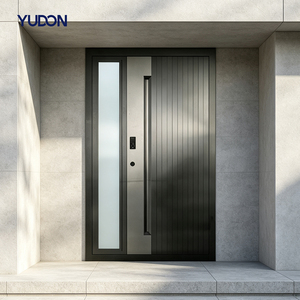
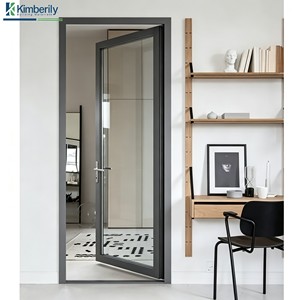
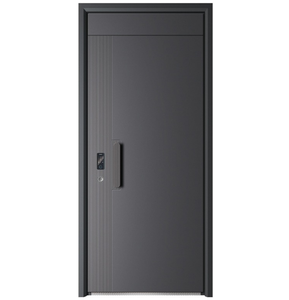
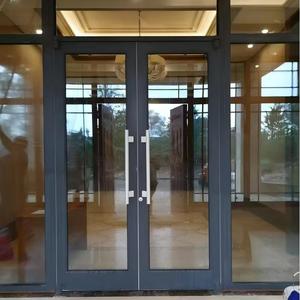
Architectural Single Door Systems
Engineered to comply with stringent ISO 9001, CE, and Australian AS 2047 fenestration standards, offering maximum structural integrity and thermal efficiency.
180,000㎡
Smart Manufacturing Base
25+
Years Fenestration Leadership
100+
Global Patents & Testing Certs
AS 2047
N6 Structural Wind Load Rated
Industry Whitepaper & Procurement Analysis
Strategic Procurement of Aluminum Single Doors: Technical Engineering, Metallurgical Specifications, and Supply Chain Governance
In high-performance architectural engineering, the specification of exterior and interior door systems has evolved far beyond basic spatial demarcation. In contemporary residential complexes, commercial developments, and high-density hospitality ventures, single doors fabricated from structural aluminum alloys serve as complex structural envelopes. They must systematically mitigate severe meteorological loads, restrict cross-boundary acoustic energy, deliver verifiable thermodynamic containment, and ensure lifecycle durability over decades of aggressive mechanical utilization.
Procurement directors, civil contractors, facade engineers, and volume distributors increasingly evaluate Chinese manufacturers not simply as lower-cost extrusion facilities, but as advanced technological hubs capable of end-to-end bespoke fabrication. As global standards tighten—ranging from the strict air infiltration benchmarks under European EN 12207 and American AAMA/WDMA/CSA 101/I.S.2/A440 to the hyper-stringent cyclone testing protocols of Australian AS 2047 (N6 classifications)—understanding the metallurgical and structural realities of aluminum single doors becomes critical to project risk mitigation.
1. Metallurgical Profiles, Billet Quality, and Thermal Insulation Architecture
The operational longevity of an aluminum single door starts directly at the chemical composition of the primary aluminum alloy. Industrial leaders utilize prime 6063-T5 and structural 6060-T6 architectural grade aluminum extrusions characterized by precise silicon and magnesium ratios. Lower-tier manufacturers often introduce uncontrolled recycled scrap billets that result in elevated iron impurities. Such contamination degrades post-anodizing aesthetic uniformity, introduces micro-fissures during high-pressure extrusion cycles, and dramatically compromises the tensile strength required to withstand severe structural wind deflection.
Modern fenestration performance mandates the deployment of advanced Thermal Break (Polyamide Barrier) technology. Uninsulated aluminum features a thermal conductivity coefficient (K-value) of approximately 160 W/(m²·K) to 200 W/(m²·K), transforming doors into massive thermal bridges that trigger indoor surface condensation, elevate HVAC energy burdens, and compromise internal climate stability. By mechanically crimping multi-chambered Polyamide 66 reinforced with 25% chopped fiberglass (PA66 GF25) between interior and exterior aluminum profiles, manufacturers lower whole-system U-values down below 1.6 W/(m²·K) when coupled with double or triple insulated glass units (IGU). In aggressive climates—ranging from scorching Middle Eastern deserts with high ambient diurnal temperature swings to monsoon-prone tropical zones across the Philippines, Malaysia, and Singapore—this structural separation guarantees absolute thermal resistance while preventing the thermal bow effect that causes door leaves to warp and fail to latch properly under direct solar exposure.
2. Surface Finishing Engineering: Fluorocarbon (PVDF) vs. Architectural Anodizing
Coastal developments, maritime ports, and high-salinity island properties present brutal environmental challenges for architectural hardware and exposed framing. Surface protection engineering determines whether an export shipment maintains its architectural finish over 30 years or succumbs to unsightly filiform corrosion, chalking, and delamination within 24 months of exposure.
- AAMA 2605-Compliant Polyvinylidene Fluoride (PVDF): Consisting of minimum 70% fluoropolymer resin systems, multi-coat PVDF coatings provide unmatched resistance against ultraviolet degradation, acid precipitation, and chemical atmospheric pollutants. In high-exposure tropical territories, these finishes withstand rigorous 4,000-hour continuous salt spray testing without micro-blistering or loss of gloss retention.
- Architectural Class I Anodizing (Qualanod Certified): Electrolytically formed anodic oxide layers exceeding 20-25 microns deliver superior surface hardness and scratch resistance. Anodizing permanently integrates the finish with the underlying aluminum crystal matrix, eliminating the possibility of adhesion loss, peel-back, or chipping even under aggressive daily pedestrian impact in high-traffic hotels, offices, and residential entry foyers.
- High-Durability Powder Coatings (Qualicoat Class 2): Engineered specifically for modern exterior facades, thermosetting architectural powder coatings deliver robust mechanical abrasion resistance, flexible color formulations, and zero-VOC production metrics aligned with international green building rating systems such as LEED and BREEAM.
3. Future Trends Shaping Global Sourcing and Procurement in 2026-2030
The global architectural fenestration sector is experiencing radical technological disruption driven by building information modeling (BIM), ultra-tight municipal energy codes, and end-user demand for smart architectural automation. International buyers are strategically realigning their supply chain partnerships toward manufacturers demonstrating core competency in the following emerging vectors:
A. Monolithic Oversized Single-Leaf Pivot Topologies: Modern architectural designs favor dramatic entry openings characterized by oversized single-leaf configurations reaching vertical heights up to 4,000mm and widths exceeding 1,800mm. Standard perimeter-hung butt hinges are structurally incapable of carrying such dead weights (often ranging from 250kg to 500kg). The market is aggressively pivoting toward integrated floor-recessed and overhead hydraulic pivot systems. These concealed pivots transfer the vertical load directly to structural floor slabs, delivering featherlight operational kinetics, adjustable backcheck dampers, and automatic self-closing alignment without mechanical sag over millions of operational cycles.
B. Biometric Identification and Building Automation Protocol (BACnet/Modbus) Integration: The conventional lock cylinder is rapidly becoming a secondary emergency override. Single doors destined for high-end residential subdivisions and corporate towers require pre-milled structural pockets accommodating concealed motor-driven multipoint locking systems. Factory-integrated multi-modal biometric sensors (such as 3D facial recognition, subcutaneous vein scanners, and encrypted RFID modules) must communicate seamlessly via dry-contact relays or wireless Zigbee/Matter protocols with building master automation setups and visual intercom infrastructures.
C. Extreme Acoustic Decoupling for High-Density Urban Living: As urbanization accelerates adjacent to heavy transit arteries, commercial airports, and urban hubs, the acoustic transmission class (STC) and sound reduction index (Rw) of single entry and casement doors are treated as top-tier engineering metrics. Achieving sound isolation levels exceeding 38 dB to 42 dB requires multi-layered architectural laminates (Acoustic PVB), dual-perimeter continuous EPDM cellular rubber gaskets, and automated drop-down bottom threshold seals that deploy instantly upon latch engagement, cutting off airborne sound pathways completely.
D. Low-Carbon Metallurgy and Circular Supply Chains: International institutional developers face strict Environmental Product Declaration (EPD) mandates. Sourcing doors utilizing hydro-powered aluminum billets (boasting carbon footprints under 4.0 kg CO₂e per kg of primary metal) compared to traditional coal-powered smelting (often exceeding 16.0 kg CO₂e/kg) has evolved into an essential qualifying benchmark for commercial project tenders.
4. Enterprise Manufacturing Superiority: The Foshan Industrial Advantage
Guangdong Dejiyoupin Doors and Windows Co., Ltd. (DERCHI) represents the pinnacle of China’s high-precision architectural manufacturing ecosystem. Situated strategically in Foshan—the world’s undisputed epicenter for advanced aluminum extrusion and fenestration technology—our manufacturing park spans an expansive 180,000 square meters. Operating over 25 continuous years of focused research, engineering development, and cross-border execution, DERCHI bridges the gap between customized architectural craftsmanship and hyper-efficient industrial production.
Every single door profile passing through our automated CNC processing lines undergoes micron-accurate milling, computerized corner-crimping with dual-component structural adhesives, and multi-axis hardware positioning. Our facility maintains over 100 patents and prestigious international certifications including CE, ISO 9001, Australian AS 2047, and UL fire-rated verifications. We have developed specialized engineering protocols designed specifically for typhoon-ravaged shorelines, extreme monsoon environments, and coastal salt-spray exposures across the Asia-Pacific region, the Middle East, and beyond.
By maintaining total vertical integration—from structural CAD shop drawing generation and profile extrusion finishing to automated double-glazing assembly and pre-shipment dry-fit testing—DERCHI eradicates job-site fitment discrepancies. We eliminate costly intermediary markups, providing world-class tier-one developers and regional wholesalers with direct factory-floor cost efficiencies, guaranteed project timelines, and exhaustive technical coordination.
Enterprise Strengths
Why Major Global Contractors Partner With Us
Engineered precision, certified regulatory compliance, and fully synchronized export supply chain management.
End-to-End Vertical Integration
From in-house profile design, thermal-break assembly, and robotic CNC processing to IGU glazing and dry-hang QC testing, total control over quality and delivery speed is maintained.
International Certifications
Fully tested and compliant with CE, ISO 9001, UL Fire-Rated standards, and Australian AS 2047 N6 cyclonic wind load resistance, ensuring smooth municipal sign-offs globally.
Global Engineering Coordination & Port Access
Strategically positioned near major South China deepwater ports (Shenzhen/Guangzhou/Foshan). Our English-fluent engineering sales force works in GMT+8, providing real-time CAD shop drawings, hardware schedule coordination, and tailored sea-freight crating to protect precision surfaces from saltwater vapor during ocean transit.
Procurement Knowledge Base
Frequently Asked Technical Questions
Critical considerations for international procurement directors, facade consultants, and general contractors sourcing from China.
What alloy compositions and profile wall thicknesses are standard for exterior doors?
For exterior commercial and luxury residential doors, prime 6063-T5 or structural 6060-T6 aluminum alloys are standard. In accordance with high-level structural standards like AS 2047 and AAMA guidelines, principal profile wall thicknesses for heavy-duty single doors range between 2.0mm and 3.0mm, with critical structural reinforcement chambers reaching up to 3.5mm. This guarantees zero flexure under extreme wind loads and prevents fastener strip-out over thousands of high-cycle operations.
How are door units protected against moisture, corrosion, and damage during long-distance ocean freight?
Export protection uses heavy-duty crating. Every aluminum profile is wrapped in anti-static protective film and foam edge-guards. Glass components are decoupled using cork separation pads. The assembled leaves and sub-frames are placed inside completely sealed, fumigated non-coniferous plywood crates with multi-layer vapor barriers and industrial-grade silica gel desiccant packs. This prevents condensation, surface etching, and marine salt air infiltration during sea transit.
Can customized hardware, European multi-point locks, and digital smart systems be factory integrated?
Yes. Our multi-axis CNC routing equipment supports pre-milled mortise pockets and cut-outs tailored for European groove systems (Euro-Groove standard), German hardware manufacturers (e.g., Siegenia, Hoppe, GU, Roto), as well as American standard ANSI/BHMA commercial locksets. We also factory install concealed conduits, electric power transfer hinges (EPT), and drop-seals for biometric and smart access control integrations.
What is the typical manufacturing lead time and CAD submittal process for custom commercial projects?
Upon receiving architectural schedules and structural opening dimensions, our engineering department delivers complete CAD shop drawings, anchor detail sections, and glass calculation schedules within 48 to 72 business hours. Following formal drawing sign-off and finish sample approval, mass production typically takes 25 to 35 calendar days, depending on custom extrusion requirements and specific project surface finish specifications.