Engineered Aluminium Entrance Systems & Fenestration Profiles
Explore our flagship product inventory engineered for high wind load tolerance, thermal barrier integrity, and high-security architectural specifications. Every door model undergoes rigorous testing to guarantee extreme environmental stability and structural longevity.
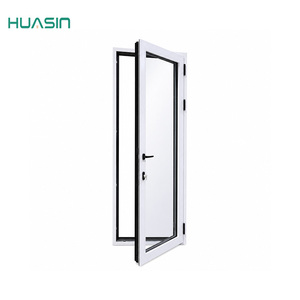
Huasin Customized Modern Design Lowe Double Tempered Glass Sound Heat Insulation Swing Aluminum Casement Door
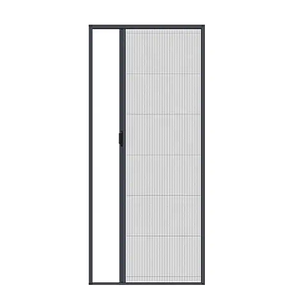
High Quality Aluminium Alloy Frame Sliding Door and windows Polyester Plisse Pleated Folded Mosquito Net Fly Screen Mesh
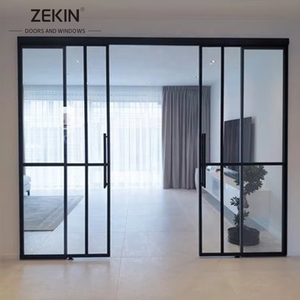
Modern Design Aluminum Grill Sliding Patio Door Glass Interior Sliding Doors Silm Frame SDL Sliding Doors
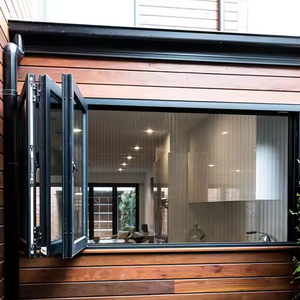
Thermal Break Modern Horizontal Aluminium Windows and Doors with 2.0mm Frame Multi Panel Folding for Kitchen Villa Patio Shop
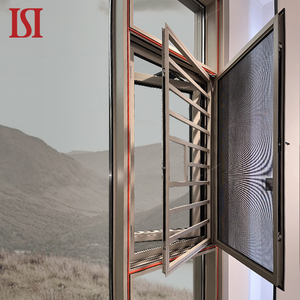
Top Brand Custom Design Security Burglar Proof Swing Open Casement Windows Blackout Window Shades with Hinges
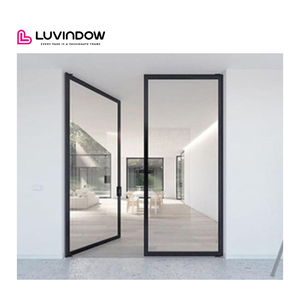
Modern Style Frameless Aluminum Bathroom Swing Casement Door Entry Door for Hotel Use
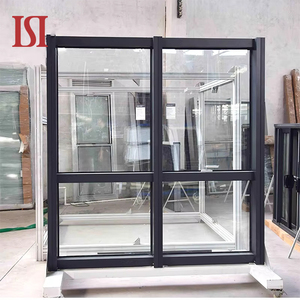
Floor Ceiling Fixed Aluminum Alloy Window Stainless Steel Horizontal Louver Design Double Glass Soundproof Heat Insulation
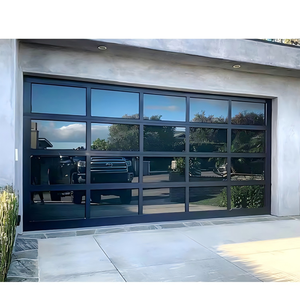
Automatic Black Aluminum Frosted Glass Sectional Residential Garage Door
Intelligent Manufacturing Base
Engineering Heritage
Patents & Global Certifications
Cyclonic Wind Rating Proven
Guangdong Dejiyoupin Doors & Windows (DERCHI): Direct Factory Authority
Selecting an aluminium front door supplier is not merely an aesthetic choice; it is a structural commitment to building longevity, life safety, energy management, and acoustic resilience. As one of China’s Top 10 High-End Architectural Fenestration Brands, Guangdong Dejiyoupin Doors and Windows Co., Ltd. (operating the international brand DERCHI) commands an advanced 180,000㎡ manufacturing complex in Foshan, Guangdong.
With more than 600 specialized production technicians, fully automated German CNC profiling centers, automated corner-crimping cells, and high-precision fluorocarbon (PVDF) coating lines, we bridge the gap between architectural vision and industrial-scale production. We eliminate intermediaries, granting developers, general contractors, and façade engineers direct factory access with complete supply-chain transparency.

Architectural & Material Engineering Trends in Aluminium Entry Systems
The global fenestration and front entrance industry is undergoing a structural paradigm shift driven by stringent carbon neutrality mandates, modern architectural preferences for expansive uninterrupted spans, and the escalation of severe weather events globally.
1. Multi-Cavity Polyamide Thermal Barriers
Historical single-chamber aluminium extrusions exhibited thermal bridges that compromised whole-building envelope ratings. Modern engineering utilizes continuous multi-cavity PA66 GF25 (25% glass fiber reinforced polyamide) thermal break strips, often combined with aerogel cores. This advancement lowers overall U-values to Uw ≤ 1.1 W/(m²·K), mitigating condensation and dramatically cutting HVAC loads across both tropical heat and sub-zero environments.
2. Extreme Wind Pressure Tolerance & AS 2047 N6
With coastal typhoons and cyclonic occurrences intensifying across Southeast Asia, Australasia, and the Caribbean, front entry systems require extreme static and cyclic wind resistance. DERCHI’s structural multi-chambered 6063-T6 architectural alloy profiles with minimum wall thicknesses of 2.0mm to 3.0mm comfortably withstand design ultimate limit state pressures exceeding 4,500 Pascals (N6 rating) without permanent frame deflection or joint displacement.
3. High-Capacity Concealed Pivot Technology
Architectural entrance demands have shifted toward monumental pivot doors reaching heights of up to 4.5 meters and widths exceeding 2.0 meters. These systems discard traditional edge hinges in favor of heavy-duty, floor-recessed hydraulic pivot mechanisms with 3D adjustability capable of effortlessly carrying sash weights up to 800 kg. Dampened closing systems and multi-perimeter pneumatic EPDM magnetic gaskets deliver whisper-quiet, airtight closing action.
4. AAMA 2605 & Qualicoat Class 2 Surface Finishes
Standard architectural coatings degrade rapidly under intense ultraviolet radiation and saline marine environments. DERCHI utilizes advanced electrostatic 70% PVDF fluorocarbon coatings and 25-micron architectural hard-coat anodization meeting AAMA 2605 and Qualicoat Seaside criteria. These chemical barriers resist color fading, chalking, and blistering during salt spray chamber exposures exceeding 3,000 hours (ASTM B117 standards).
5. IoT Smart Access & Motorized Multi-Point Locking
Front entrances are the cornerstone of smart home automation and commercial security networks. Next-generation aluminium entrance doors integrate concealed motorized locking drives connected via RS485, KNX, or Zigbee protocols. Biometric fingerprint recognition, 3D facial scanning sensors, capacitive touch bars, and mobile encrypted tokens work in conjunction with 5-point claw bolts, resisting physical crowbar leverage while maintaining emergency egress compliance.
6. Hybrid Material Composites & 3D Cast Armour
Pure wood doors warp under fluctuating humidity, whereas solid structural steel poses severe weight and oxidation liabilities. Modern luxury architectural doors combine internal aerospace-grade hollow aluminium profile carcasses with exterior vacuum-cast aluminium sculptured slabs (up to 12mm thick) and interior real wood or Italian porcelain finishes. This hybrid approach delivers bullet-resistant core strength and rich aesthetics with virtually zero maintenance.
Comprehensive Engineering Benchmark: Front Door Substrates
Compare performance attributes across prime structural materials to evaluate why thermally broken aluminium and cast aluminium assemblies dominate high-spec commercial and luxury residential projects.
| Material System | Thermal Transmittance (U-Value) | Cyclonic Wind & Air/Water Infiltration | Dimensional Stability (Humidity / Heat) | Maintenance Lifecycle | Security & Structural Toughness |
|---|---|---|---|---|---|
| Thermal Break Aluminium (DERCHI System) | Uw 1.0 - 1.4 W/(m²·K) | Passed AS 2047 N6 (4500Pa wind / 450Pa water) | Zero expansion, shrinkage, or torsional warping | 30+ Years; periodic wash only | Multi-point mechanical interlocking; high shear resistance |
| Cast Aluminium Security Entry Door | Uw 1.2 - 1.6 W/(m²·K) (with PU core) | Exceptional impact resistance, storm barrier rating | Completely impervious to high humidity & coastal salt spray | 35+ Years; fluorocarbon finish resists UV degradation | Armour grade; withstands extreme blunt force & forced entry |
| Solid Natural Hardwood (Teak/Oak) | Uw 1.8 - 2.4 W/(m²·K) | Variable; joint loosening compromises air/water seal | High swelling, warping, and shrinkage across seasons | Re-coating, oiling, and sanding every 2 to 3 years | Susceptible to drilling, split grain failure, and rot |
| Standard Galvanized Steel Door | Uw 2.2 - 3.2 W/(m²·K) (severe thermal bridge) | Moderate; susceptible to sheet metal buckling under load | Dimensionally stable, but edge seams crack under heat flex | 5-8 Years in coastal sites; edge rust & weld oxidation | High tensile strength; vulnerable at weld points and hinges |
| Glass Composite / Fiberglass (FRP) | Uw 1.5 - 2.0 W/(m²·K) | Moderate to good; limited sash sizes (deflects over 2.4m) | Stable, but gel-coat resin yellows under extreme solar UV | 10-15 Years; surface delamination risks over time | Moderate; core flexes under concentrated crowbar attack |
Future Sourcing & Procurement Directives for General Contractors & Developers
Procuring architectural doors from overseas factories requires proactive risk management, clear engineering verification, and logistics synchronization. Leading quantity surveyors and procurement directors apply several baseline criteria when vetting suppliers.
Pre-Hung Unitization
Jobsite labor costs represent up to 40% of building envelope expenses. Procuring complete pre-hung systems—inclusive of sub-frames, precision-mortised locksets, concealed drop-down acoustic seals, and pre-adjusted hinges—reduces on-site installation time by over 45% while eliminating alignment errors.
BIM & Parametric CAD Workflows
Direct supplier integration at LOD 350-400 (Level of Detail) in Revit and CAD ensures precise rough opening dimensions, slab deflection clearances, and flashing details are locked before extrusion cutouts begin, guaranteeing zero field modifications.
Total Cost of Ownership (TCO)
In commercial hospitality, high-end condominiums, and waterfront villas, premature paint delamination, hinge sagging, and air infiltration drive massive warranty liabilities. Specifying 6063-T6 architectural aluminium with certified multi-point hardware yields a payback within 36 months via zero call-backs.
Export Grade Packaging
Damage during sea freight negates manufacturing lead times. DERCHI protects every door slab with 5-layer protective polyethylene wrap, shock-absorbing cellular edge guards, moisture desiccant packs, and fully enclosed IPPC-certified fumigated plywood skeleton crates.
Frequently Asked Questions: Technical Sourcing & Factory Specifications
Straight answers to architectural questions, structural engineering queries, and commercial terms asked by developers, façade consultants, and general contractors.
How do DERCHI aluminium front doors resist severe typhoon wind loads and coastal water ingress?
For cyclonic and coastal zones, our systems are certified under Australian AS 2047 N6 standards (tested to serviceability wind pressures up to 3000 Pa and ultimate limit state pressures of 4500 Pa). Triple continuous EPDM vulcanized sealing gaskets and concealed weep-hole systems prevent water back-siphonage even under wind-driven rain pressures up to 450 Pascals.
Why choose aluminium or cast aluminium over solid timber doors for tropical and coastal environments?
Aluminium is completely non-hygroscopic, exhibiting zero dimensional alteration regardless of 100% relative humidity. Furthermore, our finishes are chemically bonded via Qualicoat Class 2 fluorocarbon (PVDF) or electro-deposition, providing total resistance to fungal growth, termite infestation, and coastal salt-spray corrosion (tested over 3,000 hours in continuous salt fog without blistering).
Can the factory support custom oversized dimensions, bespoke hardware, and smart IoT integration?
For access control, frames can be pre-channeled and pre-wired for motorized multi-point locks (such as German KFV or Italian Siegenia hardware), integrated hidden door contacts, motorized pivot closers, keyless biometric fingerprint readers, LED vertical illumination pull bars, and building management system (BMS) interfaces.
What international testing certificates and building code compliances do DERCHI products hold?
Full certified lab test reports, structural engineering calculations, and mill certificates for 6063-T6 billets are provided with commercial documentation to ensure rapid approval by local building authorities and structural certifiers.
What are the standard factory lead times, sample policies, and logistics protocols for international shipping?
Corner extrusion samples, coating swatches, and scale hardware samples can be dispatched via air express within 5 business days. Because our production complex is located in Foshan, Guangdong, shipments can be routed directly through Guangzhou, Shenzhen, or Hong Kong ports, guaranteeing rapid container departure schedules to Southeast Asia, North America, the Middle East, and Europe.
How does the factory guarantee quality control before container crating and loading?
- Incoming Raw Material Inspection: Chemical spectrometer testing of aluminium billet batches, anodizing film thickness checks, and glass tempering stress validation.
- In-Line Extrusion & Crimp Testing: Continuous pull-off and shear testing of polyamide thermal break crimp lines according to EN 14024.
- 100% Pre-Assembly In Factory: Every door slab is hung in its mating sub-frame on our leveling staging racks prior to packaging to verify gap clearances, hinge dampening, motorized lock bolt alignment, and drop-seal compression.
- Digital Pre-Shipment Inspection: High-resolution photos and video inspection records are shared with clients prior to crate sealing.
Initiate Your Door Specification & Engineering Review
Collaborate directly with DERCHI's senior fenestration engineers. Submit your door schedules, rough opening dimensions, architectural elevations, or wind-load criteria. Our engineering office will prepare preliminary CAD shop drawings, structural thermal calculations, and factory-direct commercial estimates within 24 business hours.