Engineered Architectural Doors & High-Performance Mesh Enclosures
Explore our verified selection of architectural aluminum main entry doors, hurricane-resistant sliding panels, security mesh systems, and coastal-rated entrance assemblies tailored for commercial and residential developments.
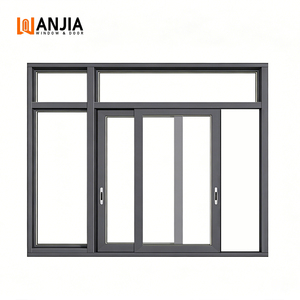
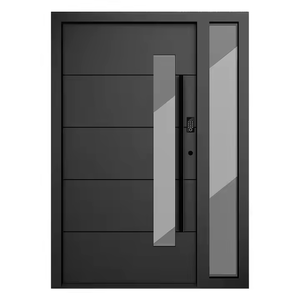
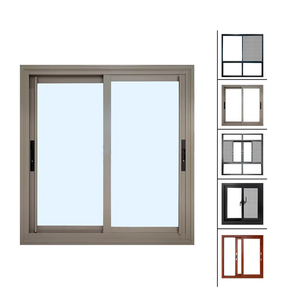
The Engineering Architecture of Aluminium Mesh Main Entrance Systems
Evaluating structural alloy integrity, stainless steel wire weave kinematics, anti-jemmy extrusion geometry, and galvanic corrosion barriers for modern civil and residential infrastructure.
Primary Extrusion Metallurgy: 6063-T5 vs. 6063-T6
The structural backbone of any high-security entrance system relies on precision billet composition. Standard aluminum mesh doors often fail during forced-entry testing due to alloy fatigue at mechanical miter corners.
We mandate architectural grade 6063-T6 virgin aluminum alloy with a minimum wall thickness of 2.0mm to 3.0mm across load-bearing perimeter jambs. This metallurgy delivers a tensile strength exceeding 205 MPa and a yield strength of 170 MPa, preventing torsion deformation under cyclic mechanical crowbar pry loads.
- Profile wall thickness: 2.0mm – 3.2mm multi-cavity chambering
- Internal zinc-aluminum alloy corner keys secured by hydraulic crimping
- Thermal-break polyamide PA66-GF25 integration for energy envelope continuity
Marine-Grade Mesh Infill: 304 vs. 316 Wire Cloth
The physical barrier integrity of modern mesh doors depends on the wire diameter, mesh count, and weave tension. Non-certified security screens use magnetic 201-series stainless steel, which rapidly corrodes within months in coastal environments.
Our industrial production applies 0.80mm to 1.0mm 316 marine-grade austenitic stainless steel wire woven at high tension (11-mesh/inch). Tested under ASTM B117 salt fog chambers for 3,000+ hours with zero red rust development, it delivers impenetrable knife-shear resistance.
- High-tensile wire exceeding 900–1050 N/mm² puncture threshold
- Knife-shear resistance compliance conforming strictly to AS 5039 / AS 5041
- Uniform black fluorocarbon architectural coating for glare-free visual clarity
Galvanic Isolation & Clamping Engineering
A catastrophic failure vector in metal mesh doors is galvanic bimetallic corrosion triggered when stainless steel mesh directly contacts aluminum frame extrusions in tropical humidity.
Our engineered door systems feature patented mechanical retention clamping strips insulated with high-grade UV-stabilized PVC gaskets. The stainless mesh is pressed into a recessed profile channel under hydraulic pressure without screw penetrations through the wire body, completely neutralizing electrolytic circuits.
- Zero contact galvanic isolation gaskets eliminating electrochemical decay
- Continuous anti-pry mechanical locking jaws with uniform grip friction
- Acoustic buffer gaskets preventing panel vibration during wind shears
Product Selection & Architectural Application Guide
Aligning high-traffic commercial and luxury residential entry points with certified structural performance metrics.
| System Type | Mesh & Glazing Specification | Extrusion Profile Alloy | Wind Load / Security Rating | Primary Target Environment | Action |
|---|---|---|---|---|---|
| Heavy-Duty Security Mesh Main Door | 0.9mm 316 Marine Stainless Steel (11-Mesh) | 6063-T6 (2.5mm Wall Thickness) | AS 5039 / AS 5041 Forced Entry Tested | Coastal Villas, High-End Gated Residences | Get Catalog |
| Integrated Dual Glaze & Mesh Patio Door | Double Low-E Tempered + Retractable 304 Mesh | Thermal Break 6063-T5 (2.0mm) | AS 2047 N6 / CE / ISO 9001 Compliance | Oceanfront Penthouses, Luxury Resorts | Get Catalog |
| Cyclone Impact Sliding Screen System | 1.0mm High-Tensile Mesh + Laminated Core | Reinforced 6063-T6 (3.0mm Multi-Chamber) | Wind Pressure > 4,500 Pa (Typhoon Grade) | Tropical Coastal Zones, High-Rise Towers | Get Catalog |
| Acoustic Partition & Security Screen | Acoustic Interlayer Glass + Micro-Mesh Shield | Architectural Alloy (1.8mm – 2.0mm) | Acoustic STC 38dB / Corrosion Class C4 | Commercial Office Portals, Boutique Hotels | Get Catalog |
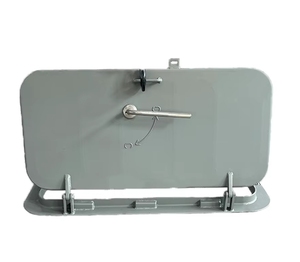
| Marine Weather-Tight Hatch & Entry Door | Continuous Welded Plate / Reinforced 316 Mesh | Marine 5083 / Heavy-Gauge 6063 Alloy | Submersible Water Tightness / UL-94 Standard | Harbor Facilities, Extreme Chemical Environments | Get Catalog |
Future Procurement Trends in Architectural Mesh & Main Doors (2025–2030)
How global sourcing directors, developers, and project engineers are navigating environmental compliance, smart home interoperability, and extreme climate adaptation.
1. Low-Carbon Circular Extrusions
Global architectural standards (LEED v4.1, BREEAM) are penalizing virgin aluminum billets with excessive embodied carbon footprints.
Enterprise procurement contracts increasingly stipulate hydroelectric-smelted low-carbon primary aluminum or post-consumer recycled billet content (>40%) verified by third-party Environmental Product Declarations (EPDs).
2. Multi-Point Smart Locking Protocols
Traditional mechanical deadbolts are giving way to motorized multi-point perimeter latching concealed seamlessly inside the extrusion groove.
Door assemblies now incorporate biometric fingerprint scanning, 3D facial recognition, and Zigbee/Matter protocols connected directly to centralized Building Management Systems (BMS) with failsafe magnetic battery overrides.
3. Extreme Wind-Borne Debris Resilience
With typhoons and superstorms intensifying across Southeast Asia, Australasia, and the Americas, building codes require dual-action defense.
Developers are consolidating separate flyscreens and storm shutters into unified hurricane-mesh entrance systems that withstand 60 m/s wind gusts and repetitive missile impact tests without compromising natural fresh air ventilation.
4. Factory Modular Pre-Glazing & Rapid Assembly
Escalating on-site installation labor costs across overseas markets have forced general contractors to prioritize pre-hung, factory-calibrated door sets.
Specifiers now demand factory-fitted sub-frames, laser-aligned mortise locks, and snap-in clip profiles that reduce field installation time by up to 65% while eliminating contractor error in tensioning the stainless wire mesh.
From Insect Barriers to Structural Defense Envelopes
A 30-year chronological progression of entrance screen technology and manufacturing philosophy.
Lightweight Insect Screens
Characterized by hollow 0.8mm thin aluminum roll-formed extrusions and lightweight fiberglass/nylon wire mesh secured by rubber spline cords.
Zero structural security, highly flammable, susceptible to UV deterioration within 24 months, and easily breached with simple domestic cutting tools.
Diamond Grille Aluminum Castings
Combined heavy cast aluminum diamond grilles over exterior insect screens with mechanical pop-rivet fasteners.
Improved physical presence, yet visually restrictive ("prison bar aesthetic"), prone to galvanic rusting around untreated carbon steel rivets, and lacking dynamic cyclic impact absorption.
High-Tensile Woven Structural Screens
Full architectural integration using flush T6-hardened profiles, continuous clamping channels, marine 316 wire, and electrostatically cured PVDF coatings.
Crystal-clear unobstructed sightlines, 100% insect shielding, acoustic dampening, AS 5039 knife-shear and dynamic impact compliance, and 30+ year lifespan in extreme coastal atmospheric conditions.
Why DERCHI Is the Preferred Global Factory Partner
Guangdong Dejiyoupin Doors and Windows Co., Ltd. (DERCHI) stands among China's Top 10 fenestration and door system manufacturers. Headquartered in Shishan Town, Foshan—the world's capital of aluminum extrusion processing—our modern industrial manufacturing complex spans over 180,000 square meters.
With 25+ years of dedicated engineering excellence, DERCHI maintains complete vertical integration: in-house alloy profile design, multi-axis precision CNC machining centers, automated powder-coating lines, clean-room assembly bays, and an accredited physical laboratory conducting destructive air, water, wind pressure, and forced-entry cycle testing.

Frequently Asked Sourcing & Technical Questions (FAQ)
Exhaustive technical guidance answering critical structural, coating, logistical, and inspection specifications.
While grade 304 stainless steel contains 18% chromium and 8% nickel, marine-grade 316 stainless steel integrates 2% to 3% molybdenum. Molybdenum significantly reduces pitting corrosion caused by airborne chlorides and salt fog within 15 km of coastal water bodies. For beachfront villas, island resorts, and high-humidity tropical sites, 316 wire mesh provides indefinite corrosion resistance, whereas 304 mesh may experience surface tea-staining if not washed with fresh water every few months.
Our products are engineered in compliance with Australian Standards AS 5039 (Security Screen Doors) and AS 5041 (Methods of Test). This encompasses three mandatory physical tests: the Dynamic Impact Test (simulating five consecutive heavy blunt human kicks of 100 Joules each), the Knife Shear Test (three continuous directional razor slices under 350 N mechanical downward pressure), and the Anti-Jemmy Pry Test (applying multi-axis mechanical leverage against deadbolts and hinges to verify frame rigidity).
Galvanic corrosion occurs when dissimilar metals (stainless steel and aluminum) share electrical contact in the presence of an electrolyte like humid saline air. DERCHI applies a dual-layer isolation protocol: first, the wire mesh undergoes complete multi-stage electrostatic thermoset powder encapsulation; second, the profile channel utilizes continuous UV-stabilized Santoprene/PVC isolation clamps that isolate the wire edge entirely from raw aluminum contact.
We offer architectural powder coatings via AkzoNobel Interpon D2015 and PPG fluorocarbon PVDF finishes (70% Kynar 500 resin content). These coatings comply with AAMA 2604 and AAMA 2605 specifications, guaranteeing superior color retention, chalking resistance, and gloss retention under intense tropical UV radiation for 15 to 25 years without flaking or blister degradation.
Yes. Every architectural project is supported by our in-house engineering division. We regularly fabricate grand pivot doors exceeding 3,500mm in height and 2,000mm in width, incorporating heavy-duty German concealed hydraulic pivot hinges rated for up to 500 kg door leaves. Before production begins, our team provides 2D/3D shop drawings, BIM models, and comprehensive static wind-deflection calculations free of charge.
Our door systems feature European-standard 3-point and 5-point locking mechanisms sourced from certified partners like HOPPE, GU, and in-house proprietary heavy-duty multi-locks. When the primary handle is engaged, hardened steel deadbolts project simultaneously at the top, center, and bottom frame jambs, anchoring the sash solidly against hydraulic spreading or crowbar attacks.
Export units undergo a 5-tier packaging protocol: (1) low-tack protective PE film applied to all coated aluminum faces; (2) shock-absorbent EPE pearl cotton padding; (3) reinforced corrugated cardboard wrapping around all perimeter edges; (4) vacuum-sealed moisture desiccant bags; and (5) ISPM-15 certified heat-treated non-fumigation plywood crates with internal structural timber bracing to prevent racking in container transit.
For customized residential villa orders and standard RAL architectural color configurations, our fabrication lead time is typically 25 to 35 business days following final CAD sign-off. For large commercial projects involving bespoke extrusion dies, lead times range from 35 to 45 business days. We maintain a flexible contractor-friendly policy: our standard MOQ begins at just 1 set for custom luxury main doors, supporting custom mock-ups before mass container production.
Accelerate Your Project with Certified Factory Precision
Submit your opening schedules, architectural drawings, or technical specifications. Our senior engineering department prepares full CAD shop drawings, structural wind-load proposals, and factory-direct wholesale pricing within 24 hours.