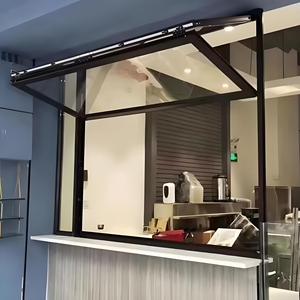
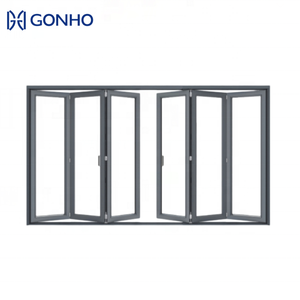
Exterior Aluminum Bifold Push-up Folding Soundproof Double Glazed Window
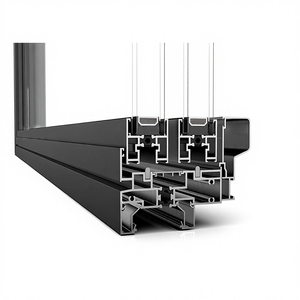
Heavy-gauge alloy framework with integrated double-glazing gas cavities, delivering superior acoustic damping and perimeter moisture sealing.
Tested for extreme lateral wind-load resistance, acoustic isolation, moisture ingress protection, and thermal barrier optimization across residential, commercial, and subterranean envelopes.
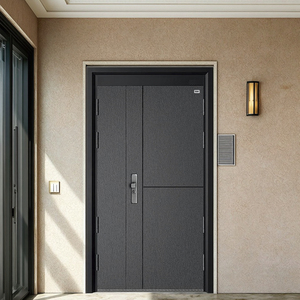
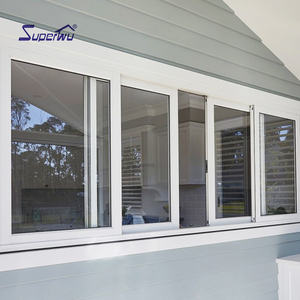
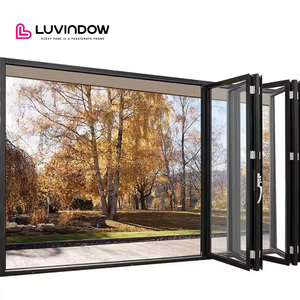
Why subterranean and basement storm enclosures represent the most rigorous engineering challenge in modern building envelope design.
Basement fenestration occupies an inherently hazardous microclimate within the building envelope. Unlike upper-story fenestrations that primarily manage uniform wind pressures and shed moisture through natural gravity, aluminum basement storm windows must withstand localized hydrostatic pressure differentials, high ambient soil moisture, splashback erosion, and poor sub-grade airflow. When intense cyclonic weather or prolonged seasonal downpours strike, below-grade window wells act as localized catchment basins. Traditional residential storm frames constructed with untreated or thin mill-finished aluminum buckle under soil heave or suffer galvanic and pitting corrosion, leading to catastrophic basement inundation, mold proliferation, and foundation instability.
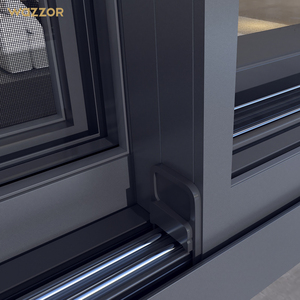
At Guangdong Dejiyoupin Doors and Windows Co., Ltd. (DERCHI), our engineering framework treats the basement storm window not merely as an aesthetic secondary sash, but as a primary pressure-rated containment barrier. Utilizing primary-billet 6063-T6 and 6061-T6 architectural aluminum profiles, DERCHI integrates stepped multi-chambered weep baffle systems with gravity-assisted backdraft valves. This prevents storm wind gusts from forcing water backward through the drainage channels—a flaw rampant in lower-tier supplier catalog designs.
A chronic vulnerability of raw aluminum in subterranean installations is thermal bridging. Basements consistently maintain lower ambient temperatures and higher relative humidity compared to upper floors. During freezing seasons, an uninsulated aluminum frame drops below the dew point, causing persistent condensation run-off that rots adjacent drywall, compromises sill plates, and degrades structural masonry anchors.
DERCHI rectifies this thermodynamics failure by deploying continuous structural polyamide (PA66 GF25) thermal barriers within the frame and sash extrusions. By physically isolating the exterior aluminum profile exposed to sub-grade temperatures from the interior profile, thermal transmission is broken. Combined with argon-filled, warm-edge spacer double- or triple-glazed sealed units, our thermal-break basement storm windows achieve exceptional U-values below 0.28 BTU/(hr·ft²·°F) [1.6 W/(m²·K)], ensuring interior glass and frame surfaces remain completely dry and warm even in sub-zero climates.
Anticipating international regulatory mandates, structural resilience specifications, and evolving global supply chain paradigms for 2026–2030.
Global building codes increasingly reject uncertified glazing. Commercial and high-spec residential procurement requires demonstrated performance under rigorous testing: AS 2047 N6 wind loads, NFRC thermal metrics, and NOA (Notice of Acceptance) missile-impact thresholds to survive severe climatic events.
Basement storm windows are shifting from passive weather panels to active defense barriers. Modern procurement demands integrated stainless-steel security meshes that provide burglar protection, hurricane flying-debris shielding, and one-touch emergency escape compliance (NFPA 101 Life Safety Code).
General contractors and architectural developers are abandoning tiered middleman distributors in favor of direct factory coordination. By utilizing millimeter-accurate CAD shop drawings and BIM parametric models, construction cycles eliminate costly site refitting and installation delays.
A transparent engineering analysis detailing material composition, thermal efficiency, and water infiltration barriers.
| Engineering Attribute | Standard Commodity Market Windows | DERCHI Architectural Storm Series | Performance Impact on Below-Grade Sites |
|---|---|---|---|
| Alloy Composition & Temper | Recycled scrap aluminum; 6063-T4/T5 (1.0–1.2mm wall) | 100% Primary Billet 6063-T6 / 6061-T6 (1.8–3.0mm wall) | Resists soil backpressure heave without sash deflection or corner seal cracking. |
| Surface Protection System | Standard powder coat (<40µm); susceptible to chalking | Fluorocarbon PVDF or AkzoNobel Marine-Grade Finish (>80µm) | Zero surface oxidation, blister, or peeling when exposed to high-salt coastal soils. |
| Thermal Insulation Bridge | Non-thermal or cheap PVC/nylon snap-in strips | Technoform® Polyamide PA66 GF25 Structural Struts | Completely terminates interior condensation weepage; lowers basement HVAC loss. |
| Water Ingress / Weep Mechanism | Simple punched slot weep holes without check valves | Baffled cascading chambers with anti-blowback flaps | Prevents high gale winds from driving standing window well floodwater indoors. |
| Glazing Architecture | Single 4mm tempered pane or 3+6A+3 insulating glass | 5+12A+5 / 6+16Ar+6 Low-E Argon-Filled / Laminated PVB | Reduces sub-grade ambient traffic vibration and withstands category 4+ cyclonic impacts. |
| Hardware & Fasteners | Zinc-alloy diecast or 201 stainless steel; rust prone | German Roto / SIEGENIA 304/316 Stainless Multi-Point Locks | Maintains continuous compression gasket seal; resists forced mechanical entry. |
Combining 25+ years of precision manufacturing, world-class German machining infrastructure, and seamless international project delivery.
Located in Foshan, Guangdong—the world’s foremost aluminum fabrication capital—DERCHI operates automated German CNC cutting lines, computerized double-head miter saws, and specialized corner-crimping hydraulic stations, producing over 300,000 square meters of certified fenestration products annually.
Every fenestration batch undergoes air infiltration (ASTM E283), water penetration resistance under static pressure (ASTM E331), and structural load assessments (ASTM E330). Our production processes are strictly accredited under ISO 9001, European CE, Australian AS 2047, and North American NFRC benchmarks.
With deep engineering experience serving villa developments, commercial landmarks, and institutional projects across Southeast Asia, North America, Oceania, and the Middle East, our multi-lingual technical team provides real-time CAD shop drawings, custom structural calculations, and seaworthy fumigated steel-frame crating.
Comprehensive answers addressing architectural specifications, material selection, moisture prevention, and international logistics.
Consult with DERCHI’s technical engineering team today. Send us your architectural schedules, rough opening dimensions, and performance criteria for complimentary CAD shop drawings and factory-direct project proposals.