The Architectural Evolution of Aluminum Double Swing Doors
Strategic Material Selection, Structural Aerodynamics, and Building Envelope Physics
In high-end architectural fenestration, few elements command as much structural and visual gravity as the aluminum double swing door. Historically regarded as ornamental French gateways or commercial egress portals, contemporary fenestration engineering has transformed the double-leaf swing configuration into a heavy-duty, climate-impermeable structural barrier. For structural architects, civil engineers, and commercial procurement directors across tropical, coastal, and arid regions, choosing the correct manufacturer involves an exacting evaluation of structural alloys, metallurgical temper, extrusion geometries, polyamide thermal breaks, multi-point lock mechanics, and wind-load resistance.
Unlike single-sash configurations that fasten into continuous perimeter jambs on three sides, double swing systems inherently rely on an active-and-passive sash interaction with an intermediate vertical meeting stile (astragal). This structural junction is the most critical vulnerability for atmospheric leakage, wind load deflection, and forced mechanical entry. Top-tier manufacturers utilize proprietary 6063-T6 or 6061-T6 virgin architectural aluminum profiles paired with continuous multi-chambered polyamide (PA66 GF25) thermal insulation bars. These assemblies counteract the bi-metallic distortion caused by wide temperature differentials between exterior air faces and air-conditioned interior living zones, ensuring long-term planarity, operational equilibrium, and acoustic decoupling.
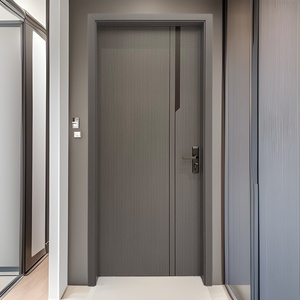
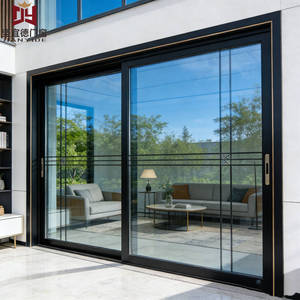
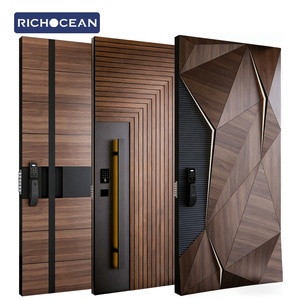
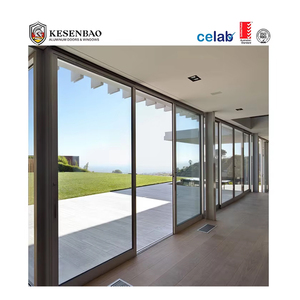
Featured Double Swing & Architectural Entrance Systems
Precision-Engineered Door Formats Tested to International AS2047, CE, and NFRC Ratings
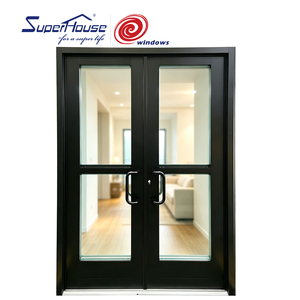
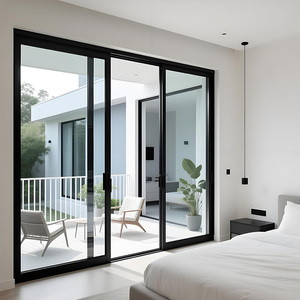
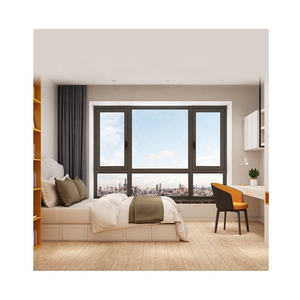
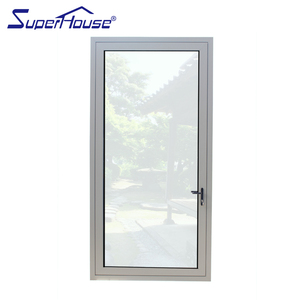
Engineering Metrics: Material Comparative Analysis
Quantified Structural Rigidity, Climate Resilience, and Maintenance Lifecycle Evaluation
| Profile Substrate | Structural Deflection (Wind-Load Limit) | Thermal Transmittance (U-Value W/m²K) | Marine Salt-Fog Life Expectancy | Air Infiltration (ASTM E283) |
|---|---|---|---|---|
| 6063-T6 Polyamide Thermal Aluminum | Passes AS2047 N6 (Serviceability 3000 Pa, Ultimate 4500 Pa) | 1.4 - 1.8 (Triple Low-E Insulated Argon Glazing) | >35 Years (PVDF / AkzoNobel Fluorocarbon Coated) | <0.05 L/s·m² at 75 Pa Pressure Differential |
| Commercial Grade 304 Stainless Steel | Extreme Rigidity; High Mass (Requires Heavy Pivot Bearings) | 2.8 - 3.4 (High Heat Bridging Without Interior Decoupling) | 15 - 20 Years (Prone to Tea-Staining in Direct Coastal Splash) | 0.08 - 0.12 L/s·m² Depending on Perimeter Gaskets |
| Cast Aluminum Solid Architectural Slab | High Impact; Ballistic Grade Defense Profiles Available | 1.6 - 2.1 (With Internal High-Density Polyurethane Core) | >30 Years (Deep-Anodized or Multi-Layer Fluorocarbon) | <0.06 L/s·m² (Dual Perimeter EPDM Co-Extrusions) |
| Solid Architectural Timber (Teak/Oak) | Moderate; Prone to Swell/Shrink Across Monsoon Wet-Dry Cycles | 1.8 - 2.2 (Natural Insulator, High Volumetric Instability) | 5 - 8 Years Before Major Recoating/Re-Alignment | Variable (>0.25 L/s·m² Over Season-Induced Sash Bowing) |
Why Global Specifiers Partner with DERCHI
Guangdong Dejiyoupin Doors & Windows Co., Ltd. (DERCHI) — Foshan's Premier Manufacturing Authority
180,000㎡ Modern Production Base
DERCHI operates an automated fenestration manufacturing base in Shishan Town, Nanhai District, Foshan. Equipped with German multi-axis CNC machining centers, automated corner-crimping lines, and continuous electrostatic powder/fluorocarbon spray booths, the facility delivers rigorous dimensional accuracy with profile tolerances governed within ±0.3mm.
Rigorous International Certification
Every double swing door assembly is subjected to exhaustive testing before export. DERCHI holds European CE certification, ISO 9001 quality management verification, Australian AS 2047 cyclonic wind and water resistance ratings (N6 classification), North American NFRC energy performance ratings, and UL fire-rated certifications.
Full-Cycle CAD & BIM Engineering Support
Unlike standard off-the-shelf merchants, our technical department provides complimentary CAD shop drawings, structural wind load analysis, and glass deflection calculations for every project schedule. We coordinate thermal break alignments, sill drainage channels, and sub-frame integration with architectural teams prior to metal extrusion cutting.
Product Development & Architectural Procurement Trends
Forward-Looking Analysis of Next-Generation Entrance Assemblies
Deep Polyamide Breaks & Aerogel Infill
Energy codes across Southeast Asia, the Middle East, and North America are tightening baseline window-wall and door envelope standards. The transition toward polyamides with engineered hollow chambers, cellular EPDM gaskets, and nanoporous silica aerogel infills allows double swing doors to reach passive house standards (U-values below 1.0 W/m²K) without compromising slender frame aesthetics.
Smart Access & Mechatronic Concealment
Global procurement data highlights a surging demand for motorized multi-point perimeter latching integrated seamlessly with building management systems (BMS). Architects specify double swing doors with concealed wiring loops, 3D adjustable concealed hinges, biometric fingerprint scanners within the pull handle, and emergency motorized fail-secure break-in deadbolts.
Monolithic Heights & Ultra-Slim Sightlines
Commercial villas and hospitality lobbies increasingly request entrance heights from 3.2m to 4.5m with minimal visual perimeter frames. This necessitates heavy-duty 3.0mm wall thickness aluminum profiles, structural glazing bonding using Dow Corning 983 silicone, and top-tier German Siegenia or Sobinco multi-lock astragals to prevent top-and-bottom deflection under gusting pressures.
Frequently Asked Questions by Commercial Buyers
Direct Engineering Insights for Project Managers, Quantity Surveyors, and Importers
How does DERCHI prevent water and air leakage along the meeting astragal of a double swing door?
What surface treatment is recommended for oceanfront villas in coastal Southeast Asia or the Middle East?
Can DERCHI produce custom double swing doors tailored to oversized openings with arched headers?
What are the lead times for custom-engineered export containers?
How does DERCHI guarantee structural hinge performance on heavy double double-glazed doors?
Request Engineering Drawings & Complete Technical Catalog
Connect directly with our Foshan engineering and estimation team. Receive complimentary CAD shop drawings, structural wind load analysis, and complete price schedules within 24 business hours.
Get Catalog