Certified Hurricane-Rated Aluminum Impact Doors & Architectural Systems
Explore our heavy-duty extruded aluminum Fenestration systems tested under extreme cyclic pressures, salt-fog corrosion atmospheres, and stringent global architectural specifications.
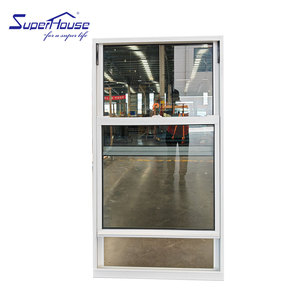
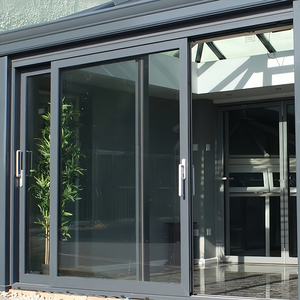
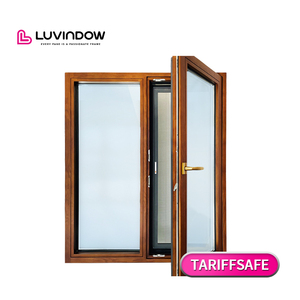
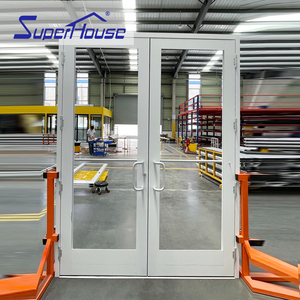
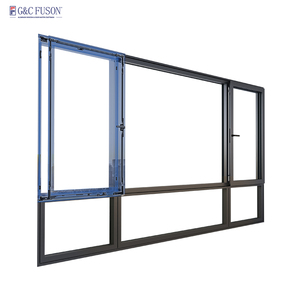
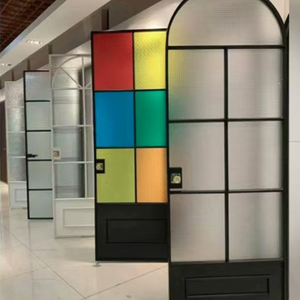
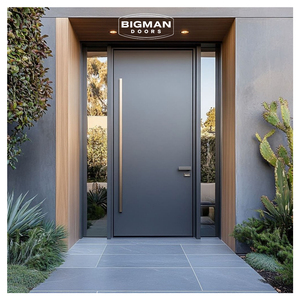
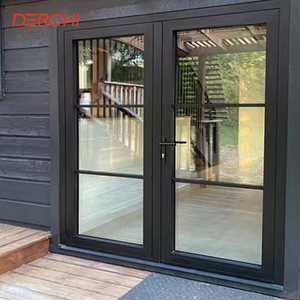
Technical Benchmark: Engineering Criteria for Aluminum Impact Doors
In modern architectural fenestration, the specification of aluminum impact doors goes far beyond aesthetic geometry. Specifiers, facade consultants, and general contractors must navigate complex global building codes, cyclonic pressure classifications, and metallurgical durability standards. As coastal urban zones face intensified meteorological events, the failure of building envelope barriers during high-velocity windstorms can result in immediate internal pressurization, often triggering catastrophic roof and structural collapses.
Top trusted aluminum impact door manufacturers focus on three core physical parameters: structural deflection under dynamic pressure, inter-laminar membrane shear retention, and thermal edge isolation. Aluminum alloy 6063-T6 or 6061-T6 profiles serve as the structural backbone, offering optimal tensile yield strength exceeding 210 MPa. Combined with engineered structural silicones (such as Dow Corning 983 two-component structural sealants), the door sash maintains structural integrity during high-load cyclic oscillations (9,000 cycles under ASTM E1886/E1996 and Florida Building Code TAS 201/TAS 203 protocols).
Comparative Technical Matrix: Structural Standard Compliance
| Testing Standard / Code | Wind Load / Design Pressure | Impact Criterion | Key Application Environment |
|---|---|---|---|
| Florida HVHZ (TAS 201 / 202 / 203) | +/- 70 PSF to 120 PSF | 9-lb 2x4 lumber projectile at 50 ft/s (Large Missile) | Coastal USA, Caribbean, High-Risk Storm Zones |
| Australian Standard AS 2047 (N6 Rating) | Up to 4400 Pa Serviceability / 6000 Pa Ultimate | Cyclic water penetration testing at 450 Pa | Australia, Pacific Islands, Typhoon-Exposed Coastal Asia |
| European Norm EN 12210 / EN 12207 | Class 4 / Class C5 (2000 Pa) | Acoustic isolation (Rw up to 45dB) + Air tightness | European Metropolises, High-Density Commercial Developments |
| NFRC Thermal Code (ANSI/NFRC 100/200) | U-factor ≤ 0.28 BTU/h·ft²·°F | SHGC ≤ 0.22 with Low-E Solar Control | Net-Zero Sustainable Buildings, Luxury Villa Envelopes |
Beyond structural deflection, the chemical treatment of the aluminum substrate plays a decisive role in exterior door longevity. Standard powder coatings rapidly succumb to filiform corrosion and blistering in marine microclimates characterized by continuous salt-mist deposition. Premium manufacturers employ AAMA 2605-compliant fluoropolymer (PVDF) electrostatic coatings or hyper-durable 25μm architectural anodizing. These surface barrier matrices withstand 4,000 hours of continuous salt spray (ASTM B117) without cross-hatch adhesion failure, protecting real estate asset value across decades of harsh environmental exposure.
Future Sourcing & Engineering Trends in Aluminum Fenestration
Where architectural design meets structural resilience: The emerging technological and procurement shifts driving Tier-1 commercial and residential developments.
Polyamide Thermal Barriers & Passive House Efficiency
The global race toward Net-Zero carbon real estate is eliminating non-thermal break profiles. Procurement pipelines now demand multi-cavity glass-fiber reinforced polyamide (PA66 GF25) thermal struts that lower overall system U-values below 1.4 W/m²·K while maintaining monumental sash dimensions.
Oversized Architectural Pivot Formats
Modern luxury developments are transitioning from traditional hinged doorways to monumental 4-meter-tall aluminum pivot entrance systems. These feature heavy-duty floor spring pivots carrying up to 800kg leaf weights, equipped with integrated concealed electromagnetic multi-point mortise security locking.
Direct Manufacturer CAD/BIM Supply Integration
Supply chain compression has prompted Tier-1 developers to bypass intermediary traders in favor of direct factory partnerships. By utilizing automated BIM libraries, parametric CAD integration, and pre-glazed modular assemblies, construction schedules gain 20-30% labor velocity on job sites.
DERCHI Enterprise Advantages: Why Global Buyers Trust Our Manufacturing
Backed by over two decades of technical rigor, Guangdong Dejiyoupin Doors and Windows Co., Ltd. combines German CNC fabrication lines with comprehensive export certifications.

One-Stop Architectural Envelope
From hurricane impact entry doors and oversized pivot systems to commercial curtain walls and thermal casements, we engineer entire project fenestration under one standardized factory quality protocol.

Verified Global Certifications
Our systems comply rigorously with AS 2047 (Australia N6), NFRC / Miami-Dade NOA standards (USA), CE benchmarks (Europe), and ISO 9001 total quality manufacturing audits.

Parametric CAD/Shop Drawings
Our 50+ in-house facade engineers deliver custom structural calculations, static wind-load simulations, and millimeter-accurate shop drawings prior to extrusion cutting and CNC milling.

Export-Grade Maritime Crating
All units feature protective film wrapping, corner guards, desiccated moisture-barrier sheeting, and fully enclosed fumigated plywood steel-strapped crates to guarantee zero-defect port arrival.
Precision Fabrication in our 180,000㎡ Foshan Industrial Park
Located in the heart of China's aluminum industrial cluster, Guangdong Dejiyoupin Doors and Windows Co., Ltd. (DERCHI) operates automated 5-axis CNC processing centers, hydraulic corner-crimping stations, and cleanroom glass laminating chambers.
- Spectrometric Alloy Verification: 100% 6063-T6 / 6061-T6 prime ingot traceability.
- Multi-Point Hardware Durability: Tested through 100,000 continuous cycle runs.
- Autonomous Water Chamber Testing: Dynamic rain penetration checking up to 700 Pa.

Frequently Asked Questions: Aluminum Impact Door Sourcing
Essential technical clarifications for architects, quantity surveyors, real estate developers, and international facade contractors.
?What is the architectural distinction between Standard Tempered and Laminated Impact Glass?
Standard tempered glass undergoes thermal tempering, fracturing into blunt granules upon breakage, which leaves building envelopes exposed to wind and rain. In contrast, laminated impact glass integrates an elastic, highly adhesive interlayer (0.76mm to 2.28mm PVB or SGP SentryGlas) bonded between two glass plies. When cracked under high-speed missile impact, the glass remains firmly adhered to the interlayer, resisting extreme positive and negative cyclic hurricane pressures and safeguarding building interiors from destructive pressurization.
?How do thermal break profiles prevent condensation and thermal bridging in tropical & frigid climates?
Aluminum is naturally highly conductive. Without a thermal break, extreme ambient outdoor heat or cold conducts directly into the interior, causing substantial HVAC energy loss and interior condensation that degrades finishes. A thermal break profile introduces an engineered, low-conductivity polyamide (PA66 GF25) insulator that structurally divides the interior and exterior aluminum sections. This isolates the thermal transmission path, reducing condensation and lowering whole-window U-factors by over 50%.
?What surface coating specifications are required for coastal installations within 1 kilometer of ocean shorelines?
Within high-salinity marine boundary layers, standard architectural powder coatings deteriorate rapidly from chloride ion intrusion. We specify 3-coat fluoropolymer PVDF systems compliant with AAMA 2605 (containing minimum 70% Kynar 500 / Hylar 5000 resins) or high-grade architectural Class I anodizing (25-micron thickness). These coating matrices provide superior resistance to UV breakdown, chalking, color fading, and salt-mist corrosion, and are certified under 4,000-hour continuous salt spray testing protocols.
?How does the factory guarantee dimensional accuracy and eliminate on-site installation variance?
Prior to extrusion processing, our engineering department creates complete 2D/3D BIM shop drawings cross-referenced against your site rough openings (W × H) and structural anchor plans. Fabrication uses computerized 5-axis double-miter saws and high-precision CNC machining centers with tolerances within ±0.5mm. Every oversized pivot and entrance door is fully pre-assembled, hung, squared, and hardware-tested at the factory before crating, ensuring plug-and-play field installation without costly on-site modifications.
Partner with a Globally Verified Impact Door Manufacturer
Send us your door schedules, project elevation drawings, or target performance specifications. Our technical engineering team will review your requirements and provide detailed structural proposals, CAD cross-sections, and factory-direct pricing within 24 hours.
Get a Quote