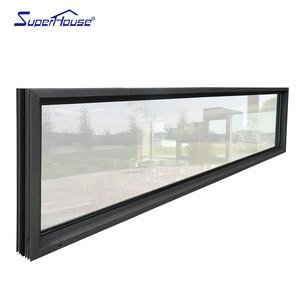
Engineered Fenestration Systems
High-Performance Aluminum Sunroom Windows & Glass Enclosures
Explore our certified fenestration portfolio engineered for extreme weather resilience, maximum natural illumination, and superior structural rigidity in premium residential and commercial sunspaces.
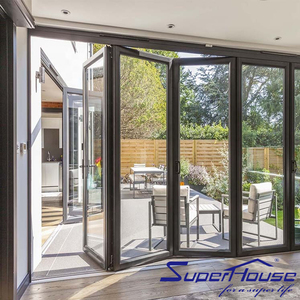
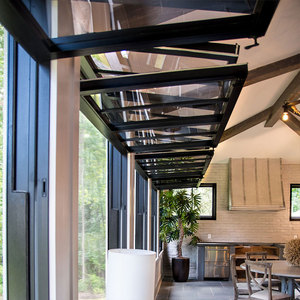
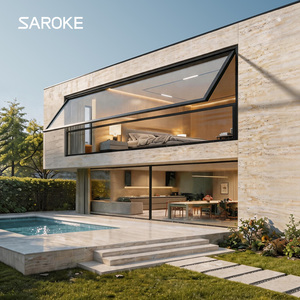
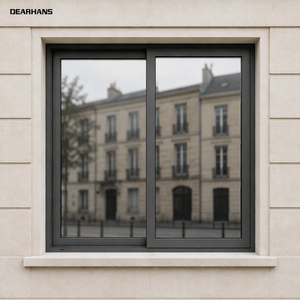
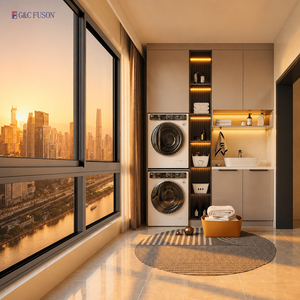
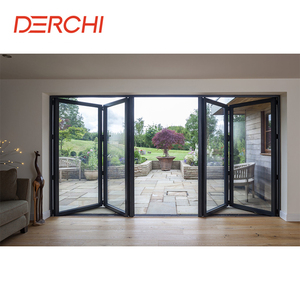
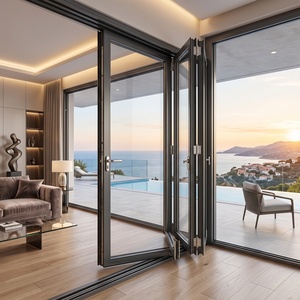
180,000㎡
Modern Manufacturing Base
AS 2047 N6
Severe Cyclone Certified
25+
Years Engineering Expertise
100+
Global Patents & Certifications
Engineering Whitepaper
Structural & Thermal Evolution in Sunroom Fenestration
A technical overview of modern fenestration dynamics: meeting rigorous energy conservation standards, dynamic climate loads, and architectural minimalism.
Advanced Polyamide Thermal Barrier Technology
Traditional aluminum profiles suffer from high thermal conductance. Modern sunroom fenestration incorporates multi-cavity PA66 GF25 polyamide thermal struts, effectively segregating internal and external ambient boundaries to mitigate convective energy loss, eliminate condensation risks, and achieve U-values under 1.4 W/m²K.
Structural Wind & Severe Cyclic Resistance
Sunrooms constructed in coastal and typhoon-prone corridors face extreme positive and negative surface pressures. Utilizing 6063-T6 architectural-grade alloys with wall thicknesses exceeding 2.0mm–3.0mm, combined with multi-point stainless steel espagnolette locking systems, ensures compliance with high water penetration and air infiltration thresholds.
Electro-Kinetic & Building Automation Integration
The convergence of architectural envelopes with IoT protocols has positioned motorized vertical lifters and awning casements at the forefront of modern design. Integrated with automated rain sensors, wind monitoring stations, and building management protocols, smart motorized windows regulate indoor air quality autonomously.
| Performance Parameter | Standard Non-Thermal Aluminum | DERCHI Advanced Thermal Break System | Industry Standard Target |
|---|---|---|---|
| Thermal Transmittance (U-Value) | > 5.2 W/m²K | 1.2 – 1.8 W/m²K (Low-E Argon Double Glazed) | EN ISO 10077-1 Compliant |
| Cyclonic Wind Resistance | 1200 Pa to 1800 Pa | Up to AS 2047 N6 (> 4500 Pa Design Pressure) | ASTM E330 / AS 2047 |
| Acoustic Attenuation (Rw / STC) | 22 dB – 26 dB | 38 dB – 45 dB (Laminated Acoustic Core) | ISO 717-1 Acoustic Rating |
| Surface Protection & Durability | Standard Anodized (10-15μm) | AkzoNobel Powder Coat / PVDF (Fluorocarbon >40μm) | AAMA 2605 / Qualicoat Class 2 |
Strategic Procurement Insights
Future Procurement Trends in Global Architectural Fenestration
Critical market shifts defining B2B supply chains, modular prefabricated enclosures, and ESG environmental compliance over the next decade.
Transition Towards Modular Prefabrication
Developers and general contractors increasingly demand off-site assembled, plug-and-play fenestration packages. Prefabricated sunroom wall modules drastically diminish high-cost on-site labor, mitigate weather delays during installation, and enforce factory-controlled sealant integrity that field-glazing rarely delivers.
Decarbonization & Low-Carbon Aluminum
Strict energy codes such as the European Energy Performance of Buildings Directive (EPBD) and North American Title 24 mandate reduced embodied carbon. Importers are systematically screening manufacturers capable of providing verified Environmental Product Declarations (EPDs) and secondary recycled billet inputs without sacrificing mechanical tensile thresholds.
Supply Chain Resiliency & Direct-From-Source Engineering
Tier-1 contractors are shifting away from intermediaries toward direct partnerships with comprehensive engineering facilities. By collaborating directly with factories that provide shop-drawing generation, integrated hardware customization, and bonded export warehousing, buyers compress lead cycles while eliminating markup margins.
Manufacturing Authority
Why Leading Global Importers Choose DERCHI
Guangdong Dejiyoupin Doors and Windows Co., Ltd. (DERCHI) stands among China's Top 10 fenestration enterprises, maintaining high-precision manufacturing systems in Foshan.
Uncompromising Production Scale & Engineering Rigor
Anchored in our extensive 180,000㎡ industrial complex in Foshan, Guangdong, DERCHI integrates the entire value stream from profile thermal-break assembly, precision CNC mitering, and glass tempering to robotic corner-crimping.
- Certified Global Compliance: Fully accredited under CE, ISO 9001, Australian AS 2047, and UL fire-rating standards to streamline local building approvals.
- Dedicated Engineering Support: In-house drafting teams supply bespoke CAD shop drawings and structural wind load calculations tailored to specific architectural schedules prior to raw material extrusion.
- Global Project Track Record: Proven delivery across prominent high-end villas, resort developments, and commercial envelopes throughout Southeast Asia, Australia, and the Middle East.

Coastal Salt-Air Durability
Equipped with specialized multi-stage pre-treatment and marine-grade powder coatings, our products deliver exceptional salt-fog resistance, protecting profiles against oxidation in coastal zones.
Same Time-Zone Agility (GMT+8)
Our sales engineering divisions operate on GMT+8, delivering rapid turnaround times for quotes, submittal packages, and technical clarifications for international trade schedules.
Strategic Export Corridors
Direct proximity to core maritime ports in Foshan, Guangzhou, and Shenzhen enables secured containerization, customized steel-framed crate packaging, and dependable ocean shipping routes.
Turnkey OEM/ODM Capability
From exclusive profile extrusion dies to private-label hardware branding, we cater to architectural distributor networks requiring distinctive differentiation.
Procurement Knowledge Base
Frequently Asked Questions on Sunroom Window Procurement
Essential technical clarifications for structural engineers, project managers, and sourcing executives.
How do you prevent structural leakage and condensation in glass sunroom envelopes?
Sunroom roofs and window interfaces require pressure-equalized rain-screen engineering. We utilize heavy-gauge EPDM continuous vulcanized gasket systems alongside hidden drainage channels that route accumulated condensation and wind-driven water safely outward. Thermally broken frames with multi-cavity insulation strips break the internal-to-external temperature bridge, effectively mitigating interior condensation even during sharp thermal swings.
What structural certifications are available for hurricane or high-wind environments?
Our systems are tested to rigorous international standards, including the Australian AS 2047 N6 cyclonic testing protocol (reaching structural test pressures exceeding 4500 Pa), European CE certification, and ASTM severe impact testing standards. Glass configurations can be customized with multi-layer SentryGlas (SGP) or PVB laminates to ensure that the envelope remains structurally sealed if damaged.
Can DERCHI accommodate bespoke architectural sizes, non-standard angles, and integrated systems?
Yes. Every production run is custom manufactured. We handle irregular facets, triangular gable sunroom transoms, curved glass sections, and motorized awning panels. Our technical team works alongside project designers, providing preliminary structural analysis, wind deflection checks, and shop drawing verification to ensure smooth installation.
How do you ensure safe ocean transit and zero transit damage for large-format glass?
All export fenestration packages are protected by an export packing protocol: individual units are edge-padded, vacuum film-wrapped, and crated in fully enclosed, fumigated wooden cases with independent internal metal load-bearing frames. Glass panes receive corner protectors and cork separation pads to prevent dynamic shock, vibration friction, or moisture intrusion during long-distance maritime freight.
What are the standard production lead times and Minimum Order Quantities (MOQ)?
For standard profile finishes and commercial glass assemblies, our typical production cycle ranges from 25 to 35 business days following shop drawing approval. We maintain flexible project parameters for commercial builders and distributors, accommodating both full-container loads (FCL) for multi-unit developments and mixed consolidated shipments (LCL) for high-end residential applications.
Ready to Engineer Your Architectural Sunroom Project?
Connect directly with our senior fenestration engineering team. Submit your architectural schedules, dimensional drawings, or project requirements for accurate CAD submittals and factory-direct estimates.
Get a Quote