High-Performance Aluminium Glass Door Systems for the Turkish Built Environment
Direct factory export collections engineered to harmoniously satisfy TS 825 insulation criteria, TS EN 14351-1 product standards, and coastal anti-corrosion requirements.
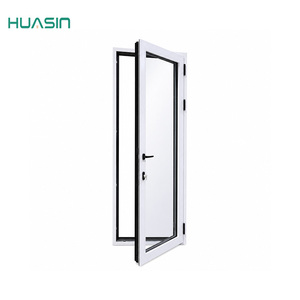
Huasin Low-E Double Tempered Thermal Swing Casement Door
- Profile: 6063-T6 2.0mm Polyamide Break
- Glass: 5mm+12A+5mm Argon Filled Low-E
- Acoustic Rating: Rw 42 dB sound damping
- Ideal for: Anatolian & Istanbul residential
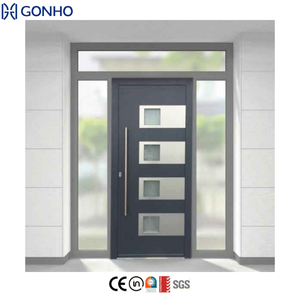
Heavy-Duty Aluminium Multi-Leaf Bi-Folding Patio Doors
- Track: Stainless steel bottom heavy rollers
- Weathering: Dual EPDM continuous gaskets
- Clear Openings: Spans up to 12 meters
- Ideal for: Bodrum & Antalya resort verandas
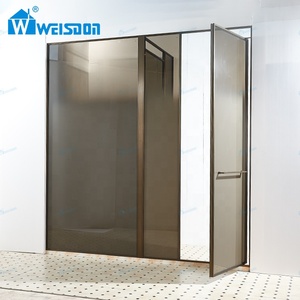
Soft-Close SGCC Anodized Bronze Pivot Shower Door
- Hardware: Hydraulic damping soft-pivot hinges
- Glass: 5mm+5mm PVB laminated impact glass
- Finish: Anti-fingerprint electrodeposition
- Ideal for: Luxury hospitality & wellness spas
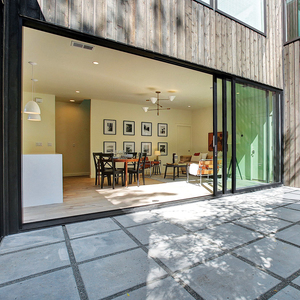
Coastal High-Wind Load Impact Sliding Door System
- Structural Test: Certified to AS 2047 & Impact
- Water Tightness: 600 Pa threshold protection
- Interlock Stile: Ultra-rigid 32mm reinforced
- Ideal for: High-rise Bosphorus & coastal towers
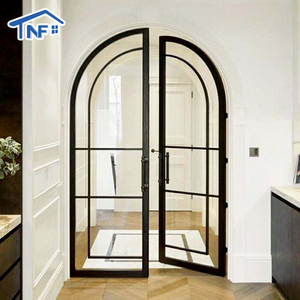
Slim Crittall-Style Arched Double Glazed French Doors
- Sightline: Ultra-narrow 25mm profile frame
- Arch Bending: Precision CNC curved tolerance
- Glazing: Double tempered acoustic Low-E
- Ideal for: Historical renovations in Beyoğlu
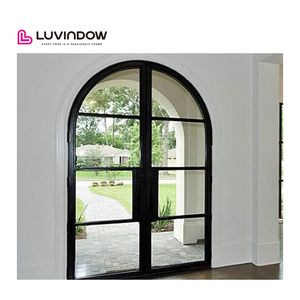
Modern Mother & Son Pivot/Hinged Main Entry Door
- Structure: 80mm heavy-wall insulated leaf
- Security: 7-point motorized biometric locking
- Threshold: Thermal drop-seal zero barrier
- Ideal for: Prestigious private estates & mansions
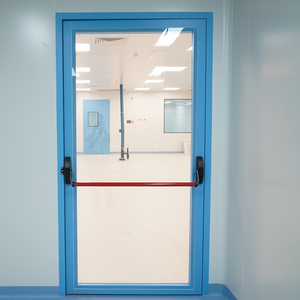
Airtight Stainless Steel Fire Exit Glass Door System
- Fire Rating: EI 60 / EI 120 fire barrier glass
- Airtight Seal: Four-side pneumatic compression
- Hardware: UL panic exit latch & auto-closer
- Ideal for: Hospitals, labs, and metro stations
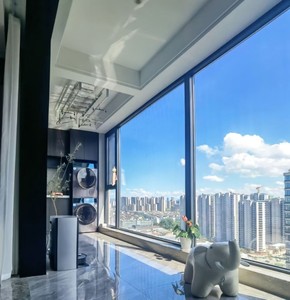
270° Corner Seamless Panoramic Balcony Enclosure
- Post-Free Corner: Glass-to-glass structural silicone
- Thermal Rating: Uw down to 1.1 W/m²K
- Load Handling: 500kg sash bearing capacity
- Ideal for: Luxury penthouses in Çeşme & Izmir
Engineering Glass & Aluminium Systems for Turkey's Regulatory Architecture
An authoritative analysis of thermodynamic thermal performance, seismic drift calculations, and coastal corrosion protection for Turkish architectural procurement.
Thermodynamic Efficiency & TS 825 Standard Harmonization
Turkey exhibits diverse climatic zones ranging from the Mediterranean warmth of Region 1 (Antalya, Mersin) to the severe continental winters of Region 4 (Erzurum, Central Anatolia). Consequently, the TS 825 (Thermal Insulation Requirements for Buildings) standard establishes rigid thresholds for building envelopes. Aluminium fenestration systems imported into the Turkish market must eliminate structural thermal bridging through precision-engineered polyamide barriers.
Our export-grade door systems utilize PA66 GF25 (polyamide reinforced with 25% glass fiber) thermal insulation strips varying from 24mm to 34mm in depth. Combined with warm-edge spacer technology, dual Low-E surface coatings, and 90% Argon gas filling, our architectural assemblies deliver overall system U-values (Uw ≤ 1.1 to 1.4 W/m²K). This performance surpasses the mandated target criteria for Istanbul (Region 2) and Ankara (Region 3), mitigating internal condensation while significantly cutting HVAC load operational costs.
- PA66 GF25 thermal breaks maintaining dimensional stability under extreme thermal cycles (-30°C to +80°C).
- Multi-chamber profile geometry designed for optimal thermal chamber decoupling and acoustic attenuation.
- Fully compatible with Saint-Gobain Planitherm or Turkish Şişecam Solar Low-E glass integration.


Seismic Drift Accommodation (TBDY 2018) & Structural Wind Loads
Structural safety is non-negotiable within Turkey's active tectonic zones. The Turkish Building Earthquake Code (TBDY 2018) specifies strict performance standards regarding the maximum allowable inter-story drift under seismic base shear. When oversized glass doors and monumental pivot entries are incorporated into reinforced concrete or steel frameworks, the door frames must accommodate seismic displacement without transferring destructive torsional forces to the glass infill.
Our fabrication engineering incorporates flexible perimeter sub-frame anchor brackets alongside custom EPDM perimeter decoupling blocks. Glass panels are set upon engineered elastomeric setting blocks with high durometer values, preventing structural glass-to-aluminium contact during high cyclic shear events. Furthermore, our assemblies undergo finite element analysis (FEA) to confirm wind load resistance conforming to TS EN 12210 (Class C5/B5), guaranteeing flawless structural integrity against violent Marmara squalls and Aegean coastal gusts.
- Independent seismic expansion reveal joints engineered for up to ±25mm lateral movement.
- Heavy-duty 6063-T6 architectural alloy extruded with wall thicknesses from 2.0mm to 3.0mm.
- Concealed bottom-pivot hardware rated for dynamic operational loads up to 600 kg.
Engineering Comparison: Chinese Direct Supply vs. Local & European Solutions
A transparent overview of material metallurgy, finishing certifications, thermal ratings, and procurement economics for the Turkish building sector.
| Performance Parameters | Our Factory Direct (Foshan) | Standard Local Fabricators (TR) | Western European Systems |
|---|---|---|---|
| Aluminium Alloy & Temper | Primary Billet 6063-T6 / 6061-T6 (Virgin Ingots) | Mixed 6063 (High Recycled Content Scrap) | Primary Alloy EN AW-6060 / 6063-T6 |
| Thermal Transmittance (Uw) | 1.1 - 1.4 W/m²K (PA66 GF25 34mm) | 1.8 - 2.4 W/m²K (Standard 14-20mm strip) | 1.0 - 1.3 W/m²K (High-spec polyamide) |
| Surface Treatment Protection | Qualicoat Class 2 (PVDF 3-Coat / 25μm Anodized) | Standard Qualicoat Class 1 (Powder 60μm) | Qualicoat Seaside / GSB International |
| Seismic & Wind Resistance | TS EN 12210 Class C5 / AS 2047 Cyclone Tested | TS EN 12210 Class C2-C3 | TS EN 12210 Class C4-C5 |
| Hardware Integration | German Siegenia / G-U / Hopo Heavy Duty | Domestic Turkish / Budget Hardware | Roto / Schüco / Sobinco Proprietary |
| Custom Engineering & CAD | Complimentary 3D BIM, CAD & Structural Shop Drawings | Standard Catalog Dimensions Only | High Surcharge for Project Customization |
| Lead Times to Turkish Ports | 25-30 Days Fab + 24 Days Shipping (Ambarlı/Mersin) | 6-10 Weeks (Subject to Raw Billet Shortages) | 12-16 Weeks Fabricated Delivery |
| Total Landed Cost Efficiency | 30% - 45% Capital Cost Savings | Baseline Market Price | +80% to +120% Premium Surcharge |
Tailored Fenestration Deployment Across Turkey's Geo-Climatic Landscapes
From historical Bosphorus waterfront restorations to cutting-edge Aegean seaside resorts and inland commercial headquarters.
Istanbul Waterfront Mansions & High-Rises
Istanbul presents a dual challenge: intense urban noise pollution coupled with brutal wind-driven rain along the Bosphorus strait. Projects in Levent, Maslak, and Bebek demand acoustic glass configurations combined with high-wind sliding door systems.
Our heavy-duty sliding systems and minimalist Crittall-style doors feature multi-layered acoustic PVB laminated glass (Rw ≥ 42 dB) and triple EPDM fin gaskets, effectively sealing luxury residential spaces against traffic noise and Bosphorus moisture.
- High water-tightness thresholds up to 600 Pa.
- Concealed drainage channels prevent siphoning.
Bodrum, Çeşme & Antalya Luxury Resorts
The Mediterranean coastline is characterized by scorching solar radiation, elevated humidity, and aggressive marine airborne salt chlorides. Luxury hillside villas require expansive, unobstructed openings that connect indoor interiors with panoramic sea views.
Our 270-degree panoramic thermal break corner windows and massive bi-fold accordion systems utilize Qualicoat Seaside certified powder coatings and marine-grade 25μm hard anodizing, preventing filiform corrosion and salt pitting under harsh coastal sun.
- Solar Heat Gain Coefficient (SHGC) ≤ 0.28.
- Heavy-duty 316 stainless steel roller tracks.
Ankara Corporate & Institutional Projects
Ankara and Central Anatolia undergo extreme diurnal and seasonal temperature oscillations, with winter temperatures plummeting past -15°C. Energy efficiency codes are strictly enforced for commercial office parks, embassies, and public infrastructure.
Our thermal swing casement doors and insulated mother-and-son entrance systems integrate 34mm multi-cavity polyamide bars and triple Low-E insulated glazing units, yielding industry-benchmark insulation that dramatically lowers building carbon footprints.
- Air permeability rating: TS EN 12207 Class 4.
- Zero thermal condensation on internal profiles.
Emerging Architectural Glass & Metalwork Trends Shaping Turkish Real Estate
Analyzing current shifts in buyer preferences, environmental sustainability agendas, and modern design movements across the Turkish construction industry.
Ultra-Slim Minimalist Sightlines
Contemporary Turkish architecture has moved decisively toward visual transparency. Bulky 100mm profile sightlines are being replaced by ultra-slim 20mm to 25mm structural interlocks. By transferring the structural burden onto structural bonding silicones and reinforced mullions, our minimalist systems deliver sweeping glazed facades that elevate property valuations in premier Turkish developments.
Smart Automation & Biometric Security
High-end villa compounds in Göcek, Kemer, and Zekeriyaköy increasingly require seamless integration with home automation networks (KNX, Crestron). Modern luxury pivot doors are equipped with multi-point motorized latching mechanisms, concealed electro-magnetic contacts, keyless biometric fingerprint scanners, and smartphone-controlled entry credentials.
LEED & BREEAM Green Building Alignment
Turkey's green building market is expanding rapidly, with tier-one developers pursuing LEED Gold or Platinum certification. Our aluminium fabrication leverages low-carbon extrusion processes, circular secondary scrap recycling loops, and environmentally documented glazing to maximize thermal efficiency points under international green rating frameworks.

Foshan Manufacturing Dominance: Precision Production for Turkish Importers
Located in the epicenter of global aluminium extrusion—Foshan, Guangdong—Guangdong Dejiyoupin Doors and Windows Co., Ltd. operates a high-capacity 180,000㎡ industrial manufacturing park staffed by over 600 specialized fabrication technicians and facade engineers.
Unlike small-scale fabrication workshops, our integrated facilities house multi-axis CNC machining centers, automated corner-crimping machinery, automated glass insulating lines, and robotic electrostatic powder coating plants. We maintain rigorous internal testing laboratories for air tightness, water tightness, structural wind deflection, and hardware cycle fatigue exceeding 100,000 continuous operating cycles.
- Strict ISO 9001:2015 quality control auditing at all raw material and post-assembly checkpoints.
- Direct technical support from English-speaking facade engineers operating with fast project turnarounds.
- Custom export packaging: scratch-proof film, multi-layer corner guards, bubble wrapping, and fully enclosed fumigated plywood crates.
Verified International Compliance for Smooth Turkish Customs Clearance
Importing fenestration systems into Turkey requires strict adherence to Turkish customs documentation and CEN standards. Products must carry the CE mark under EN 14351-1, accompanied by verified Declarations of Performance (DoP) and test reports from accredited notify bodies.
Our entire door and window catalog is fully certified to CE, Australian AS 2047, ISO 9001, and UL fire-rating standards. Furthermore, we assist Turkish importers and freight forwarders with precise commercial documentation, Bill of Lading consignments, and export packing lists to ensure seamless clearance at major Turkish customs gates including Ambarlı (Istanbul), Alsancak (Izmir), and Mersin International Port.

Buyer FAQ: Sourcing Architectural Aluminium Doors for Turkish Projects
Clear answers on customs clearance, transport logistics, seismic engineering, and customized shop drawing procedures.
Aluminium doors and glass architectural systems fall under HS Code 7610.10. Imports into Turkey from non-EU origins are subject to the Common Customs Tariff (CCT), plus applicable Turkish Additional Customs Duty (İlave Gümrük Vergisi - İGV) and standard Value Added Tax (KDV). By working with our direct factory supply model, Turkish developers save 30% to 45% on base product costs compared to European systems, easily absorbing import duties while yielding significant net project savings.
We engineer profile extrusions specifically around your project's regional thermal target. For Istanbul (Zone 2) or Central Anatolia (Zone 3), we specify wide 34mm PA66 GF25 thermal breaks combined with double or triple insulated glass units (IGUs) filled with 90% Argon gas and coated with soft-coat Low-E. This achieves Uw ratings between 1.1 and 1.4 W/m²K, easily surpassing mandatory TS 825 thermal building criteria.
We load directly from our Foshan facility into 20GP or 40HQ sea containers via Shenzhen or Guangzhou ports (Yantian, Shekou, Nansha). Direct maritime routes to Port of Ambarlı (Istanbul), Port of Mersin, and Port of Aliağa/Alsancak (Izmir) feature an ocean transit time of roughly 22 to 28 days. Manufacturing fabrication schedules average 25 to 35 business days depending on customization complexity.
Yes. Our facade engineering department models opening clearances and structural anchoring systems to absorb specified lateral inter-story drift values without glass racking or structural frame binding. We provide custom sub-frame profiles, slotted structural anchoring brackets, and flexible perimeter silicone expansion details engineered specifically to meet TBDY 2018 provisions.
For coastal installations within 5 km of the Mediterranean or Aegean Sea, we employ Qualicoat Seaside certified powder coatings (AkzoNobel or Tiger Drylac) or 25-micron architectural anodizing. These surface treatments withstand accelerated 3,000-hour acetic acid salt spray (AASS) laboratory testing with zero blister degradation, filiform corrosion, or color fading.
Absolutely. Our in-house technical engineering department provides full structural CAD shop drawings, connection detail drawings, and BIM models free of charge prior to manufacturing. We review opening tolerances, anchor load distributions, structural wind deflections, and threshold details to ensure flawless on-site installation by your Turkish contractor teams.
Transform Your Turkish Architectural Vision with Engineered Fenestration
Whether you are specifying luxury private villas in Bodrum, multi-family towers in Istanbul, or commercial institutional complexes across Anatolia, partner directly with Foshan's premier architectural fabrication exporter.