Engineered Fenestration Portfolio
Commercial & Residential Architectural Systems Ready for Export to Seoul
Engineered to satisfy stringent Korean Energy Use Rationalization Act guidelines, high wind loads along the Han River corridor, and extreme annual temperature swings (−15°C to 38°C).
Technical Insight & Engineering
Overcoming Thermal Bridging & Urban Acoustics in the Seoul Metropolis
A technical evaluation of why standard aluminum systems fail in South Korea’s climate and how engineered multi-chamber assemblies deliver Grade-1 energy compliance.
Architectural specification throughout Seoul, Incheon, and Gyeonggi-do is governed by some of East Asia’s most stringent building performance regulations. Under the revised Building Energy Conservation Design Standards by the Ministry of Land, Infrastructure and Transport (MOLIT), exterior glazing systems applied to residential apartments and commercial structures in central Seoul (Central Region 1 & 2) must exhibit overall heat transmission coefficients (U-values ≤ 0.90 to 1.20 W/m²·K for residential direct exposure). Conventional non-thermal aluminium fenestration induces rapid condensation during sub-zero Siberian anticyclone fronts, precipitating internal frame mold and wall assembly deterioration.
As an established export partner serving developers, general contractors, and facade consultants across Seoul, our manufacturing engineering implements multi-cavity PA66 GF25 (polyamide with 25% glass fiber) thermal barriers ranging from 24mm to 34mm in depth. This breaks structural thermal conduction completely, decoupling the external alloy profile (6063-T6 architectural grade) from interior faces. When paired with warm-edge composite spacers, dual-sealed EPDM co-extruded gaskets, and argon-gas-filled triple-glazed low-emissivity units (Soft-Coat Low-E + 16Ar + 6mm Clear + 16Ar + Soft-Coat Low-E), our export fenestration systems comfortably attain thermal transmittance metrics below 1.1 W/m²·K.
Furthermore, high-density residential hubs such as Mapo, Gangnam, and Seongsu necessitate rigorous acoustic mitigation against subterranean rail vibration and high-volume urban traffic. By configuring asymmetrical laminated glass panes (e.g., 6mm Outer + 0.76mm Sound-Insulating PVB + 6mm Inner) within rigid, structurally glued aluminum sash profiles, our assemblies attain independent laboratory-tested Sound Transmission Class (STC) ratings exceeding 42 dB, safeguarding commercial tenants and high-end condominium occupants from high-frequency exterior decibel spikes.
180,000㎡
Foshan Mega Production Base
AS 2047 N6
Certified Wind & Air Load
U ≤ 1.1
W/m²·K Thermal Rating
30+
Global Structural Patents
Localized Applications
Architectural Deployments Tailored for Seoul Project typologies
Configured specifically to match district-specific zoning demands, aesthetic trends, and environmental exposure levels.
Luxury Villas in Hannam-dong & Seongbuk-dong
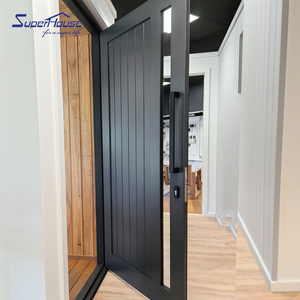
Super-scale oversized pivot entrance doors and minimalist thermal break slim-profile curtain facades. Engineered with concealed high-bearing European pivot hinges supporting panels up to 500kg, integrated with Korean smart home fingerprint, NFC, and wall-pad access protocols.
High-Rise Penthouse Balconies along the Han River
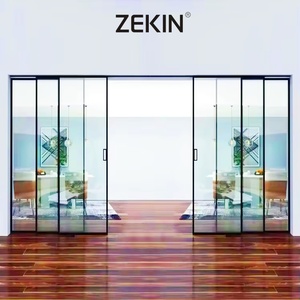
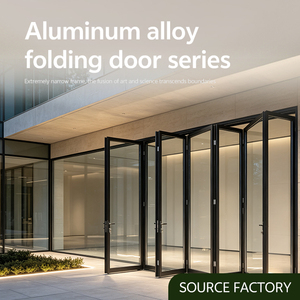
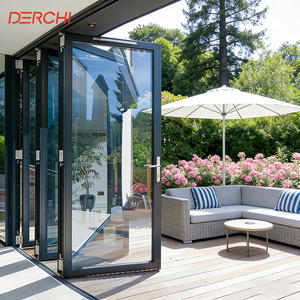
NFRC & AS2047 N6 certified heavy-duty sliding stacker systems and accordion bi-fold configurations. Engineered to resist direct monsoon wind gust pressures exceeding 3,000 Pa, equipped with sub-sill drainage gutters that channel typhoon rainwater outward with zero indoor seepage.
Commercial Showrooms & Boutiques in Gangnam & Seongsu
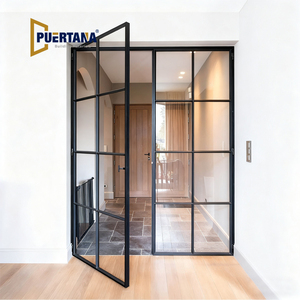
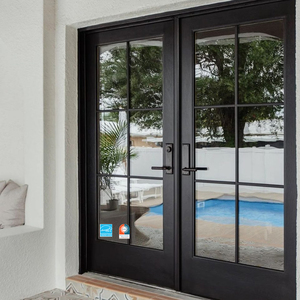
Narrow sightline French doors, frameless acoustic partition systems, and structural storefront glass with AkzoNobel fluorocarbon (PVDF) electrostatic powder-coat finishes that guarantee 25-year anti-fading durability against urban smog, fine yellow dust (Hwangsa), and ultraviolet degradation.
Market Intelligence
Emerging Trends Transforming Architectural Fenestration in South Korea
Strategic movements observed in 2025–2026 specifications by leading Korean design firms (SAMOO, Heerim, Gansam).
Transition to Zero-Energy Building (ZEB) Mandates
Korea’s statutory ZEB roadmap requires all new residential buildings over 30 units to achieve net-zero certification class ratings. This has accelerated replacement of legacy PVC profiles with structurally superior, infinitely recyclable thermal break aluminium alloys utilizing vacuum or quadruple insulated glass units.
Smart IoT & Mortise Biometric Convergence
The Seoul market demands instant compatibility with dominant smart domestic protocols (Samsung SmartThings, LG ThinQ, Commax). Door entries must come pre-machined with European DIN standard or Korean KS standard CNC cut-outs to house concealed multi-point smart mortise locksets seamlessly.
Hyper-Minimalist Visible Sightlines
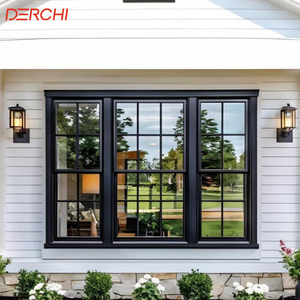
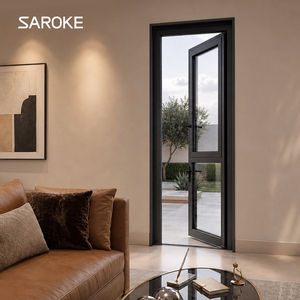
Driven by contemporary Scandinavian and Japanese influences dominating Seoul interior aesthetics, architects are stripping outer visible mullion widths down from 80mm to under 25mm. Our slimline stacking and casement systems maximize daylight ratio without sacrificing structural wind deflection ratings.
Enterprise Value Proposition
Guangdong Dejiyoupin (DERCHI): Foshan Manufacturing Direct to Incheon Port
Leveraging 25+ years of fenestration engineering, our massive 180,000㎡ industrial complex bridges cost efficiency with world-tier compliance.
Industrial Scale & Full CNC Precision
Our 180,000㎡ intelligent production base in Foshan, Guangdong houses automated 4-axis profile machining centers, robotic laser welding, and automated corner crimping lines operated by over 600 skilled technicians.
Full Global Certification
Every profile design holds documented compliance credentials including CE, ISO 9001, Australian AS 2047 N6, and UL Fire-Rated classifications, delivering guaranteed peace of mind for Korean site inspectors and QA surveyors.
GMT+8 Same-Time-Zone Engineering
With only a 1-hour time zone difference between Guangdong and Seoul, our dedicated export engineering teams communicate in real time, furnishing customized CAD shop drawings, glass stress analysis, and BIM models within 24 to 48 hours.
Direct Coastal Ocean Logistics
Situated within 45 minutes of major Pearl River Delta ports (Nansha/Shekou), containerized cargo sails directly to Incheon Port or Busan Port within 3 to 5 days, drastically minimizing transit timelines and port warehousing exposure.
Seoul Importer & Specifier FAQ
Frequently Asked Questions on Importing Aluminium Doors & Frames to Seoul
Direct answers addressing Korean regulatory compliance, sea shipping logistics, moisture defense, and customization requirements.
Do your aluminium frame systems satisfy Korean KS F 3117 and MOLIT thermal insulation standards? +
Yes. Our multi-chamber thermal break profiles utilize 24mm to 34mm PA66 GF25 polyamide insulative struts, warm-edge spacers, and triple-pane soft-coat Low-E argon insulated glazing units (IGUs). These assemblies yield overall window/door U-values down to 0.95–1.1 W/m²·K and airtightness Class 1 ratings, directly compliant with the Energy Saving Design Standards for Buildings administered by the Korean Ministry of Land, Infrastructure and Transport (MOLIT) for the Seoul Metropolitan Zone (Central Region).
What is the shipping transit time and export packing protocol from Foshan to Incheon or Busan Port? +
Ocean transit from South China export hubs (Nansha or Shenzhen Shekou) to Incheon Port typically takes only 3 to 5 days on direct feeder lines. To eliminate salt-air pitting and handling shocks during transit, every assembly undergoes multi-tier export packaging: protective film over all aluminum profiles, corner guards, waterproof PE shrink wrap, high-density pearl cotton cushioning, and fumigated steel-reinforced solid plywood crates compliant with ISPM 15 standards.
Can entry doors and sliding systems be pre-cut and pre-wired for Korean smart electronic locks? +
Absolutely. Every unit is engineered strictly made-to-order based on verified CAD architectural drawings. We regularly pre-machine accurate mortise lock pockets, backsets, wire raceways, and magnetic sensor cut-outs for popular Korean smart door lock brands including Samsung SDS, Yale Korea, Gateman, and Kaadas, ensuring flawless on-site hardware drop-in without secondary field drilling.
How do your assemblies address Seoul's extreme winter condensation and seasonal yellow dust? +
Interior condensation is avoided by maintaining inner profile temperatures well above the dew point through continuous structural thermal isolation barriers and dual-pane/triple-pane insulated glazing. Against fine particulates and yellow dust (Hwangsa), our systems implement multi-tier co-extruded automotive-grade EPDM compression seals, continuous vulcanized corner boots, and concealed multi-point perimeter locking hardware that creates an airtight seal resisting fine airborne particulate ingress.
What documentation and structural data do you provide for Korean local building approval? +
We provide a complete technical submission package for municipal planning and construction supervisors (Gamri). This includes full CAD shop drawings with cross-sectional profiles, static wind load calculation sheets, material mill certificates for 6063-T6 aluminum, glass stress and thermal simulation reports (LBNL THERM / WINDOW models), and independent laboratory test certificates for AS2047, NFRC, and ISO 9001 quality management systems.