Precision Engineering
High-Performance Window & Architectural Door Systems
Engineered for the demands of maritime salt resistance, hurricane gale survivability, and severe thermal insulation required by modern Nordic residential and commercial standards.
Architectural Whitepaper
Engineering Aluminium Fenestration for the Norwegian Sub-Zero Ecosystem
A technical guide for Norwegian developers, general entreprenørs, and facade consultants balancing building regulations (Byggteknisk forskrift - TEK17) against fierce Atlantic coastal storms.
Polyamide Thermal Barriers
Aluminum profiles are configured with multi-cavity, continuous polyamide 66 reinforced with 25% fiberglass (PA66 GF25) thermal strips. This interrupts linear heat conductance across inner and outer frames, completely preventing condensation during inside-outside temperature deltas reaching ΔT 45°C.
TEK17 U-Value Compliance (≤ 0.80 W/m²K)
Wind Load & Salt Spray Resistance
Norwegian coastal structures face extreme winds along the North Sea and Norwegian Sea. Our aluminum alloy profiles (6063-T6 / 6061-T6) withstand wind resistance ratings verified up to AS 2047 N6 and EN 12210 Class C5, coupled with marine-grade Qualicoat Class 2 fluorocarbon powder coatings resistant to Atlantic saline corrosion.
EN 12210 Class C5 Wind Pressure
Hermetic Gasketing & Acoustics
Employing co-extruded EPDM cellular sealing gaskets combined with warm-edge composite spacers and multi-point locking gear ensures airtightness meeting EN 12207 Class 4. Multi-layer acoustic laminated glass reduces low-frequency offshore wind howling and urban transport noise by up to Rw 44 dB.
EN 12207 Class 4 Airtightness
| Performance Vector | Norwegian Baseline (TEK17) | DERCHI Factory-Engineered Spec | Validation / Verification Protocol |
|---|---|---|---|
| Thermal Transmittance (Uw) | ≤ 1.2 W/m²K (Standard) / ≤ 0.80 (Passive) | 0.75 - 0.84 W/m²K (Triple Glazed with Argon + Dual Low-E) | EN ISO 10077-1 / EN ISO 10077-2 Hot-Box Tested |
| Wind Load Resistance | Class 3 to 4 (Regional dependent) | Class C5 (≥ 3000 Pa design load, 4500 Pa safety) | AS 2047 N6 / EN 12211 Cyclic Pressure Testing |
| Watertightness Under Pressure | Class 9A (600 Pa) | Class E1200 (1200 Pa static & dynamic driving rain) | EN 1027 Cascade Water Spray under Pressure |
| Air Permeability | Class 3 (≤ 2.25 m³/(h·m²)) | Class 4 (≤ 0.75 m³/(h·m²)) | EN 12207 Positive & Negative Pressure Chamber |
| Alloy Surface Finish | ISO 12944 C4 (Maritime/Industrial) | Qualicoat Seaside Class 2 Fluorocarbon (AAMA 2605) | 3000-Hour Accelerated Acetic Acid Salt Spray (AASS) |
Localized Deployments
Engineered for Norway’s Varied Architectural Scenarios
From high-exposure coastal cabins facing Atlantic weather to modern energy-positive urban apartments in Scandinavian cities.
Fjordline Modernist Villas
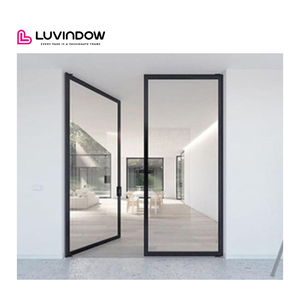
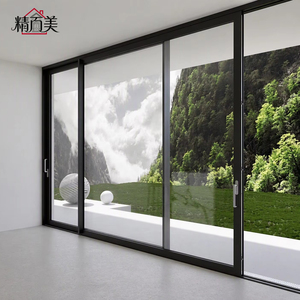
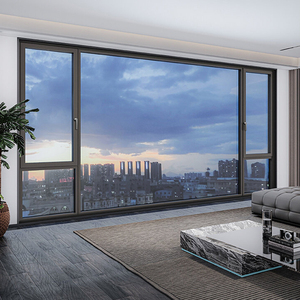
Large-format panoramic picture windows and ultra-slim lift-and-slide doors designed to frame stunning vistas of Geirangerfjord and Hardangerfjord without structural deflection under cyclonic mountain squalls.
Deep Sightlines & Heavy Sash Capacity
Oslo Urban Mixed-Use Developments
Thermal-break casement systems featuring tilt-and-turn Euro-groove hardware, balancing urban acoustic deflection with calibrated micro-ventilation to avoid interior air stagnation during prolonged winter closures.
Acoustic Attenuation (Rw 42 dB)
Commercial Hospitality & Spas
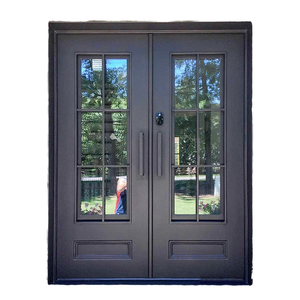
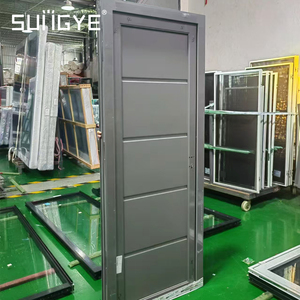
High-traffic cast aluminum and frameless structural entrance doors engineered for commercial geothermal spas, boutique Arctic hotels, and coastal ferry terminal facilities demanding condensation resistance.
Heavy-Duty European Hardware
Mountain Cabins (Hytter)
Custom insulated entryways and exterior honeycomb-core doors built to endure heavy snow loads, sub-zero freeze-thaw expansion cycles, and remote off-grid passive thermal requirements.
Severe Freeze-Thaw Integrity
Future Horizon
Scandinavian Fenestration Trends: Beyond TEK17
An executive analysis of where the Norwegian fenestration market is moving over the next decade.
Circular Economy & Low-Carbon Aluminium
The Norwegian building council is increasingly prioritizing Environmental Product Declarations (EPD). Modern developers seek recycled post-consumer aluminum billets processed with renewable hydropower to lower upfront carbon footprints in BREEAM-NOR certified projects.
Hidden Sash & Frameless Architecture
Architects across Bergen and Trondheim demand flush structural transitions where the outer sash is concealed behind external brickwork or timber cladding. This modern styling maximizes natural daylight while protecting thermal isolators from exposed wind-driven rain.
Smart Access & Motorized Bioclimatic Integration
Modern luxury developments in Norway require automated lift-and-slide motorized tracks seamlessly networked with KNX/Z-Wave smart home systems, including biometric access protocols designed to function at -30°C.
Direct Manufacturer Advantage
Why Norwegian Importers & Contractors Partner with DERCHI
Combining the scale of a top-tier Chinese manufacturing base with rigorous international compliance and personalized design support.
180,000㎡ Production Engine
Our Foshan manufacturing facility houses automated CNC 5-axis profile machining centers, robotic corner-crimping units, and automated insulating glass lines capable of producing 25,000+ units monthly with strict tolerance controls (±0.5mm).
Independent International Certification
Certified across CE, ISO 9001, Australian AS 2047, and UL fire ratings. All products undergo factory air, water, and static load test protocols before overseas dispatch.
Free CAD / BIM Engineering Support
Eliminate project communication barriers. Our bilingual facade engineers produce shop drawings, cross-sectional thermal break simulations, and glass load calculations directly from your architectural schedules.
Full Intermodal Export Packing
Every window and door is cushioned with peelable protective film, corner guards, waterproof wrapping, and fumigated steel-reinforced plywood crates designed for safe intermodal shipping directly to the Port of Oslo, Bergen, or Brevik.
Buyer Knowledge Base
Frequently Asked Questions by Norwegian Importers & Contractors
Key technical, regulatory, and logistics questions answered by our engineering team.
Q: How do your aluminum windows achieve TEK17 compliance for U-values in Norway?
Our systems incorporate multi-chamber PA66 GF25 thermal breaks ranging from 24mm to 39mm, paired with triple-glazed IGUs filled with 90%+ Argon gas and double Low-E soft coatings. By utilizing warm-edge spacers (such as Technoform or Swisspacer), we achieve total window Uw values down to 0.78 W/m²K, easily surpassing TEK17 baseline requirements.
Q: Can your products withstand the corrosive marine conditions along the Norwegian coastline?
Yes. For projects in coastal zones like Bergen, Stavanger, and the Lofoten Islands, we use Qualicoat Seaside Class 2 certified architectural powder coatings and AAMA 2605 fluorocarbon finishes. Combined with 316-grade stainless steel screws and hinges, this provides long-term resistance to salt-laden sea air without pitting or chalking.
Q: How do you handle shipping logistics, customs documentation, and delivery to Norway?
We provide full FOB, CIF, or DDP delivery terms. Our export department handles all CE compliance documentation, commercial invoices, export customs declarations, and packing lists with detailed item tagging to facilitate smooth Norwegian Toll customs clearance. Shipments are packed in reinforced, fumigated crates built for ocean transit to key ports including Oslo, Kristiansand, and Bergen.
Q: Can our architectural team review CAD shop drawings before placing production orders?
Absolutely. Before any cutting or assembly begins, our design engineering office generates complete CAD shop drawings, detailing wall junction details, sill flashings, drainage weep holes, and glass configurations. We revise these drawings until your project architect and general contractor approve every detail.
Q: What glass options are available for sound insulation and security?
We offer double- and triple-glazed configurations with laminated acoustic interlayers (PVB or SentryGlas) to attenuate sound up to Rw 44 dB. Security-rated glass is also available up to EN 356 Class P4A or P5A for intrusion protection, alongside tempered safety glass compliant with EN 12150-1.
Q: What is the typical lead time from drawing sign-off to delivery in Norway?
Standard fabrication takes 25 to 35 days depending on project size and finish specifications. Maritime transit from South China to Norwegian ports typically takes 32 to 42 days. For time-sensitive construction milestones, we recommend initiating technical reviews 70 to 85 days before on-site installation.