Featured Fenestration & Architectural Systems for Bangladesh Projects
Explore factory-fabricated heavy-duty swing windows, cyclone-tested sliding systems, French doors, and thermal-break architectural frames ready for direct shipping to Chittagong and Mongla ports.
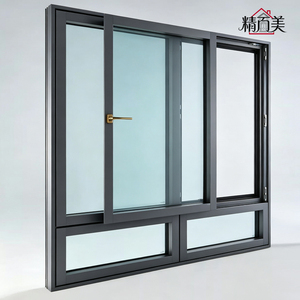
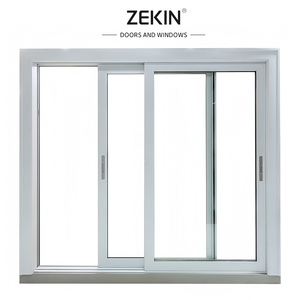
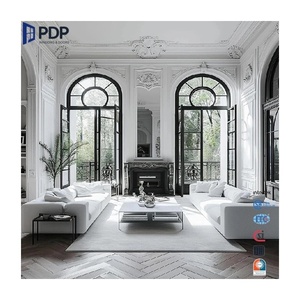
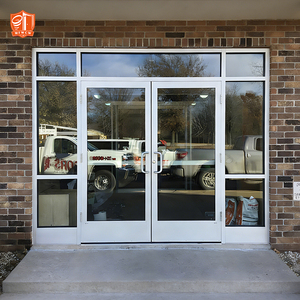
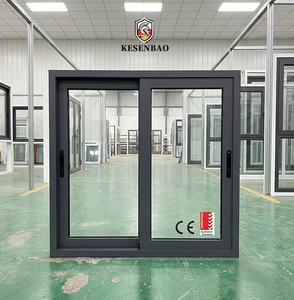
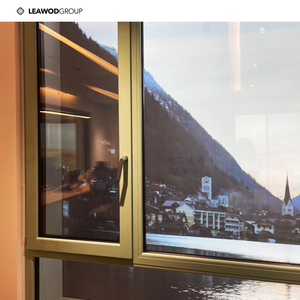
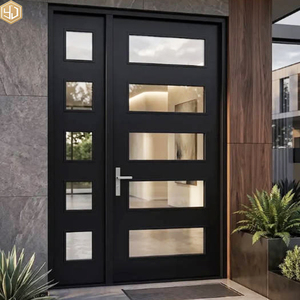
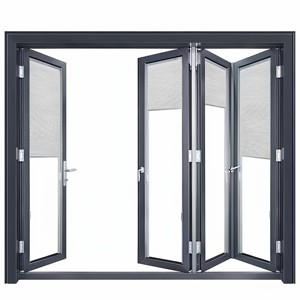
Precision Aluminum Swing Windows Engineered for Bangladesh's Microclimates
Bangladesh presents one of South Asia's most rigorous fenestration environments, dictated by prolonged southwest monsoon torrents, hyper-dense atmospheric humidity, persistent coastal saline corrosion along the Bay of Bengal, and seismic wind loadings. Commercial and residential developers in Dhaka, Chittagong, and Sylhet can no longer depend on uncertified local profile rolling shops.
As a premier Chinese window and door manufacturing enterprise rooted in the global extrusion hub of Shishan Town, Foshan, Guangdong Dejiyoupin Doors and Windows Co., Ltd. (DERCHI) supplies custom high-performance aluminum swing (casement) window systems engineered strictly to neutralize these vulnerabilities. An aluminum swing window—characterized by side-hung sash frames anchored on heavy-duty friction hinges or structural pivot pins—creates a mechanical compression seal against the primary frame that outperforms standard sliding tracks by more than 400% in continuous air and water tightness tests.
Monsoon Pressure Seals
Triple-perimeter vulcanized EPDM gasketing coupled with multi-point perimeter compression cams to prevent rain penetration during 100+ km/h tropical depressions.
Saline & Humidity Defense
AkzoNobel or PPG fluorocarbon PVDF surface finishes (coating thickness ≥40μm) rated for 3,000+ hours in ASTM B117 salt spray testing for coastal Chittagong projects.
Thermal & Acoustic Insulation
Polyamide PA66 nylon thermal break barriers engineered with argon-filled low-E insulated glass units (IGU), cutting interior noise by up to 42 dB in congested urban zones.
Under the Bangladesh National Building Code (BNBC 2020), fenestration envelopes installed in coastal zones (such as Cox's Bazar and Patuakhali) must sustain basic wind speeds up to 260 km/h (72.2 m/s). DERCHI's proprietary casement and swing frames are extruded from architectural-grade 6063-T5 and 6063-T6 virgin aluminum billets with structural web thicknesses ranging from 1.8mm up to 3.0mm, completely eliminating frame flexing, glass blowout risks, and water seepage across mid-rise to supertall structural elevations.
Localized Application Scenarios in Bangladesh's Core Commercial Hubs
The demands placed on architectural swing windows vary significantly across Bangladesh's distinctive geographical sectors. Our engineering unit tailors window profile depths, glazing build-ups, and locking hardware to meet the distinct engineering realities of each micro-zone:
Performance Benchmark: DERCHI Systems vs. Local Bangladesh Market Standard
Architects, structural engineers, and general contractors frequently encounter quality bottlenecks when relying on locally extruded aluminum profiles or low-tier imports. Below is a validated engineering comparison highlighting the tangible information gain and operational advantages our factory delivers:
| Performance Characteristic | Local Bengali Market Extrusions | DERCHI Architectural Swing Systems | Compliance Standards |
|---|---|---|---|
| Billet Material Quality | Recycled aluminum scrap mix (high iron/zinc inclusions) | 100% Virgin 6063-T5 / T6 Architectural Alloy | GB/T 5237, ASTM B221 |
| Structural Wall Thickness | 1.0 mm – 1.2 mm (deflects under gusts) | 1.8 mm – 2.5 mm Heavy Duty Casement Profile | BNBC 2020 Wind Criteria |
| Thermal Isolation | Non-thermal break (massive thermal transfer) | PA66 GF25 Polyamide Thermal Barrier Strips | ISO 10077-2 / LEED v4 |
| Water Tightness Under Pressure | Seeps at ≤ 150 Pa (common monsoon failure) | Watertight up to 700 Pa (No leakage detected) | AS 2047 / EN 12208 Class 9A |
| Wind Pressure Resistance | Failures witnessed at ≤ 1800 Pa | Passes AS 2047 N6 Rating (≥ 4500 Pa) | ASTM E330 / AS 4055 |
| Hardware & Multi-Point Lock | Zinc die-cast latches, rapid play/corrosion | Siegenia / Hoppe / CMECH 304/316 Stainless Sets | EN 13126-8 Cycles Test |
| Acoustic Attenuation (Rw) | 22 – 26 dB (traffic noise fully audible) | 36 – 43 dB (with DGU + PVB Laminate) | ISO 717-1 Acoustic Rating |
By specifying DERCHI swing systems, developers in Bangladesh achieve a predictable return on investment through extended envelope lifespans, substantially reduced facade maintenance liabilities, and streamlined approval from structural verification boards.
Emerging Architectural & Procurement Trends in Bangladesh's Fenestration Sector
Bangladesh's construction ecosystem is moving through a pivotal transition phase. Three primary macro trends are reshaping how developers, architects, and quantity surveyors source window and door assemblies:
1. Surge in USGBC LEED Certifications
Bangladesh currently hosts the world's highest concentration of LEED Platinum and Gold certified green RMG factories and modern commercial towers. These projects mandate low overall U-factors (≤2.0 W/m²·K) and low SHGC glazing configurations that only precision thermal break swing systems can achieve.
2. Shift to Integrated Security & Mosquito Meshes
Given endemic vector-borne risks (such as Dengue fever) across South Asia, luxury home builders require swing windows engineered with integrated 304 diamond mesh security screens. These screens provide impenetrable anti-theft defense alongside unimpeded natural cross-ventilation.
3. Factory Pre-Assembled Precision Packaging
Fragmented site-fabrication in Dhaka notoriously suffers from inaccurate miters and compromised weatherstripping. Institutional real estate groups now opt for fully pre-glazed, factory-calibrated modular units packaged in export-grade fumigated wooden crates.
Guangdong Dejiyoupin Doors and Windows Co., Ltd. (DERCHI)
Ranked among China's Top 10 High-End Door and Window Brands, DERCHI operates a premier 180,000㎡ intelligent production base in Shishan Town, Nanhai District, Foshan. We integrate dedicated R&D labs, European computerized CNC profile machining centers, robotic sealing lines, and full-spectrum testing chambers.
- Verified international testing credentials: CE, ISO 9001, Australian AS 2047, and UL fire ratings.
- 30+ national appearance, mechanical sealing, and profile utility patents.
- Seamless logistics from Pearl River Delta container ports directly to Chittagong (CTG) & Mongla.
- Dedicated bilingual engineering desk working in GMT+8, closely synchronized with Bangladesh Standard Time (BST, GMT+6).
Frequently Asked Questions for Bangladeshi Importers & Developers
A direct, authoritative guide resolving technical, financial, and customs regulations when importing aluminum swing windows into Bangladesh.
What are the key advantages of aluminum swing (casement) windows over sliding windows in Bangladesh's climate?
Sliding windows operate with brush weatherstripping along horizontal bottom tracks. In Bangladesh, intense monsoon storms accompanied by wind pressures easily push pooling rainwater across the track threshold, causing internal drywall damage. Furthermore, standard brush seals allow significant acoustic leakage and heat gain.
In contrast, aluminum swing windows press continuous vulcanized EPDM gaskets tightly between the sash and frame using multi-point lock hardware. When locked, the sash forms a hermetic compression seal that eliminates water penetration even at pressures exceeding 600–700 Pa. Swing windows also offer 100% opening aperture when swung open, enabling full natural cross-ventilation during non-monsoon months.
How does DERCHI accommodate Bangladesh Bank Letter of Credit (L/C) requirements?
Importing commercial building materials into Bangladesh necessitates compliance with Bangladesh Bank's foreign exchange regulations. Every import order requires an Irrevocable Letter of Credit (L/C at sight) or confirmed payment mechanism issued by authorized dealer commercial banks (e.g., BRAC Bank, Eastern Bank, Standard Chartered Bangladesh, or City Bank).
Our experienced export documentation department issues precise Proforma Invoices with comprehensive HS code specifications, precise itemized descriptions matching your IRC (Import Registration Certificate), LCA (Letter of Credit Authorization) form parameters, country-of-origin documentation, and pre-shipment inspection (PSI) / Clean Report of Findings (CRF) test reports when required, ensuring zero clearance delays at customs.
What are the recommended HS codes and customs clearance procedures for aluminum windows at Chittagong Port?
Finished aluminum windows and doors generally fall under HS Code 7610.10.00 (Doors, windows and their frames and thresholds for doors, of aluminum) under Bangladesh Customs Tariff schedules. We supply full Commercial Invoices, Packing Lists detailing net/gross weights and cubic meterage, original Bill of Lading (B/L), and Chamber of Commerce Attested Certificates of Origin (CO).
Shipments depart directly from Guangzhou (Nansha) or Shenzhen (Shekou/Yantian) container hubs and arrive at Chittagong Port (Chittagong Port Authority - CPA) within 12 to 18 sailing days. We can coordinate with your nominated local C&F (Clearing and Forwarding) agent to facilitate swift customs assessment and container haulage to your jobsite.
Which surface finish standard is necessary to withstand Bangladesh's coastal air and UV radiation?
For inland projects in Dhaka, Gazipur, and Rajshahi, electrostatic architectural powder coating using premium polyester powders (e.g., AkzoNobel Interpon D1000/D2000 or Tiger Drylac) with a film thickness of 60–80 microns provides excellent UV resistance and color retention for 15+ years.
For coastal developments in Chittagong, Cox's Bazar, Khulna, and Barisal, we strongly specify Fluorocarbon PVDF (Polyvinylidene Fluoride) 2-coat or 3-coat architectural spray finishes, or Class 20/25 hard-anodized protective layers (thickness ≥ 20μm). PVDF finishes completely resist chalking, blistering, and chemical deterioration induced by warm maritime salt-fog exposure.
Can DERCHI supply complete architectural shop drawings and custom opening configurations?
Yes. Every single window and door assembly we produce is manufactured purely to order. Once your architectural team provides the structural opening schedule, floor layouts, or rough opening dimensions, our engineering department delivers free detailed AutoCAD and BIM submittal drawings.
These drawings clearly articulate profile extrusions, glass thicknesses, expansion clearances, perimeter anchorage brackets, mullion reinforcement stiffeners, and water barrier weep-hole locations. Precision cutting and CNC fabrication only start after your formal review and signed shop drawing approval.
How are fragile glass units and assembled window frames protected during maritime transit?
We deploy a robust 5-tier export crating protocol designed for ocean container shipping. First, all metal profile surfaces are wrapped with low-tack electrostatic protective film. Second, corner joints are reinforced with thick custom molded hard corner pads. Third, the units are sealed within waterproof bubble wraps and heavy craft foam.
Finally, the entire assembly is secured inside custom-built, fully enclosed fumigated plywood crates (ISPM 15 compliant) or heavy steel transport pallets with shock-absorbing bottom runners. Crates can be offloaded directly using forklifts or crane slings on site in Dhaka or Chittagong without zero glass fracture risk.
Elevate Your Architectural Envelope in Bangladesh
Consult with DERCHI's senior fenestration engineers to receive custom CAD details, structural wind load analysis, and factory-direct pricing for your commercial or residential developments across Bangladesh.