Standardized & Engineered Fenestration Catalog
Explore our export-certified aluminium double-glazed window configurations, multi-slide patio assemblies, structural entry doors, and precision automated machinery engineered in our 180,000± production facility.
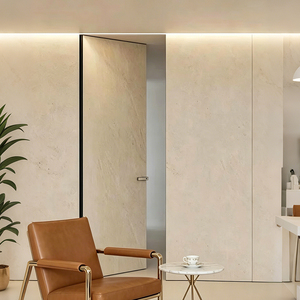 Acoustic Rated
Rock Slab Aluminium Honeycomb Door
Frameless impact-resistant porcelain rock slab bonded with aircraft-grade aluminium honeycomb core for maximum torsional stability in luxury suites.
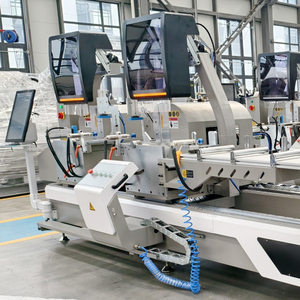 CNC Automated
Dual-Head 45° Inward Swing Cut Machine
CE-certified precision CNC double-mitre saw with micro-metric profile clamping, digital angle correction, and carbide circular blades for fenestration plants.
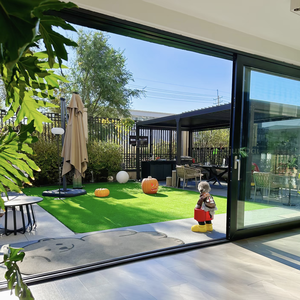 Thermal Break
Double Glazed Multi-Slide Patio Doors
Heavy-wall 6063-T5 aluminium profiles paired with Low-E argon-insulated glass units (IGU), heavy-capacity tandem rollers, and multipoint latching perimeter hardware.
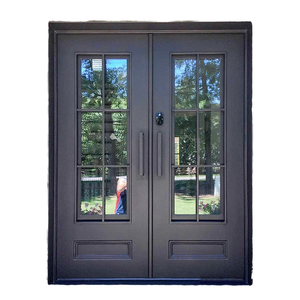 RC3 Anti-Theft
EOKO Smart Hybrid Security Entrance Door
Reinforced double entry assembly fusing structural 304 stainless steel cores, cast aluminium cladding, integrated biometric locks, and tempered security vision lites.
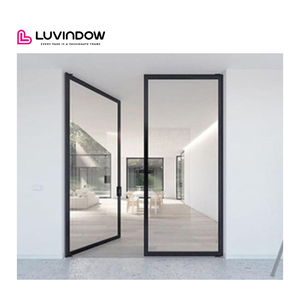 Moisture Proof
Minimalist Slim-Line Casement Swing Door
Ultra-narrow perimeter sightlines, anodized corrosion protection for 100% relative humidity, concealed pivots, and acoustic laminated privacy glass options.
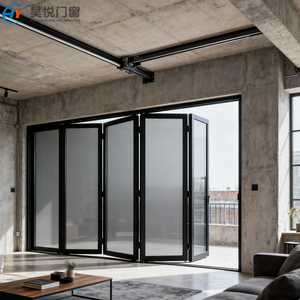 AS 2047 Certified
Heavy-Duty Thermal Break Bi-Fold Door
Engineered bottom-rolling architectural bi-fold doors equipped with PA66 GF25 thermal insulating barriers, flush weathered thresholds, and wind resistance up to 4500Pa.
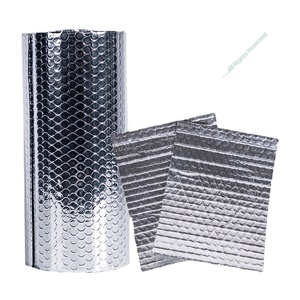 Radiant Barrier
130gsm Double-Sided Reflective Wrap
Commercial thermal-barrier bubble wrap engineered for envelope rough-opening perimeter seals, curtain-wall spandrel backing, and roof insulation retrofits.
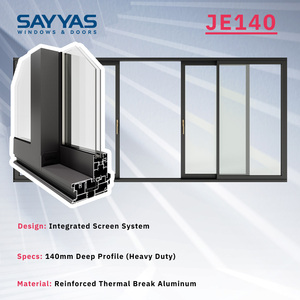 High-Load System
JE140 Heavy Lift & Slide Double-Glazed System
Engineered for panels up to 400kg per sash. Integrated micro-mesh flyscreens, dual EPDM vulcanized gasket seals, and German Siegenia lifting mechanism.
The Engineering Science Behind Export-Grade Aluminium Double Glazed Windows
In commercial facade engineering and premium residential development, fenestration represents both the most vulnerable thermal bridge and the critical primary barrier against environmental forces. As China's premier fenestration manufacturing cluster in Foshan, Guangdong reaches unprecedented technological sophistication, global procurement officers and facade consultants no longer assess suppliers merely on unit price per square meter. Modern specification protocols demand comprehensive verification of primary billet metallurgy (virgin 6063-T5 vs. contaminated secondary remelts), polyamide thermal break mechanics, dual-seal insulating glass unit (IGU) dew point longevity, and structural wind-load deflection tolerances (L/250 to L/300) under extreme pressure differentials.
Critical Specification Alert: Polyamide Strip Quality vs. PVC Extrusions
Sub-tier manufacturers frequently substitute cheap PVC thermal strips for genuine glass-fiber reinforced polyamide (PA66 GF25). PVC strips suffer from plasticizer migration, brittle fractures under negative wind cycling, and a linear thermal expansion coefficient incompatible with aluminium profiles (ΔL differential exceeds 2.5x), resulting in profile delamination, air leakage, and catastrophic frame shearing in tropical and arctic climates. DERCHI strictly employs Technoform and OEM co-extruded PA66 GF25 bars knurled and mechanically rolled to achieve shear test values exceeding 70 N/mm per EN 14024.
Our manufacturing operations under Guangdong Dejiyoupin Doors and Windows Co., Ltd. (DERCHI) integrate end-to-end metallurgical and assembly controls. Every profile extruded for our export double-glazed series features wall thicknesses meeting or exceeding 1.4mm to 2.0mm structural thresholds per AS 2047, AAMA 101, and EN 12020 standards. By pairing structural multi-cavity thermal break extrusions with automated warm-edge IGUs filled with 90%+ Argon gas, we consistently achieve overall window U-values down to 1.2 – 1.6 W/(m²·K) (equivalent to NFRC U-factor 0.21 – 0.28 BTU/hr·ft²·°F), providing tangible energy savings for high-rise buildings and luxury coastal villas.
Thermal & Acoustic Engineering
Multi-chambered profiles insulated by 24mm to 34mm PA66 GF25 barriers. Acoustic laminated outer lites combined with 16mm warm-edge argon cavities attenuate city street noise by up to Rw 42dB.
- U-Value: 1.2 to 1.8 W/(m²·K)
- Acoustic Reduction: 36dB to 44dB
- Condensation Resistance Factor (CRF): >68
Cyclone & Wind Pressure (N6/C4)
Engineered for typhoon-prone Asian coasts, Pacific Rim belts, and Florida-level hurricane codes. Rigorously tested to withstand positive and negative design pressures exceeding 4500Pa without frame failure.
- Serviceability Wind Pressure: 3000Pa
- Ultimate Limit State Pressure: 4500Pa+
- Water Infiltration Limit: 700Pa static head
Marine Fluorocarbon & Qualicoat
Surface treatments tailored for high-salinity coastal fronts. 3-coat PPG fluorocarbon (PVDF) and AkzoNobel Interpon powder coatings guarantee zero flaking, pitting, or blistering over 25+ years.
- ASTM B117 Salt Fog Resistance: >3,000 Hours
- Coating Thickness: 70μm – 85μm uniform
- Qualicoat Class 2 & AAMA 2605 Certified
Guangdong Dejiyoupin (DERCHI): 25+ Years of Export Prowess
Operating as a Top 10 fenestration brand in China, our manufacturing headquarters in Nanhai District, Foshan combines German robotic machining lines, specialized metallurgical testing laboratories, and custom fabrication bays.
Exporting high-performance architectural windows requires more than just premium extrusions; it demands strict adherence to dimensional tolerances and comprehensive pre-shipment quality verification. At DERCHI's industrial park, our production lines utilize automated Italian and German double-head 45-degree CNC saws capable of holding cutting lengths to ±0.2mm precision. Profile corner joints are fastened via pneumatic heavy crimping machines using cast aluminium corner cleats injected with two-component German Henkel polyurethane corner sealing adhesives. This guarantees total frame water-tightness and eliminates joint slippage during cross-ocean container transit.
Furthermore, our factory is located within 90 minutes of major Pearl River Delta container ports (Guangzhou Nansha, Shenzhen Yantian, and Foshan Sanshui). This strategic geographic footprint allows us to execute 20GP, 40GP, and 40HQ containerized shipments across the Asia-Pacific region, Australia, North America, and the Middle East with minimal overland freight exposure and optimal logistics economics.
Emerging Procurement Trends Shaping Global Window Supply Chains
Global developers, architects, and facade contractors are adjusting their import matrices to comply with tighter green building standards, extreme climate threats, and streamlined logistics. Here are the defining shifts through 2030.
1. Direct Mill-to-Site Modular Prefabrication
Developers are bypassing intermediary distributors by sourcing factory-assembled, pre-glazed unitized and semi-unitized window pods directly from Chinese mega-factories. Fully tested, pre-hung window packages save up to 45% on local job-site glazier labor in Australia, the US, and Southeast Asia while ensuring airtightness seals are applied under strict factory-controlled ambient conditions.
2. Embodied Carbon Tracking & Recycled Content
Driven by LEED v4.1, BREEAM, and European CBAM (Carbon Border Adjustment Mechanism) carbon tariffs, institutional purchasers now require Environmental Product Declarations (EPD). Tier-1 Chinese exporters are adopting hydropower-smelted low-carbon aluminium billets (<4.0 kg CO2/kg Al) alongside traceable post-consumer scrap recycling without sacrificing tensile purity or grain boundary integrity.
3. Smart Envelope Automation & Micro-Sensors
Commercial windows are shifting from passive envelope barriers to active building management components. Emerging export demands focus on factory-integrated concealed chain actuators, embedded magnetic contact burglar sensors, micro-trickle ventilation valves, and electrochromic glass systems linked directly to centralized smart home and BACnet building automation protocols.
Standard Architectural Fenestration Specification Matrix
A side-by-side performance comparison of common Chinese export window systems for architectural project scheduling and budget estimation.
| System Category | Profile Spec & Alloy | Thermal Break | Glass Configuration (IGU) | U-Value (W/m²·K) | Acoustic (Rw) | Target Architectural Applications |
|---|---|---|---|---|---|---|
| Casement / Tilt-Turn 70 Series | 1.6mm Wall, 6063-T6 Extrusion | 24mm PA66 GF25 | 5mm Low-E + 16Ar + 5mm Clear | 1.4 – 1.6 | 38 dB | High-rise condominiums, suburban luxury residences, hospitals. |
| Heavy-Duty Casement 85 Series | 2.0mm Wall, 6063-T5 Structural | 34mm Multi-Cavity PA66 | 6mm Low-E + 16Ar + 6mm Acoustic Lam | 1.1 – 1.3 | 42 dB | Cold climate passive envelopes, beachfront typhoon corridors. |
| Multi-Slide 120 Series Patio | 2.0mm Wall, Heavy Reinforcement | 20mm PA66 GF25 | 6mm Low-E + 12Ar + 6mm Tempered | 1.7 – 1.9 | 35 dB | Oceanfront villas, hotel balcony exits, expansive outdoor living. |
| JE140 Heavy Lift & Slide System | 2.5mm Wall, 400kg Sash Rating | 28mm Reinforced PA66 | 8mm Tempered + 16Ar + 8mm Low-E | 1.3 – 1.5 | 40 dB | Luxury hotel lobbies, grand penthouses, panoramic floor-to-ceiling facades. |
| Architectural Bi-Fold 75 Series | 2.0mm Wall, Stainless Rollers | 22mm PA66 GF25 | 5mm Low-E + 14Ar + 5mm Tempered | 1.6 – 1.8 | 36 dB | Restaurant storefronts, poolside enclosures, panoramic pavilions. |
Frequently Asked Questions by Global Project Buyers & Importers
Expert answers addressing the real technical, commercial, and shipping concerns developers and procurement agents evaluate when contracting Chinese fenestration factories.
What documentation and test reports must a Chinese window factory furnish to pass local council inspections in Australia, North America, and Europe?
+
For Australia and New Zealand, windows must comply with AS 2047 (covering structural deflection, air infiltration, water penetration resistance, and ultimate strength) and AS 1288 (safety glazing). Test reports must originate from a NATA-accredited test laboratory or third-party verified testing facility like Azuma Design or Intertek. For the United States, project compliance requires NFRC thermal certification (U-factor, SHGC, VT) alongside AAMA/WDMA/CSA 101/I.S.2/A440 test reports. In the European Union, CE marking compliant with EN 14351-1 supported by a Declaration of Performance (DoP) is legally mandatory. DERCHI regularly supplies full certified test packages, mill certificates for 6063 aluminium alloy billets, glass batch tempered certificates (AS/NZS 2208, ANSI Z97.1, EN 12150), and factory QA records to streamline municipal building approval.
How do you prevent glass dew point failures and argon gas leakage over the 10-to-20-year building lifecycle?
+
Insulating glass unit (IGU) failures, manifested as internal glass fogging or condensation, occur when the secondary sealant allows water vapor ingress or argon gas diffusion. DERCHI mandates a strict dual-seal system: primary seal with high-modulus polyisobutylene (PIB) applied robotically at controlled temperatures to block vapor moisture transmission, followed by a secondary structural seal using two-component structural silicone (Dow Corning 983) or polysulfide sealant. Furthermore, our IGUs incorporate bendable continuous aluminium spacer bars or warm-edge composite spacers filled with 3A molecular sieve desiccant. Automated gas filling stations guarantee an initial Argon concentration ≥90%, while our seal integrity maintains leakage rates below 0.5% per annum per EN 1279-3 testing guidelines.
How does DERCHI package heavy glazed windows to eliminate glass breakage and profile scratching during maritime shipping?
+
Maritime transport exposes goods to rough container handling, moisture humidity, and dynamic vibration. Our multi-stage export packing protocol includes: (1) Frame surfaces protected with low-tack protective PE film; (2) Corner edges wrapped in heavy shock-absorbing foam bumpers; (3) Each finished unit encased in heat-shrink plastic wrap with desiccant pouches inside; (4) Crating inside custom-built, ISPM-15 certified fumigated solid plywood crates or steel transport A-frames for oversized curtain glass. Crates feature bottom pallet skids for forklift handling and interior foam dampeners to prevent glass-to-frame dynamic resonance during ocean transit.
Can your engineering team produce full CAD shop drawings and BIM models from architectural floor plans?
+
Yes. Our in-house technical department consists of dedicated facade engineers and CAD/BIM technicians. When developers or architects submit project elevations, rough opening schedules, and performance targets, we produce comprehensive shop drawing packages within 3 to 5 business days. These drawings provide full perimeter flashing details, anchorage spacing calculations, thermal break alignment, rough opening tolerances, structural mullion inertia (Ix, Iy) stress analysis, and glass load calculations. We also furnish Revit-compatible BIM models (LOD 300 to LOD 400) for seamless integration into general contractor clash-detection models.
What are the practical Lead Times and Minimum Order Quantities (MOQ) for custom architectural projects?
+
For custom villa and commercial projects, our typical minimum order is 50 square meters, though we accommodate smaller sample orders for project approvals. Standard powder coat colors (Matte Black, RAL 7016 Anthracite Grey, Pure White) and common double-glazed glass setups carry a manufacturing lead time of 25 to 30 calendar days following final shop drawing approval and deposit receipt. Specialized setups, including custom fluorocarbon RAL color matching, thermal curvature bending, bullet-resistant glass, or oversized motorized hardware, require 35 to 45 calendar days. We routinely manage multi-stage partial container releases to synchronize with high-rise construction schedules.