Engineering Authority: The Architectural Value of Aluminum Double Swing Doors
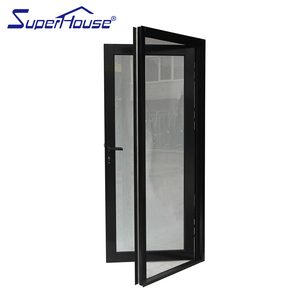
In modern industrial and luxury residential architecture, the double swing door—frequently specified as the French entry or double active pivot system—is regarded as a hallmark of structural symmetry, expansive passage volume, and grand aesthetic presence. Operating as a primary exterior envelope gateway, an aluminium double swing door must resist wind-load deflection, moisture ingress, and thermal conduction while maintaining effortless mechanical operation.
Manufactured primarily utilizing architectural-grade 6063-T6 or 6061-T6 aluminum alloys, these double swing assemblies incorporate structural wall thicknesses ranging between 2.0mm and 3.5mm. Unlike singular hinged installations, double swing door portals present an engineering challenge along the central astragal junction where the master and slave leaves interface. Achieving class-leading air permeability and water tightness demands custom-engineered, multi-tiered EPDM gasket networks, heavy-duty concealed drop-down thresholds, and shoot-bolt mechanisms anchored into reinforced head and floor tracks.
Information Gain Highlight: When sourcing wholesale aluminum double swing doors from China, structural deflection under cyclic positive and negative pressure is the primary determinant of longevity. Verified manufacturers employ internal corner crimping with two-component polyurethane bonding adhesives rather than standard mechanically screwed joints, eliminating corner separation and sag across continuous heavy operating cycles.
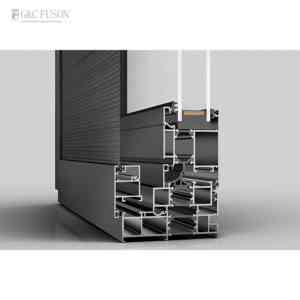
Furthermore, energy conservation regulations worldwide—such as Title 24 in North America, NCC in Australia, and the European Energy Performance of Buildings Directive—mandate strict overall thermal transmittance values (U-factors). Modern wholesale double swing doors resolve this by integrating Polyamide (PA66 GF25) thermal break barriers, effectively separating the exterior and interior aluminum extrusion planes to suppress thermal bridging, prevent interior condensation, and optimize HVAC efficiency in both tropical and sub-zero building environments.
| Performance Dimension |
Standard Non-Thermal Extrusion |
Architectural PA66 Thermal Break |
Testing Standard Reference |
| Thermal Transmittance (U-Value) |
> 5.2 W/(m²·K) |
1.6 – 2.2 W/(m²·K) (Triple Glazed) |
NFRC 100 / EN ISO 10077-1 |
| Wind Load Resistance |
Class P2 (≤ 1500 Pa) |
Class N6 (≥ 4500 Pa Cyclonic) |
AS 2047 / ASTM E330 |
| Water Penetration Barrier |
150 Pa – 200 Pa |
≥ 450 Pa Static & Dynamic |
AAMA 501.1 / EN 12208 |
| Acoustic Attenuation (Rw) |
26 dB – 30 dB |
38 dB – 44 dB Soundproof Laminated |
ISO 717-1 / ASTM E413 |
| Service Life Cycle Expectancy |
10 – 15 Years (Prone to joint looseness) |
30+ Years (Reinforced corner brackets) |
AAMA 920 Cyclic Durability |
1. Monolithic Pivot & Oversized Swing Leaves
Commercial and villa developments increasingly request oversized double swing leaves exceeding 3.5 meters in height. This requires floor-bearing hydraulic pivot hardware capable of supporting leaf loads up to 450kg without sagging or air seal compromise.
2. Low-E Triple Glazing & Warm-Edge Spacers
Decarbonization codes across international jurisdictions have positioned argon gas-filled, low-emissivity insulated glazing units (IGU) with warm-edge composite spacers as the standard baseline, lowering cooling and heating operational loads.
3. Smart Biometric & Access Control Automation
Procurement now favors automated electromagnetic multipoint locking systems seamlessly integrated into building automation systems (BAS), supporting biometric entry, smartphone encrypted credentials, and fire release interlocks.
4. Fluorocarbon & Marine Qualicoat Finishes
With major projects expanding across coastal regions in Southeast Asia, Australia, and the Middle East, importers mandate Qualicoat Class 2 or PVDF fluorocarbon exterior surface coatings capable of withstanding 3,000+ hours of continuous salt spray testing.
Full In-House Engineering
From initial structural wind load calculations to full complimentary CAD shop drawings and BIM models, our engineering team refines every door schedule before cutting single profile runs.
Rigorous Testing & Certifications
DERCHI door systems are independently tested to meet Australian AS2047 N6 cyclone standards, North American NFRC thermal metrics, CE directives, ISO 9001 quality audits, and UL fire ratings.
Comprehensive Envelope Systems
Consolidate procurement by sourcing aluminum swing doors, large pivot doors, cast aluminum security gates, and curtain walls under a single unified factory warranty, cutting logistics and admin overhead.
Global Export & Packaging
Positioned minutes from South China maritime ports (Shenzhen, Guangzhou, Foshan), products are delivered in steel-reinforced fumigated plywood crates with moisture desiccants for damage-free transit.
How do you prevent water penetration along the central meeting stile (astragal) of double swing doors?
+
Water management in double active swing doors is resolved through a three-stage barrier strategy: First, an interlocking aluminum center astragal with dual vulcanized EPDM compression fins creates a tight mechanical seal when closed. Second, an internal drainage sub-channel redirects wind-driven capillary moisture down toward weep holes with anti-backdraft valves in the threshold. Third, concealed multi-point latching secures uniform compression across the full vertical height of both leaves.
What hardware configurations are standard for high-traffic commercial vs. residential villa installations?
+
For commercial high-traffic installations, we configure overhead concealed hydraulic door closers (EN3/EN4 rated), anti-panic exit push bars compliant with EN 1125, heavy-duty stainless steel continuous gear hinges, and electronic strikes for access integration. For luxury private villas, we recommend 3D adjustable concealed hinges, Italian/German multi-point hook locks (e.g., Siegenia or Roto), and smart biometric handles with mortise deadbolts.
How does DERCHI ensure thermal performance and prevent interior condensation in extreme climates?
+
We incorporate structural polyamide 66 insulating struts reinforced with 25% glass fiber (PA66 GF25), crimped between inner and outer extruded aluminum chambers. Paired with double or triple Low-E insulated glazing units filled with 90% argon gas and warm-edge spacer technology, this setup stops thermal transmission, eliminates condensation risk under indoor high humidity, and achieves U-values down to 1.6 W/(m²·K).
What is the lead time for custom container-load orders, and what export documentation is provided?
+
Typical production lead time is 25 to 35 working days following signed approval of CAD shop drawings and hardware schedule confirmations. For every export shipment, DERCHI supplies comprehensive documentation including Bill of Lading, Commercial Invoice, Packing List with piece marks, Certificate of Origin (Form E, CO, etc.), Mill Test Certificates for aluminum alloys, and official laboratory test reports (AS2047, CE, NFRC).
Can your double swing doors be manufactured to custom structural opening dimensions?
+
Yes. Every door leaf and sub-frame is manufactured to the exact architectural millimeter. Whether you need standard 1800mm x 2100mm portals or grand monumental double entrances reaching 3000mm in width and 3600mm in height, our engineers adapt extrusion thickness and internal structural reinforcements to ensure compliance with local wind and deflection criteria.