Factory-Engineered Aluminium Door & Window Series
Every architectural entry, pantry boundary, and kitchen patio divider is manufactured utilizing structural 6063-T5 virgin aluminum alloys, precision polyamide PA66-GF25 thermal breaks, and commercial-grade tempered safety glass.
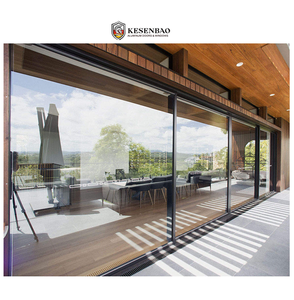
Wind Resistant Double Glazed Thermal Break Balcony Glass Patio Aluminum Sliding Doors For Houses
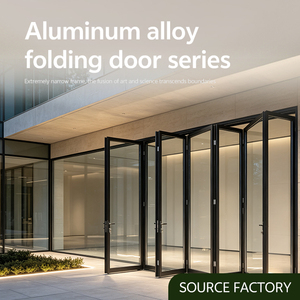
Aluminium Bifold Folding Patio Door Thermal Break Double Tempered Glass Exterior Sliding Entry Doors Bifold Fold Door
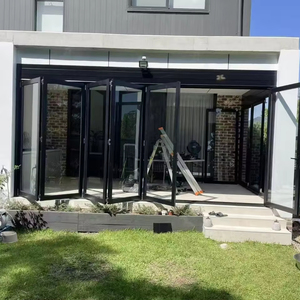
High Tightness CE Approved Modern Glass Aluminum Frame Folding Door for Exterior Entry and Commercial Use
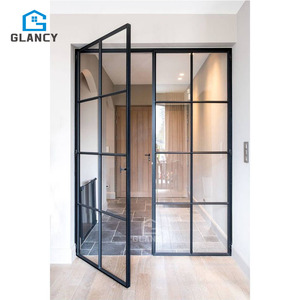
French Modern Single Glass Door CE Certified Black Power Coated Heat Insulation Made Aluminium For Outdoor Entry
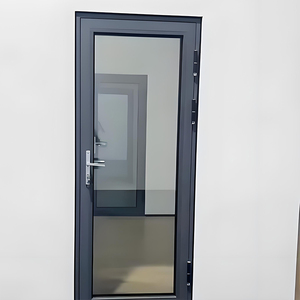
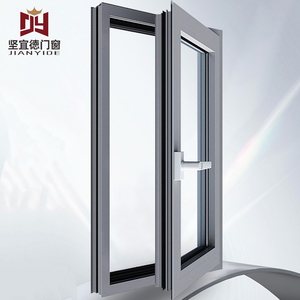
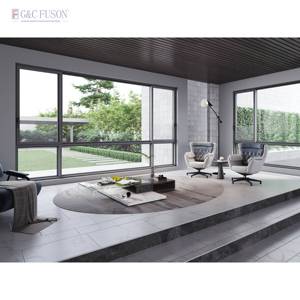
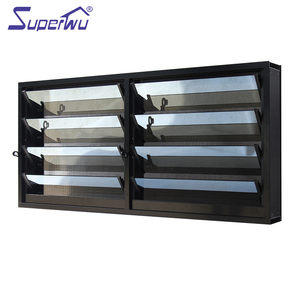
Fuson Black Steel Mesh Aluminum Balcony Louvre Sliding Windows Aluminum Frosted Glass Fixed Windows and Doors Manufacturer
Engineering Whitepaper: Specifying Custom OEM Aluminium Kitchen Doors for Modern Architecture
Modern architectural fenestration has evolved far beyond basic spatial separation. In high-density luxury high-rises, expansive coastal villas, and high-end hospitality venues, the transition between interior cooking areas, open-plan dining concepts, and outdoor patio lounges requires sophisticated barrier design. A custom OEM aluminium kitchen door must conquer a dual-environment challenge: insulating heavy thermal loads, containing internal cooking moisture and grease vapor, while resisting aggressive outdoor salt spray, UV degradation, and typhoon-level negative air pressures.
As a Tier-1 Chinese fenestration enterprise recognized across Guangdong Dejiyoupin Doors and Windows Co., Ltd. (DERCHI), we provide structural engineers, real estate developers, and international procurement direct access to factory-level OEM/ODM customization. By combining our 180,000㎡ Foshan fabrication plant with strict German-standard CNC extrusion processing, our products satisfy stringent international benchmarks including Australian AS 2047 N6 wind resistance, European CE EN 14351-1, and ISO 9001 quality controls.
Structural Specifier Note: Standard residential doors regularly warp, stick, or experience thermal bridging failure when exposed to differential indoor/outdoor temperatures. Our engineered kitchen profiles incorporate polyamide thermal breaks (PA66-GF25 reinforced with 25% fiberglass), guaranteeing a total heat-deflection resistance and thermal conductivity of λ ≤ 0.3 W/(m·K).
Architectural Application Scenarios: Where Kitchen Profiles Meet Functional Demands
A true commercial-grade aluminium kitchen door system must be segmented according to structural loading, operational cycles, and environmental interaction. Our factory engineers tailor extrusion cross-sections and hardware kinetic systems to three primary architectural configurations:
Balcony-Kitchen Patio Transitions
Engineered for seamless movement between the prep kitchen and exterior alfresco dining. Utilizes double-glazed low-emissivity argon glass units with multi-point perimeter compression seals to eliminate air leakage and resist wind speeds up to 60 m/s.
Ultra-Slim Indoor Partitions
Minimalist French narrow-frame glass doors that visually merge the kitchen with living spaces while sealing in fumes and dampness. High-tensile Fluorocarbon powder finishes ensure that greasy residues wipe clean effortlessly without surface pitting.
Commercial Grease & Louver Portals
Designed for industrial catering spaces, commercial supermarket food hubs, and luxury estates. Heavy-gauge aluminum alloy louvers paired with integrated 304/316 marine stainless steel meshes provide continuous cross-ventilation while repelling pests.
Comparative Metallurgy & Performance Metrics
The longevity of an OEM kitchen door is dictated by the composition of the extrusion billet, wall thickness, and glass assembly specification. Below is a detailed technical matrix demonstrating the structural differences between standard commercial offerings and our high-specification export systems:
| Evaluation Parameter | Commercial Grade (Standard Market) | DERCHI High-Spec OEM (Engineered) | Engineering Benefit |
|---|---|---|---|
| Aluminium Alloy Grade | Recycled / Secondary 6063 Aluminum | 100% Virgin 6063-T5 or 6061-T6 Billet | Zero internal micro-voids, tensile strength ≥ 205 MPa |
| Profile Wall Thickness | 1.2 mm – 1.4 mm | 2.0 mm – 3.0 mm (Heavy Structural) | Prevents frame sagging on extra-tall (over 3000mm) glass panels |
| Thermal Barrier Compound | PVC or Low-Grade Polyurethane | Technoform® Polyamide PA66-GF25 | Maintains coefficient of expansion identical to aluminum frame |
| Surface Coating | Standard Anodized / Thin Spray (30μm) | AkzoNobel® PVDF or Interpon Powder (≥60μm) | Qualicoat Class 2 compliance, resistance to kitchen oil & humidity |
| Hardware Endurance Cycle | 20,000 – 30,000 cycles | German Siegenia / HOPPE (≥100,000 cycles) | Effortless opening for decades under constant commercial operation |
| Acoustic Isolation Rating | Rw ≤ 24 dB | Rw 38 dB – 44 dB (Acoustic Laminate) | Isolates kitchen blender, dishwasher, and exhaust hood acoustic noise |
Future Procurement Trends: Where OEM Fenestration Sourcing is Headed
B2B fenestration procurement across Southeast Asia, North America, Oceania, and the Middle East is undergoing a paradigm shift. Real estate developers and commercial general contractors are discarding fragmented purchasing models in favor of deep OEM partnerships that minimize operational risk, simplify customs clearing, and ensure lifecycle sustainability.
1. Deep BIM & CAD Direct Manufacturing Integration
Modern developers require full integration between structural BIM (Building Information Modeling) pipelines and manufacturing shop floors. We eliminate on-site rework by converting architectural schedules into precise production drawings within 24 hours. Our engineers verify thermal movement clearances, anchorage sub-frame tolerances, and structural wind loadings before profile cutting begins, ensuring instant compatibility on construction job sites.
2. Whole-House Fenestration Sourcing Consolidation
Logistical volatility has highlighted the steep hidden costs of dividing facade contracts among multiple suppliers. Commercial buyers are migrating toward consolidated manufacturing partners capable of delivering custom kitchen partition doors, heavy exterior entrance pivot systems, automated garage portals, and thermal-break curtain walls from a singular manufacturing source. This consolidation reduces container ocean-freight expenses by up to 28% and guarantees unified surface finish consistency across the entire building envelope.
3. High-Performance Decarbonization and Low-E Demands
With stringent global mandates like the EU Energy Performance of Buildings Directive (EPBD) and localized green building accreditations (LEED, Green Mark), procurement managers must deliver verified U-values. The procurement trajectory favors aluminium systems featuring multi-cavity thermal profiles paired with Warm-Edge spacer bars and soft-coat Low-E double or triple glazing that bring overall U-values down below 1.4 W/(m²·K).
Industrial & Technological Development Trends in Aluminium Door Fabrication
To retain our position as an industry pioneer for more than 25 years, our Foshan smart plant continuously implements advanced manufacturing robotics, precision metallurgical chemistry, and kinetic structural engineering. The following technology trends define our production roadmap:
5-Axis CNC Corner Crimping & Glue Infiltration
Traditional mechanical joint fastening allows frame racking and water seepage over time. Our automated 5-axis machines inject dual-component polyurethane structural adhesives into reinforced corner keys, achieving an indestructible corner bond that withstands severe cyclic structural torque.
Ultra-Flush Floor Track Engineering
Modern kitchen transitions eliminate tripping hazards. Our innovative zero-threshold drainage tracks integrate subsurface concealed drainage channels that drain water at 120 L/(min·m), completely passing water-tightness tests while keeping the floor line continuous.
Smart IoT Automation & Sensor Interlocks
Next-generation OEM kitchen doors integrate brushless magnetic drive motors and optical pinch sensors. These systems synchronize directly with whole-house smart HVAC controls, automatically opening for air makeup when commercial ventilation hoods activate.
Why Choose Guangdong Dejiyoupin (DERCHI) as Your OEM Manufacturing Partner
As recognized among the Top 10 premium door and window brands in China, our corporate standing is supported by over two decades of technical leadership, international project delivery, and factory infrastructure. When you partner with us for custom OEM aluminium kitchen doors, you leverage institutional-grade advantages:
1. Scale & Fast-Track Production Capabilities: Our expansive 180,000 square meter industrial park in Shishan Town, Foshan, is equipped with automated European extrusion lines, intelligent glass tempering furnaces, and dust-free powder coating facilities. Supported by over 600 skilled technicians, we maintain an on-time dispatch rate exceeding 99.2% for high-volume containerized shipments.
2. Exhaustive International Compliance: We do not rely on self-declarations. Our systems have successfully undergone testing in independent accredited laboratories, holding formal CE certifications, Australian AS 2047 cyclic wind and water penetration approvals, ISO 9001 quality management credentials, and UL fire-rated classifications. This ensures painless local regulatory approvals for developers in Singapore, the Philippines, Australia, Europe, and the Middle East.
3. Dedicated GMT+8 Project Engineering Desk: Engineering errors are costly. Our technical engineering division operates across the GMT+8 time zone, guaranteeing real-time coordination with project managers in Southeast Asia and rapid, single-business-day turnaround for international inquiries. We supply complete CAD submittals, BIM models, and structural static load calculations at zero charge during the pre-contract stage.
4. Heavy-Duty Export Crate Logistics: Coastal and trans-oceanic transit requires bulletproof crating. Every finished door unit is sealed with protective peel-off film, protected with high-density EPE foam corner buffers, and secured in heat-treated, fumigated plywood crates with integrated desiccant bags to prevent moisture staining during sea voyages.
Frequently Asked Questions: Procuring Custom OEM Aluminium Kitchen Doors
What minimum profile thickness is recommended for oversized glass kitchen doors? +
How do your aluminium kitchen doors maintain durability against grease, heat, and moisture? +
What is the standard production lead time for full-container OEM orders? +
Can you manufacture custom door hardware configurations for smart home integration? +
How do you guarantee glass safety around cooking and heavy food-prep areas? +
Transform Your Architectural Fenestration Sourcing
Connect directly with our Foshan engineering headquarters. Request complete technical shop drawings, structural certifications, and comprehensive product price matrices customized for your upcoming building projects.